
An enquiry that says "we need an oil filling machine" can end up specifying four quite different machines. A plant filling 500 ml hair oil bottles at sustained volume, a lubricant blender filling 20 liter pails, a grease producer loading cartridges, and a chemical packager dosing a corrosive surfactant into HDPE bottles do not share a metering system, a nozzle or a containment plan. The catalog word "filling machine" hides those differences, which is why quotes come back with the wrong head count, the wrong seals, or a container handling system that cannot hold a pail upright.
This guide covers the oil, lubricant, grease and industrial chemical end of the range: the gear oil filling machine for a lubricant packaging line, the automatic lubricant oil filling machine for industrial oil packaging, the servo quantitative grease filling machine for cartridges and buckets, the intelligent tracking chemical bottle filling machine for corrosive liquid and the servo driven petrochemical filling machine for chemical plants. The general liquid filling machine buying guide compares layouts and metering principles, and the viscous products guide covers creams and lotions. Here the question is narrower: what to specify when the product is an oil, a semi-solid grease or an aggressive chemical, and when the container can be anything from a 30 ml bottle to a pail or cartridge. What five industries demand from a filling machine surveys the same ground at industry level; this goes one layer deeper on the specification itself.
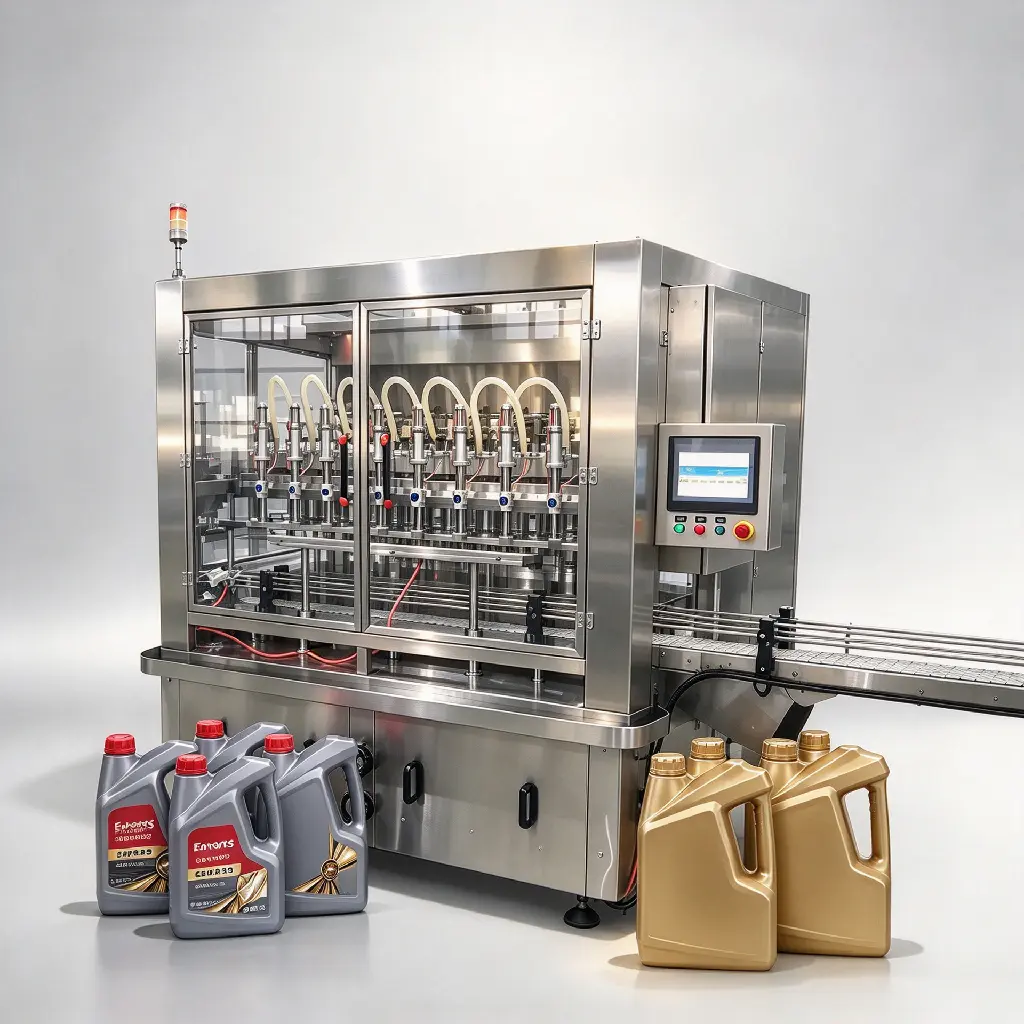
Start with the product, not the machine name
Four product classes sit behind the same enquiry, and each one changes a different part of the machine.
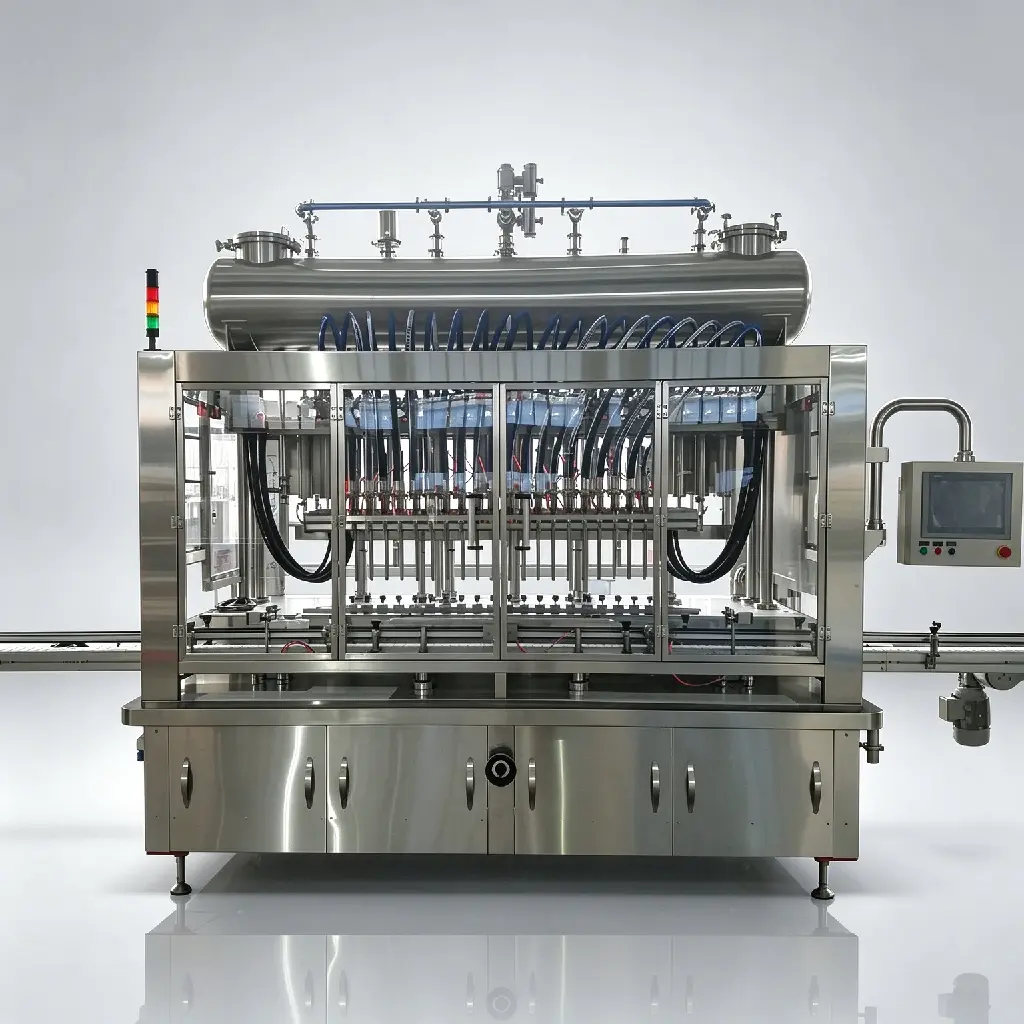
Low to medium viscosity oils flow readily. Hair oil, gear oil, lubricant oil and edible oil fall here. They are usually filled by volume into bottles or jerrycans, and the main variables are fill temperature, foaming and how much the viscosity moves between a cold morning startup and a warm afternoon run. A fully automatic high speed rotary hair oil filling machine is built for the thin, high-volume end of this class; a 30 nozzle servo controlled rotary filler is the same logic taken to a larger head count.
Semi-solid grease and stiff pastes do not flow at room temperature. They need positive displacement, often a heated hopper or jacketed product path, and a container that can be filled from the top. A servo quantitative grease filling machine is a different machine from a bottle filler even when the brand on the frame is the same.
Corrosive and aggressive chemicals include acids, alkalis, strong surfactant blends, hypochlorite and pesticide formulations. Compatibility of every wetted part, every seal and every gasket becomes the first question, ahead of speed. The tracking chemical bottle filler for corrosive liquid and the petrochemical filler for chemical plants sit in this class.
Flammable, solvent-based blends add a fourth set of requirements: electrical classification of the panel, motors and sensors, grounding and bonding points, vapor handling and drip containment. These are not optional extras on a solvent line, and they are not implied by a standard machine.
Write the product into the enquiry as a data sheet rather than a name. State viscosity at the intended fill temperature and at ambient, density and how it changes with temperature, pH or active concentration, flash point if one applies, solids content, whether the product foams or strings, and the fill temperature itself. A supplier can size a pump from that sheet. From "we fill gear oil" they can only guess.
Container format sets the metering and the nozzle
The container decides more of the machine than buyers expect. Work upward through the formats, because each step changes what the filler has to do.
At 30 ml to 500 ml, bottles are handled by a timing screw, star wheel or linear indexing system, and the neck opening limits nozzle diameter. Repeatability dominates over speed here; the small bottle filling guide explains why absolute error matters more in this range. Air pockets during priming show up on oils too, especially after a product change.
At 1 to 5 liters, jerrycans and handled bottles bring offset necks, tall bodies and a high center of gravity. Side belts or pucks replace neck handling. Foaming products need a dive nozzle that fills from the bottom up, and the foaming shampoo guide sets out the speed curve and settling time to check. An anti-drip shutoff matters more as the container gets taller, because a drip on the outside of a jerrycan travels into the case; nozzle dripping diagnosis covers the causes.
At 10 to 25 liters, pails and buckets have no neck to guide them, an open top and a lid that has to be placed after filling. Star wheels and neck grippers do not apply. Net weight filling becomes common at this size, and container handling is built around a platform or a scale rather than a bottle carrier. Cartridges and small grease packs are the other end of the same problem: a narrow, rigid body filled with something that will not flow on its own. The grease cartridge and bucket filler is built around both.
Drum and IBC formats are a separate machine class. Do not assume a bottle filler scales up to them. Confirm the supplier's range before writing a drum into the same project brief.
Across all of these, build a format matrix before asking for a quote. The multiple bottle sizes guide gives the method: minimum and maximum dimensions, neck or opening, fill volume, and which changes are guide-rail adjustments and which need change parts.
Choose the metering method by how the fill is declared
The buying guide explains the five metering principles and what each measures. The decision here is which one fits a product and a container, not how they work.
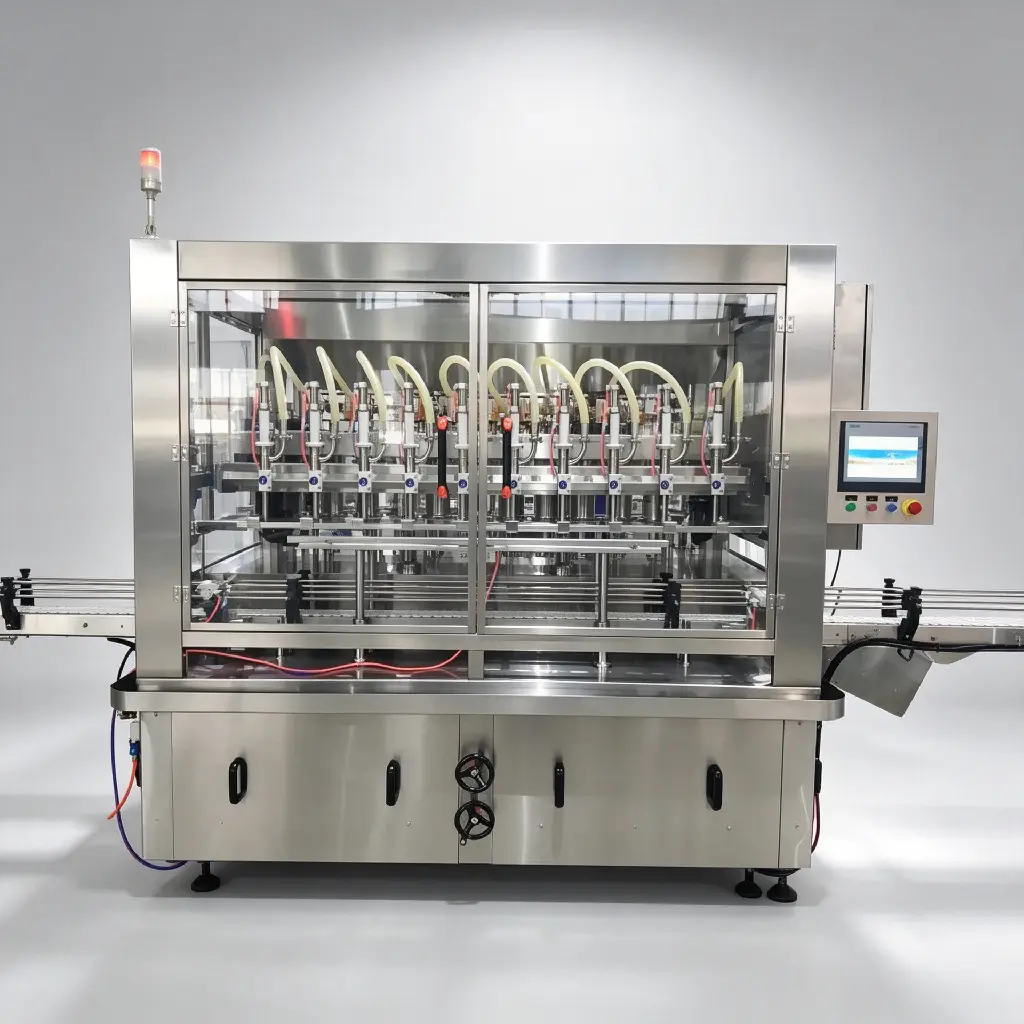
Volumetric systems deliver a set volume. A servo piston filler suits viscous products and repeatable doses. A gear pump filler handles oils well because it moves a continuous, controlled stream. A flow meter filler meters thin liquids without a piston chamber. A following type filler tracks containers that keep moving, which is useful for unstable bottles and for chemical lines where the container cannot be stopped cleanly on an index.
Gravimetric or servo weighing filling declares the fill by mass. It wins in three cases: when the label states net weight rather than volume, when the container is large, and when density varies with temperature. Oil density falls as the product warms, so a volumetric machine set at 20 °C delivers a different mass at 35 °C. If the declaration is by weight and the plant runs across a temperature range, either weigh the fill or agree on a temperature compensation method with the supplier. The servo quantitative grease filler is the quantitative end of this logic applied to a product that will not pour.
For thin oils at sustained volume, rotary layouts start to make sense. The rotary type filling machine category and the rotary paste and viscous liquid category split on product behavior rather than on speed alone. The filling machine category groups the whole taxonomy, which is a useful way to check that a proposed configuration actually exists as a product line.
Corrosive and flammable products change the containment spec
For aggressive chemistry, write the chemical name and concentration into the specification and ask the supplier to list every wetted material and every seal elastomer in writing. Daily chemical filling line problems describes what happens when chemistry and machine materials are mismatched, and evaluating a filling machine manufacturer treats contact material declarations as a due diligence item rather than a brochure line. Ask the same question about the pump seal, the valve seats, the hose or pipe grade and the nozzle. The tank is one part of the product path, and rarely the part that fails first.
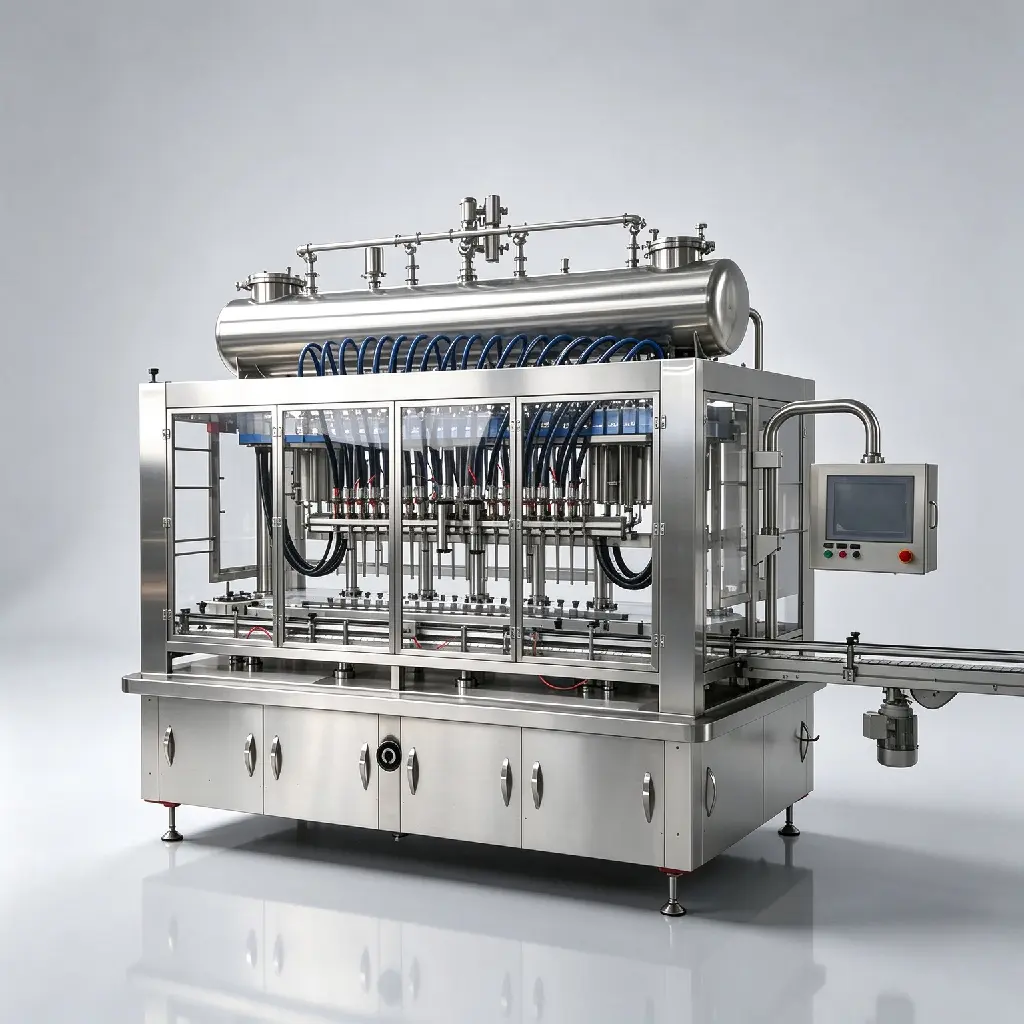
Containment is the second half of the specification. Ask for a drip tray or bunded base under the product path, a defined route for flush liquid and waste, and a written statement of where product can collect and be cleaned out. If the same machine will run more than one product, ask whether a dedicated product path is needed to prevent cross-contamination. A corrosive aqueous product and a food-grade oil should not share an unflushed line.
For flammable or solvent-based products, ask which electrical classification the panel, motors and sensors are built to, and request the documentation. Ask where the grounding and bonding points are, how vapor is drawn away from the filling point, and what the machine does with a spill. Do not assume that a standard filler qualifies because the word "chemical" appears in its description. These are questions for the supplier to answer against your product, and the answers belong in the order documents.
The corrosive liquid tracking filler and the petrochemical filler are the two references in this class, and the linear type filling machine category is where containing a single product path is simplest to arrange.
Temperature, viscosity and density move together
Oil is not one viscosity. Gear oil at a cold plant startup and the same oil at the end of a warm shift fill differently: the pump slips differently, the fill takes a different time, and the shutoff behaves differently at the end of the dose. Grease may need a heated hopper, jacketed lines and a follower plate before it will move at all. Choosing a filler for viscous products sets out why a single viscosity number on a data sheet is not enough, and the same reasoning applies in reverse to thin oils that thin further when warm.
Density moves with temperature as well. That is the link between the product and the metering decision in the previous section: a volumetric dose and a gravimetric declaration can disagree by enough to matter on a high value oil, even when the fill level looks identical in the bottle. State the fill temperature range in the enquiry alongside the ambient range, since the two are rarely the same on a hot fill line.
Two practical checks follow. Ask what warm-up or temperature control the product path needs before the first container, and how long it takes. Then run the factory acceptance test at the coldest and warmest product temperature you expect, with fill weight and fill volume both recorded. A trial at one comfortable midrange temperature will not reveal a temperature-driven drift.
Changeover, flushing and cleaning between incompatible products
A line that runs one oil in long campaigns has a simple cleaning problem. A line that switches between a corrosive chemical, a detergent base and a lubricant oil has three problems at once: what to flush with, how long it takes, and what the flush does to the seals.
Ask for a written flush or cleaning sequence, the consumables it uses and the measured time, then add that time to the changeover figure in the format matrix. The multiple sizes guide treats changeover as a specification item, and the filling machine maintenance guide covers the wear items that a harsh flush accelerates. Where two products are incompatible, a dedicated hose set or a dedicated machine is cheaper than a long flush and a rejected first pallet.
Decision table: product class and container to machine configuration
| Product class | Typical container | What to specify | Runtech reference | Main risk |
|---|---|---|---|---|
| Thin hair oil or cosmetic oil | 30 ml to 500 ml bottle | Rotary or linear volumetric dosing, small nozzle, tight repeatability | Rotary hair oil filler | Absolute fill error at small volumes |
| Gear oil or lubricant oil | 1 to 5 liter jerrycan, handled bottle | Gear pump or flow meter, dive or anti-drip nozzle, side belt handling | Gear oil filler, lubricant oil filler | Foam and drips on the outside of the container |
| Semi-solid grease or stiff paste | Cartridge, 10 to 25 liter bucket | Servo quantitative positive displacement, heated product path | Grease cartridge and bucket filler | Product will not flow at ambient temperature |
| Corrosive aqueous chemical | 500 ml to 5 liter HDPE bottle | Tracking type filler, wetted materials and seals declared in writing, containment | Corrosive liquid tracking filler | Seal and material attack |
| Petrochemical or solvent blend | Bottle to pail | Metering plus electrical classification, grounding, vapor handling, dedicated path | Petrochemical filler | Flammability and cross-contamination |
| Multi-size oil line | Several bottles and jerrycans | Format matrix, adjustable guides, defined change parts and changeover time | Complete bottle filling line specification | Changeover cost across short runs |
Read the table from the left column. The product class fixes the metering and the containment, the container fixes the nozzle and the handling, and only then does output decide whether the layout is linear or rotary.
Pre-order checklist and the acceptance test
Specification is where most of the risk sits, so put it in writing before asking for a quote.
- Product data sheet: viscosity at fill and ambient temperature, density versus temperature, pH or active concentration, flash point, solids content, foaming and stringing behavior, fill temperature.
- Container list: every format with opening or neck diameter, body dimensions, center of gravity, material, and whether it has a handle or an offset neck.
- Fill declaration: volume or net weight, target dose, tolerance, and the temperature range the plant runs across.
- Output and run profile: sustained output rather than peak, SKU count, run lengths and changeover frequency.
- Compatibility: written list of wetted materials, seal elastomers, pump seal type and hose grade, plus the electrical classification and grounding points for flammable products.
- Containment and cleaning: drip trays, flush route, waste handling, written cleaning sequence and its measured time.
- Utilities and layout: compressed air, power, available straight conveyor, and where the capper and labeler sit downstream.
Then put the same items into the acceptance test. Run your hardest SKU with your product, at sustained speed, at the coldest and warmest fill temperature you expect. Record fill weight and fill volume as numbers rather than reading the level in the container. Time the changeover between your two most different formats. Validate the flush sequence between incompatible products. Count rejects and write down the cause of each one. Evaluating a manufacturer explains why the acceptance test belongs in the contract rather than in a handwritten note after delivery, and the small bottle guide shows what fill weight records reveal that visual checks do not.
Send samples. A data sheet cannot tell a supplier how a particular grease releases from a particular cartridge, or how a surfactant blend foams at a particular nozzle lift. Send the product and the containers, and ask for filled samples back before sign-off.
Where these machines sit in the line
The filler is one station. Downstream, closures and labels have to survive the same product: a pump or trigger cap for a chemical bottle needs compatible materials, and a label adhesive has to hold on a container that may leave the filler with a film of oil on it. The pump cap versus trigger cap comparison and the capping machine buying guide set out the closure decisions, and the self-adhesive label applicator guide covers container geometry at the labeling station.
For small bottles, a monoblock reduces the handoff between filling and capping; a separate filler and capper leaves more room for a containment enclosure around a corrosive product. The complete filling line specification walks through that balance station by station, and secondary packaging line integration picks up the line from the labeler outfeed onward. Balance the whole line around its slowest station, not around the filler's catalog rating.
FAQ
Can one filling machine handle both lubricant oil and a corrosive chemical?
Usually not on a shared product path. The metering may be similar, but the wetted materials, seals, pump and containment differ, and cross-contamination between an oil and an aggressive chemical is hard to clear with a short flush. Specify a dedicated path or a dedicated machine, and treat the flush sequence as a contract item.
Should I choose volumetric or net weight filling for oil?
It depends on the declaration and the temperature range. If the label states volume, a volumetric gear pump or flow meter system is usually simpler. If it states net weight, or the product is high value and the plant runs across a wide temperature range, servo weighing removes the density error. Ask the supplier to state how temperature compensation works either way.
What is the smallest container a grease filler can handle?
That is a product question as much as a machine question. Cartridges and small packs need positive displacement and often a heated path, while 10 to 25 liter buckets need a scale or platform rather than a bottle carrier. Confirm the cartridge diameter and fill weight with the supplier before assuming one machine covers both.
Do I need a specially classified filler for solvent-based products?
Ask the supplier rather than assuming. State the flash point and solvent in the enquiry, request the electrical classification of the panel, motors and sensors with documentation, and ask about grounding, vapor extraction and spill containment. A standard machine description does not answer those questions.
How many formats should one oil filling machine cover?
Run length decides more than format count. One or two bottles in long campaigns are straightforward. A bottle, a jerrycan and a pail on the same machine usually need different handling and different change parts, so build a format matrix with changeover times before deciding. Short runs spend the flexibility gain on cleaning and setup.
What should go into a sample trial with an oil or chemical filler?
Your product, your containers, both the coldest and warmest fill temperature you expect, and a sustained run rather than a short demonstration. Record fill weight and fill volume, time a changeover, validate the flush, and count rejects by cause. Ask for filled samples back before sign-off.
A specification sheet narrows the shortlist; a run with your own product and containers settles it. Ask for filled samples back, and write what those samples show into the acceptance criteria before you sign off.
Talk to a filling engineer about your oil or chemical product