
Most filling machine quotations read the same way: a rated speed, a fill accuracy figure, a warranty period and a delivery date. Those numbers describe the machine, not the company that has to build, test and support it. Choosing a filling machine manufacturer is a decision about who holds the drawings, the PLC program and the spare parts route long after the invoice is paid. When a line stops eighteen months later, the difference between suppliers shows up in how quickly a replacement seal arrives, whether the electrical drawings match the cabinet, and whether anyone can tell you which valve was fitted at a given serial number. Make these checks before the order is placed, while they can still be written into the contract.
1. Confirm who actually builds the machine
Start with the legal entity, not the brand name. Ask for the business licence, the factory address and a description of which operations happen in-house. A trading company can quote the same machine as the factory that makes it, but it will not hold the machining drawings, the PLC source or the assembly jigs. That matters when a change part has to be remade for a new bottle format three years later.
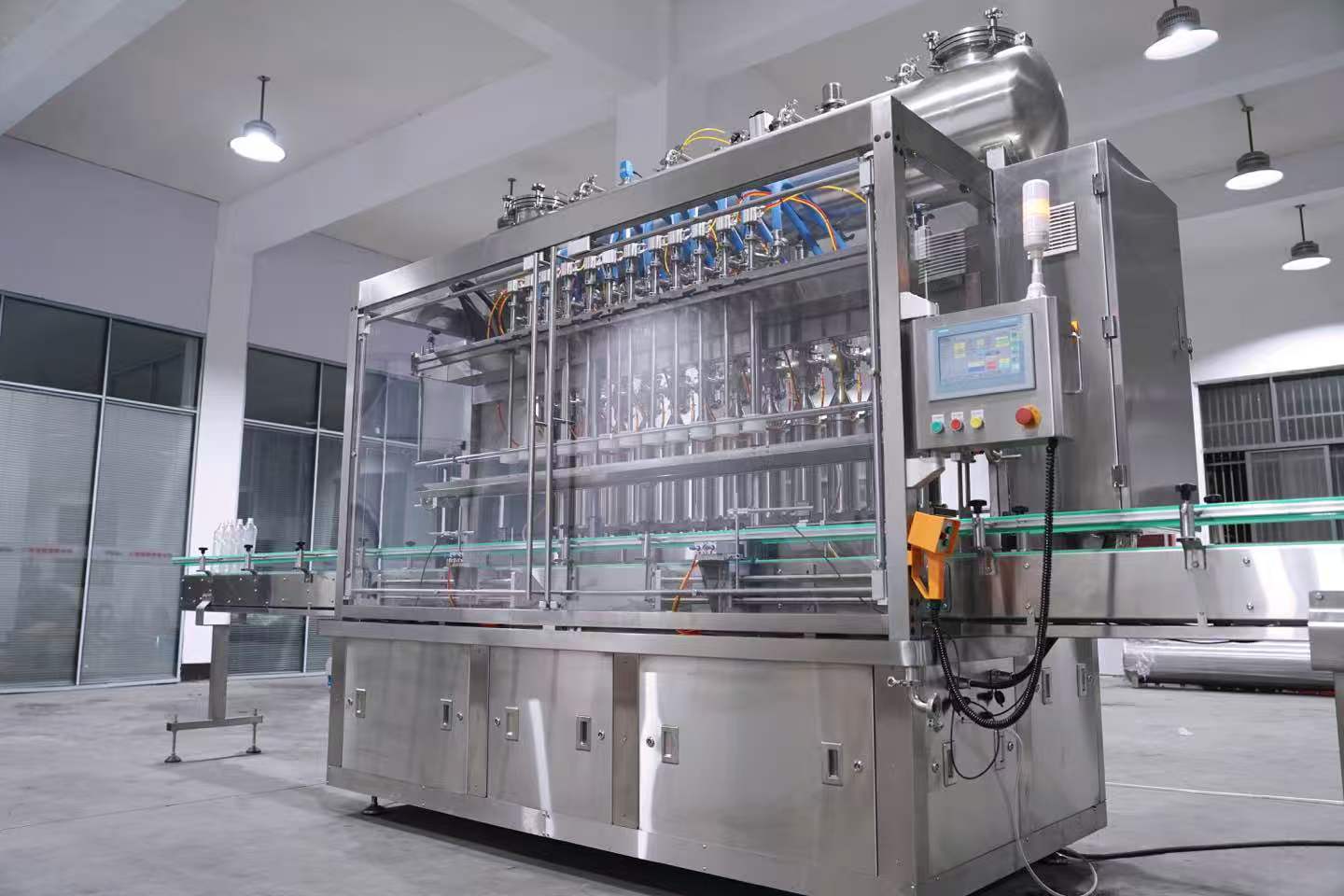
Runtech publishes its own manufacturing detail on the factory overview and tour and the CNC and manufacturing tech pages: Changzhou Run-Tech Machinery Co., Ltd. operates two bases in Changzhou, Jiangsu, with design, fabrication, assembly and testing done in-house, a workforce of 55 across engineering, machining, assembly, controls and commissioning, and an annual output of around 40 to 45 capping machines excluding cappers integrated into filling lines. Those are figures a buyer can check against a business licence. The same page says where a number is not published and offers to document it on request. That is a fair standard to hold any supplier to, and it costs nothing to ask.
Ask three questions in writing: who owns the mechanical drawings, who owns the PLC program, and who will machine a replacement part after the warranty ends. Then verify that the product range you are buying actually exists on the shop floor, under filling machines, capping machines, labeling machines and conveying and inspection equipment. A catalogue with no factory behind it is a procurement risk, not a specification.
2. Ask what the quality system checks, not just which certificate is on the wall
A certificate tells you a system was audited. It does not tell you what an inspector does on a Tuesday afternoon. Ask to see the inspection checkpoints, the record template and one completed record for a machine similar to yours.
Runtech's quality control and CE certs page sets out four checkpoints. Incoming inspection checks contact parts for material identification (SUS304 or 316L stainless where the product requires it), surfaces for cuts, deformation or residue, and electrical items for the correct type and rating against the machine's electrical design; non-conforming items are segregated so they cannot enter a build. In-process inspection covers mechanical alignment at guide rails, starwheels and transfer points, wiring against the schematic before the cabinet closes, and pneumatic tubing and servo integration. Factory acceptance testing is described in the next section. The fourth checkpoint, records and traceability, is covered below.
| Checkpoint | What to ask for | What it tells you |
|---|---|---|
| Incoming inspection | Material certificates for contact parts, an incoming inspection record | Whether wetted parts are what the quotation says they are |
| In-process inspection | The checkpoint list used on the assembly floor, a wiring check record | Whether alignment and wiring are verified before the cabinet is closed |
| Factory acceptance test | The FAT protocol, the record from a completed machine | What was actually run, for how long, and with what product |
| Records and traceability | A blank record template and one filled example | Whether a serial number can be traced back to major components |
A record that only says "checked, OK" is not a quality system. The record structure should name the asset ID and date, the inspection point, the factual observation with a measurement or photograph, the action taken with the spare part reference, and the next required interval. Runtech describes exactly this structure on its quality control and CE certs page, including traceability from a serial number back to the major components fitted to that machine.
3. Treat the factory acceptance test as a contract item
The same quality control and CE certs page states that every machine goes through a 100% FAT including a 24-hour continuous run, using sample bottles and liquid (or an equivalent test fluid), and that the record travels with the machine. The published checks include leak tests at the filling and capping stations, filling accuracy of ±0.5%, a capping pass rate of 99.8%, smooth operation of drives, guide rails and transfer points, and behaviour under continuous running. The warranty and after-sales policy repeats the 24-hour pre-shipment FAT as a standard item.
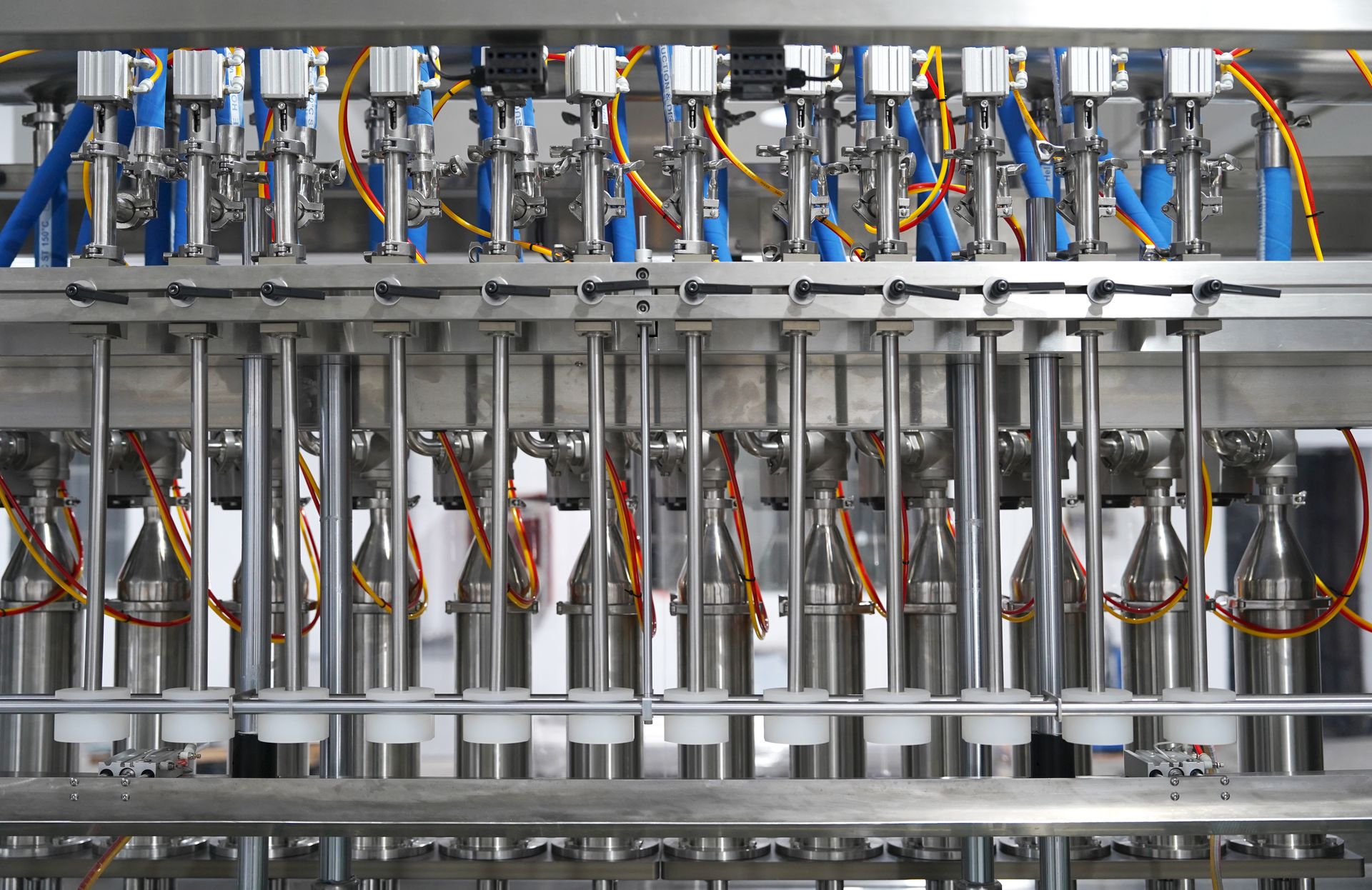
Two things belong in your order, not in a brochure. First, which SKUs run at FAT, at what speed, for how long, and what counts as a reject. Second, what the test fluid is. If your product is a foaming detergent or a corrosive bleach, water is a poor substitute.
The page is explicit about the limit of a FAT: it covers machine function and stability under test conditions only. It does not validate your recipe, shelf life or regulatory filing. The boundary is worth keeping in mind, because the rest of the validation still has to happen on your own line. Agree a real format changeover during FAT as well. Changeover time is one of the numbers most likely to be optimistic in a quotation, and the complete bottle filling line specification guide explains why the interfaces between stations matter more than the peak speed of any single machine.
4. Match certificates and contact materials to your product
Certification has two layers and buyers often conflate them. Management system certifications cover the company; product compliance documents cover the machine you will receive. Runtech lists ISO 9001:2015, ISO 45001:2018 and ISO 14001:2015, and states that an individual CE certificate is provided for each single machine, owned by the customer. Ask whether the CE documentation names your machine's model and serial number, and ask who holds the technical file.
Contact parts are the second half of this check. The spare parts and tooling support page lists SUS304 and SUS316 stainless for product contact parts, PTFE and PVDF for corrosive or aggressive products, food-grade and GMP-compliant components for food and pharmaceutical production, and seal and elastomer grades selected for the product and the cleaning process. A supplier that quotes "stainless steel" without a grade has not yet specified a machine.
| Product | Contact parts to specify | Document to request and where to look |
|---|---|---|
| Liquid chlorine bleach, quaternary ammonium disinfectants, hydrogen peroxide cleaners | PTFE or PVDF wetted parts, compatible seal grade | Material certificates; see disinfectant and bleach packaging |
| Dishwashing liquid, laundry detergent, hand soap | SUS304 or 316L; seals compatible with surfactants | Foam behaviour in the FAT; see detergent and dishwashing bottling |
| Syrup, edible oil | SUS316, seals rated for the fill temperature | Oxidation and crystallization controls; see syrup and edible oil packaging |
| Chili paste, fruit jam, high-viscosity sauces | SUS316, anti-drip nozzle specification | Volumetric accuracy at product viscosity; see viscous sauce and paste filling |
The application pages name the products a line actually handles. Surface cleaner and spray capping deals with trigger nozzle orientation and leakage, while body lotion and cream packaging and shampoo and hair conditioner lines cover the personal care end. If a supplier cannot discuss your product by name, the material specification is still generic.
5. Read the warranty and after-sales terms line by line
Runtech's warranty and after-sales policy gives an 18-month machine warranty, lifetime technical support, 24/7 online support from the sales and technical team, critical spare parts held in standardized inventory and shipped internationally, and engineers dispatched on site for installation and operator training. It also says, twice, that the terms which govern the order are those in the quotation, sales agreement and warranty certificate, and that for a project with several machines each unit and its term should be listed in the quotation.
That last point is the one to act on. "18 months" is a headline until you know when the clock starts: at shipment, at installation, or at signed acceptance. Ask for the exclusions in writing (wear parts, consumables, damage from incorrect utilities or unapproved modifications), the response time for a line-down call, who pays for travel and accommodation, and which language the support is delivered in. Ask what happens after the term ends: which parts are stocked, where they ship from, and what a line-down order costs. A troubleshooting and maintenance library and a FAQ are useful, but the contract is what you will rely on.
6. Price the spare parts, change parts and tooling, not only the machine
A filler or capper rarely stops because of the frame. It stops because of a seal, a chuck insert or a sensor. The spare parts and tooling support page lists the wear parts by station: nozzle seals, piston seals, O-rings, valve cores and seats, filter elements and pump bearings on filling machines; solenoid valves, timing belts and drive motors on capping machines; proximity and photoelectric sensors, servo drives and PLC modules on labeling machines. Genuine parts carry a 12 to 18 month warranty, are matched to the machine's model and serial number including legacy machines, and are sold direct from the factory.
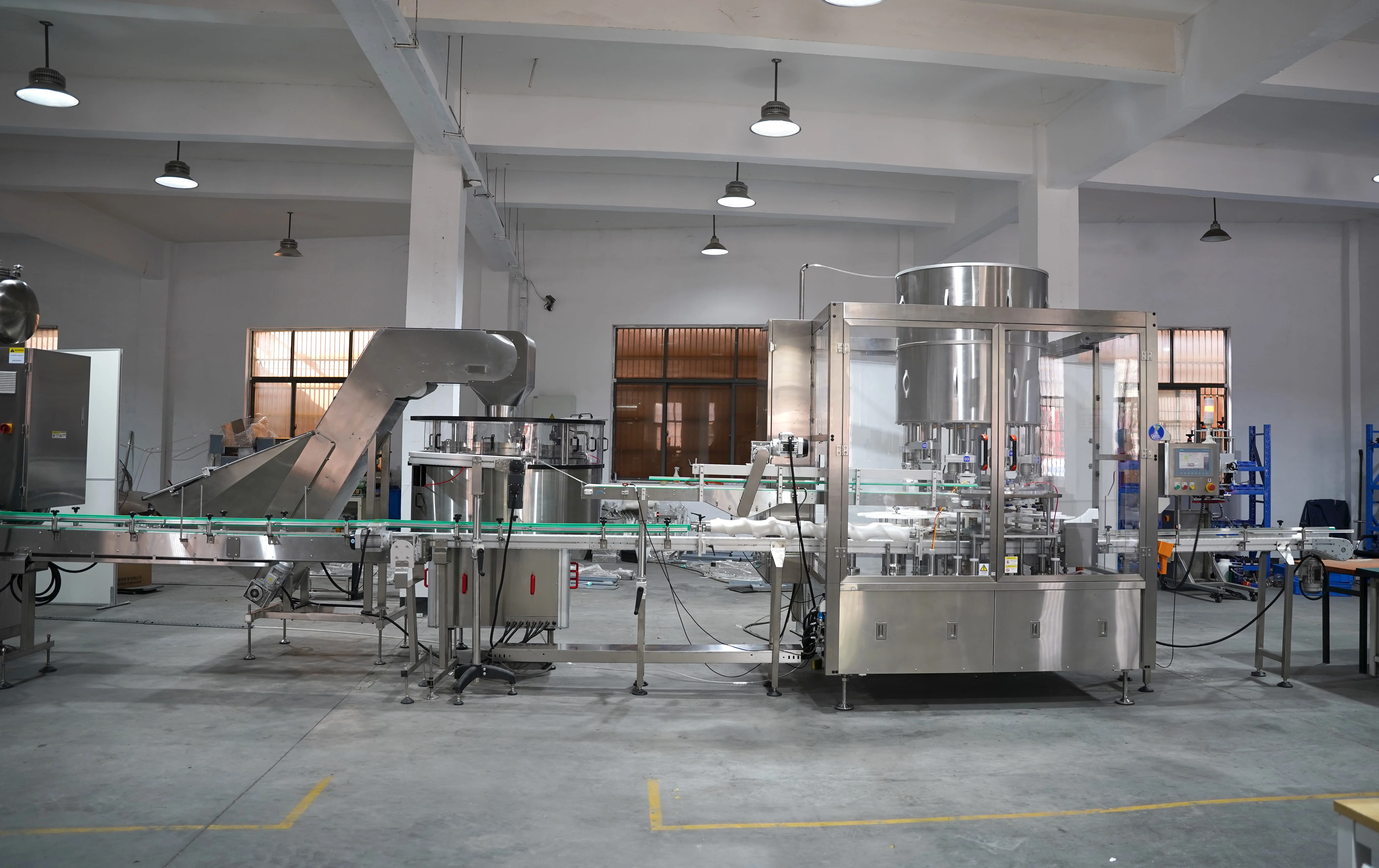
Change parts are a separate line item and should be quoted with the machine. The same page lists chucks and rubber inserts, capping heads, star wheels, guide rails, custom nozzles, cap orienters and cap chutes, built to order for the bottle and cap format with PLC programming available, and states that each set is checked against the customer's sample container before dispatch. Ask for the recommended spare parts list and the change parts list with the quotation rather than after installation, and ask for prices, lead times and whether the parts are held in stock. The catalogs and technical manuals page is where the documentation for a delivered machine should be collected.
7. Map the project stages and name each deliverable
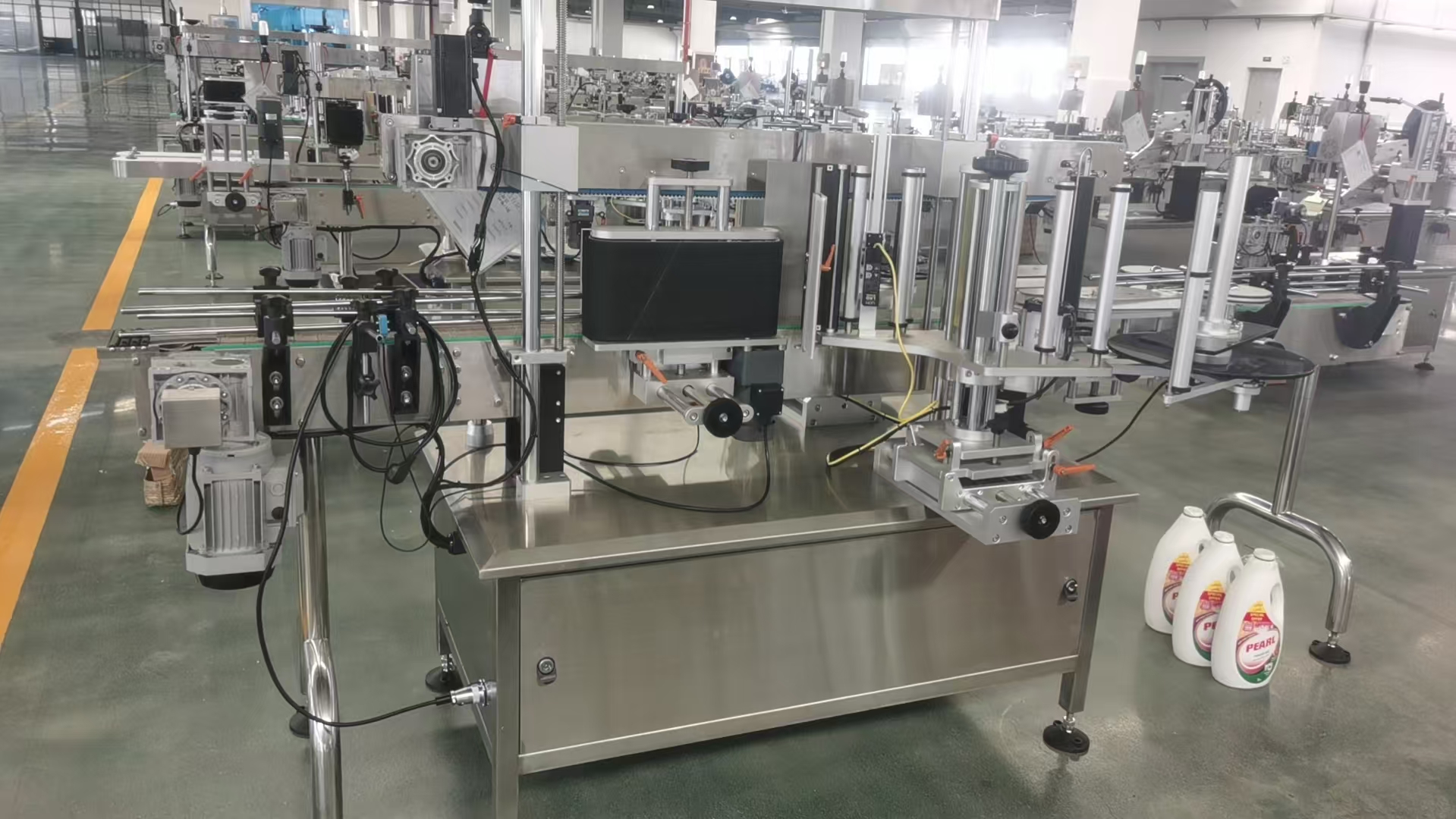
Buyers who assemble a line from several vendors know the failure mode: between machines, nobody owns the seam. The turnkey project process page sets out eight stages, each with a named deliverable and an action for the buyer.
| Stage | What you receive | Your action |
|---|---|---|
| 1. Requirements and samples | Confirmed requirements checklist, named technical contact | Send bottle and cap drawings or samples, product, target output, voltage and floor area |
| 2. 3D layout and quotation | 3D line layout and detailed quotation within 24 hours | Confirm scope, model mix and floor plan |
| 3. Sample trial | Video trial report on your own product, compatibility analysis | Approve the configuration before any metal is cut |
| 4. Manufacturing | Build records, material confirmation, factory access | Confirm the build against the approved configuration |
| 5. Factory acceptance test | 24-hour continuous FAT record | Witness or review the run and the reject criteria |
| 6. Export packaging | Packing list and protection method | Confirm destination requirements and spare parts shipment |
| 7. Installation and training | On-site commissioning and operator training | Prepare utilities, floor space and operators |
| 8. After-sales support | Permanent support channel and spare parts route | Agree the response path and keep the records |
Use that table as a comparison sheet when two quotations differ in price. The cheaper one is often cheaper because stages 3, 5 or 7 are missing. Look hardest at the sample trial. A video trial report on your own product, before any metal is cut, is the cheapest place to find out that a pump cap dip tube or a tapered bottle will not track through the machine. The filling and capping machine buying guide for multiple bottle sizes and the monoblock versus separate filler and capper comparison show how those decisions change the layout and the handoffs.
8. A due-diligence checklist to send with your RFQ
- Business licence, factory address and a description of which operations are in-house.
- Ownership of mechanical drawings, PLC source program and assembly jigs.
- The four quality checkpoints, a blank inspection record template and one completed record.
- Contact part material grade for every wetted component, with certificates.
- Seal and elastomer grade matched to the product and cleaning process.
- FAT protocol: SKUs, speed, duration, test fluid, reject criteria and one full changeover.
- CE documentation naming the machine model and serial number, and who holds the technical file.
- Warranty term with start date, exclusions, response time, travel cost and support language.
- Recommended spare parts list with prices, lead times and stock status.
- Change parts list for every bottle and cap format, checked against your samples.
- Project stage sheet with a named deliverable and a named contact for each handoff.
- Reference lines running a product of similar viscosity, foaming behaviour and closure type.
That list is longer than most RFQs, but every item maps to a cost that otherwise appears after installation. The capping machine buying guide, the liquid filling machine buying guide and the bottle labeling machine buying guide cover the machine-side checks; this list covers the supplier-side ones.
Frequently asked questions
What should I check first when evaluating a filling machine manufacturer?
Start with the legal entity and the factory. Ask for the business licence, the factory address and which of design, fabrication, assembly and testing happen in-house. A trading company can quote the same machine, but it will not hold the drawings, the PLC program or the assembly jigs you will need later.
Is ISO 9001 enough to qualify a supplier?
No. ISO 9001:2015 certifies the management system, not the machine. Ask separately for the product compliance documents, in particular the CE certificate for the specific machine and the material certificates for its contact parts. Runtech also lists ISO 45001:2018 and ISO 14001:2015, and provides an individual CE certificate for each machine, owned by the customer.
What does a proper factory acceptance test include?
A defined set of SKUs, a stated speed and duration, a named test fluid, and reject criteria agreed before the run. Runtech runs a 100% FAT with a 24-hour continuous run on sample bottles and liquid, with leak checks, filling accuracy of ±0.5% and a capping pass rate of 99.8%. The record should travel with the machine.
Does the FAT validate my product?
No. A FAT covers machine function and stability under test conditions. It does not validate your recipe, shelf life or regulatory filing. Plan a sample trial on your own product before the build is approved, and keep your own validation separate.
Which contact parts should I specify for corrosive products?
Ask for PTFE or PVDF wetted parts and a seal grade matched to the chemical, plus material certificates. For food and pharmaceutical products, SUS316 or 316L and GMP-compliant components are the usual request. Grade the whole wetted path, not just the tank.
How do I compare two quotations that differ in price?
Put both against the same project stage sheet. The lower price often omits a sample trial, a full 24-hour FAT or on-site installation and training. Add the spare parts and change parts lists with prices and lead times, then compare the total cost of the first two years, not the machine price alone.
Request a due-diligence pack and a sample trial with your own product