
A bottle filling line is usually bought one station at a time, and that is where most specification problems begin. Each machine looks defensible on its own: the filler is sized for the target output, the capper is chosen for the closure, and the labeler for the label format. Put them on one conveyor and the line runs at the rate of the slowest station. Changeover takes as long as the least flexible machine, and a bottle that tracked cleanly through the filler may wobble at the label head. The specification has to cover the interfaces between stations, the number each one has to hit, and the tests that will be run before shipment.
1. What a complete bottle line actually includes
A complete line has four working blocks plus one that is frequently left out of the quotation. Bottles arrive in bulk and out of order, so an unscrambler or infeed turntable sets them upright and into single file. The filling station meters product into the container. The capping station applies and secures the closure. The labeling station applies the primary label. Between and around those three sits conveying and inspection, which is where accumulation, reject handling, sensors and checkpoints live. That fourth block decides whether short stops at one station cascade into a full line stop.
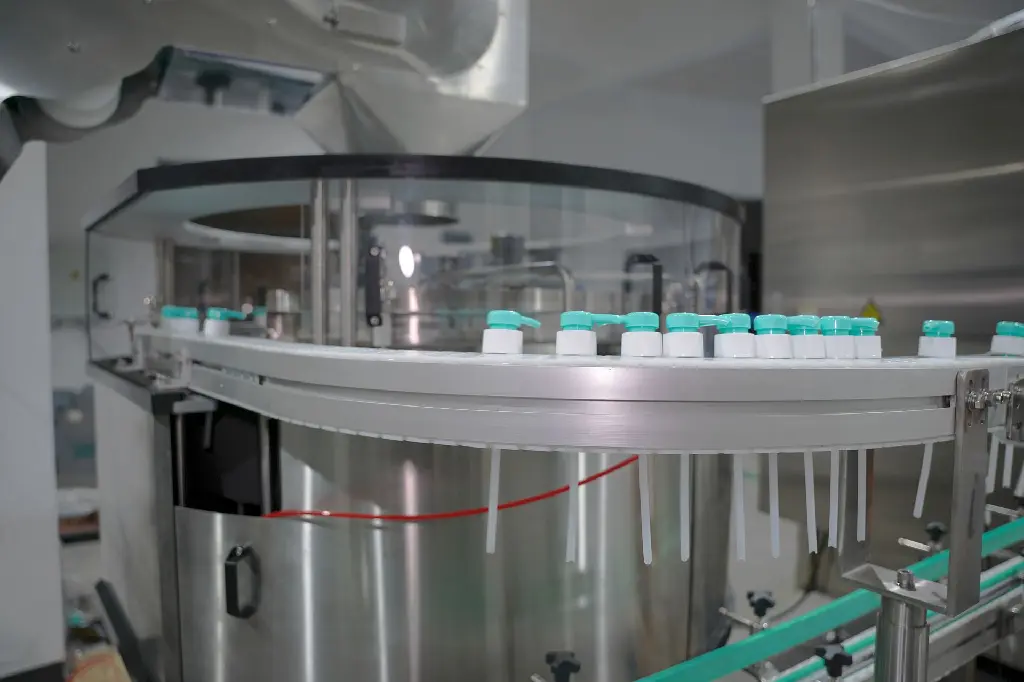
Runtech groups these under filling machines, capping machines, labeling machines and secondary packaging line integration. Specifying across those categories as one project puts the interfaces between stations in writing. A bottle unscrambler and infeed turntable is a good example: it is a small item on the bill of materials, but it sets the stability of every transfer downstream.
Draw the line as a sequence of stations with a conveyor segment between each, then mark where bottles accumulate and where they are rejected. If that diagram does not exist before the order is placed, the interfaces get settled on the factory floor.
2. Balance the line around the slowest station
Line speed is set by the slowest station, then reduced by cleaning, changeover and minor stops. Work backwards from the required net output per shift, add an allowance for stoppages, and size every station to clear that gross rate with some headroom. State which product and which bottle the quoted rate applies to: a filler that hits the number on a thin liquid will slow down on a paste.
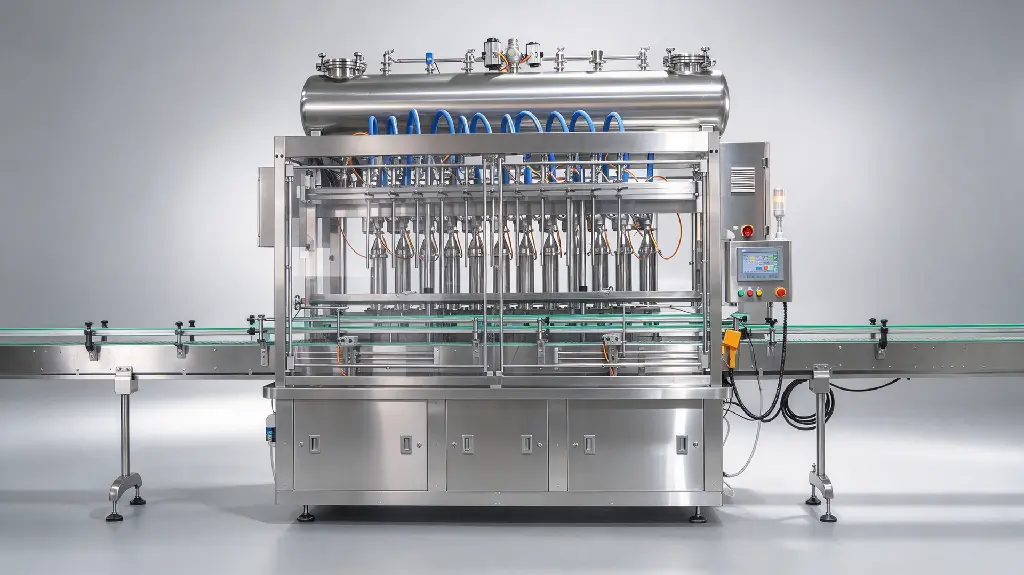
A common mistake is buying a filler rated well above the capper and labeler. The extra capacity never reaches the pallet. It just builds a queue in front of the slower machine, and the queue becomes a source of tipped bottles and label skew. Buffer conveyor absorbs short stops, but it cannot compensate for a station that is permanently slower. Where a station cannot be sped up, the honest options are to add heads, add a second lane, or lower the committed line rate.
| Station | What limits its rate | What to put in the specification |
|---|---|---|
| Filling | Fill volume, viscosity, nozzle count, nozzle motion | Volume range, viscosity at filling temperature, target BPM, container dimensions, cleaning method |
| Capping | Closure type, head count, cap feeding, torque verification | Closure drawing, cap feed method, torque range and how it is checked, change parts per cap |
| Labeling | Label format, bottle geometry, application method | Label material and size, bottle shape, front/back or wrap, speed at the label point, coding needs |
| Conveying and inspection | Accumulation length, transfer stability, reject handling | Buffer length, bottle stability at transfers, reject mechanism, sensor positions |
Two things belong in the contract for each station: what fixes that machine's rate, and the rate itself. If a supplier quotes a line rate without naming the bottle, the product and the closure behind it, the rate is not yet a specification.
3. Specify the filling station by product, not by machine name
Fillers are usually grouped by layout: linear, rotary, monoblock. For a line specification the first question is how the dose is metered, because that decides what the machine can fill at all.
Runtech's linear range covers servo piston fillers, gear pump, flow meter, following-type and servo weighing fillers. The rotary range covers liquid and paste/viscous machines, and an integrated filling and capping monoblock puts two stations on one frame. Each metering method has a product it handles well and a product that will cause trouble.
| Product | Metering approach | Notes for the line specification |
|---|---|---|
| Cream, lotion, paste | Servo piston | State viscosity at filling temperature; confirm whether the hopper needs heating or agitation |
| Sauce, honey, edible oil | Gear pump or flow meter | Confirm hot-fill temperature; check seal and hose compatibility |
| Low-viscosity liquids, chemicals | Flow meter, gravity or following-type | Check foaming behaviour and whether a diving nozzle is required |
| Large containers, product sold by weight | Servo weighing | Confirm container tare range and weighing resolution |
| Small cosmetic bottles, limited floor space | Integrated filling and capping monoblock | Fewer transfers, but check that the cap format matches the monoblock head |
For viscous products, the viscous sauce and paste filling page collects the product-side constraints in one place. Two existing guides go deeper on the machine side: how to choose a liquid filling machine for viscous products covers the product-to-meter match, and the liquid filling machine buying guide compares linear, rotary and monoblock layouts. The monoblock versus separate filler and capper comparison is worth reading before the layout is fixed, since that decision changes the conveyor and the footprint.
Viscosity is the parameter most often quoted without a temperature. Product that fills at 25 °C can behave very differently after a warm batch or a cold morning start, so the specification should name the temperature at which the stated viscosity was measured.
4. Match the capper to the closure
Closure type drives the capping station more than bottle count does. A screw cap, a lotion pump and a trigger sprayer need different handling. Pump and trigger closures carry a dip tube that has to be guided into the bottle without bending it, and the way the closure is secured is different from a threaded cap. Specifying "one capping machine" without a closure drawing leaves the hardest part of that station undefined.
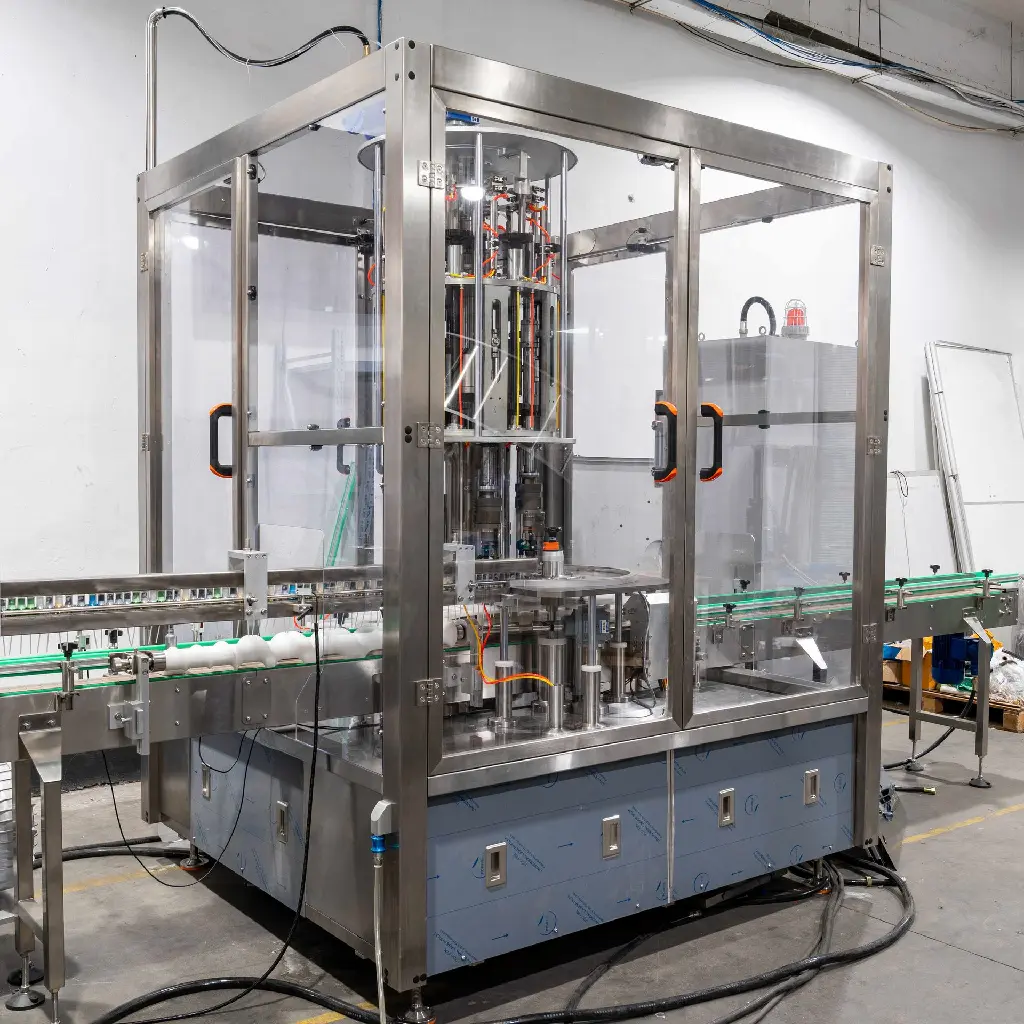
Runtech's capping machine range separates servo rotary cappers, including high-speed multi-head and non-damaging round-cap models, from specialized cap applicators such as the trigger spray pump capper and the automatic cap elevator and unscrambler. The capping machine buying guide sets out the eight checks to make before ordering, and the pump cap versus trigger cap comparison explains why those two closures cannot be treated as one format.
Torque belongs in the line specification as well as the capper settings. Loose caps, stripped threads and torque drift show up as downstream leaks and returns, and they usually trace back to a closure or a bottle neck that was never dimensioned in the RFQ. The capping torque troubleshooting guide describes what those defects look like once the line is running. Include the torque range and the method used to verify it in the acceptance criteria.
5. Choose the labeling method before you fix the conveyor
Labeling is the station most often fitted into whatever space is left, and it is the one most sensitive to bottle geometry and transfer stability. Decide the label format first, then reserve the straight conveyor length it needs.
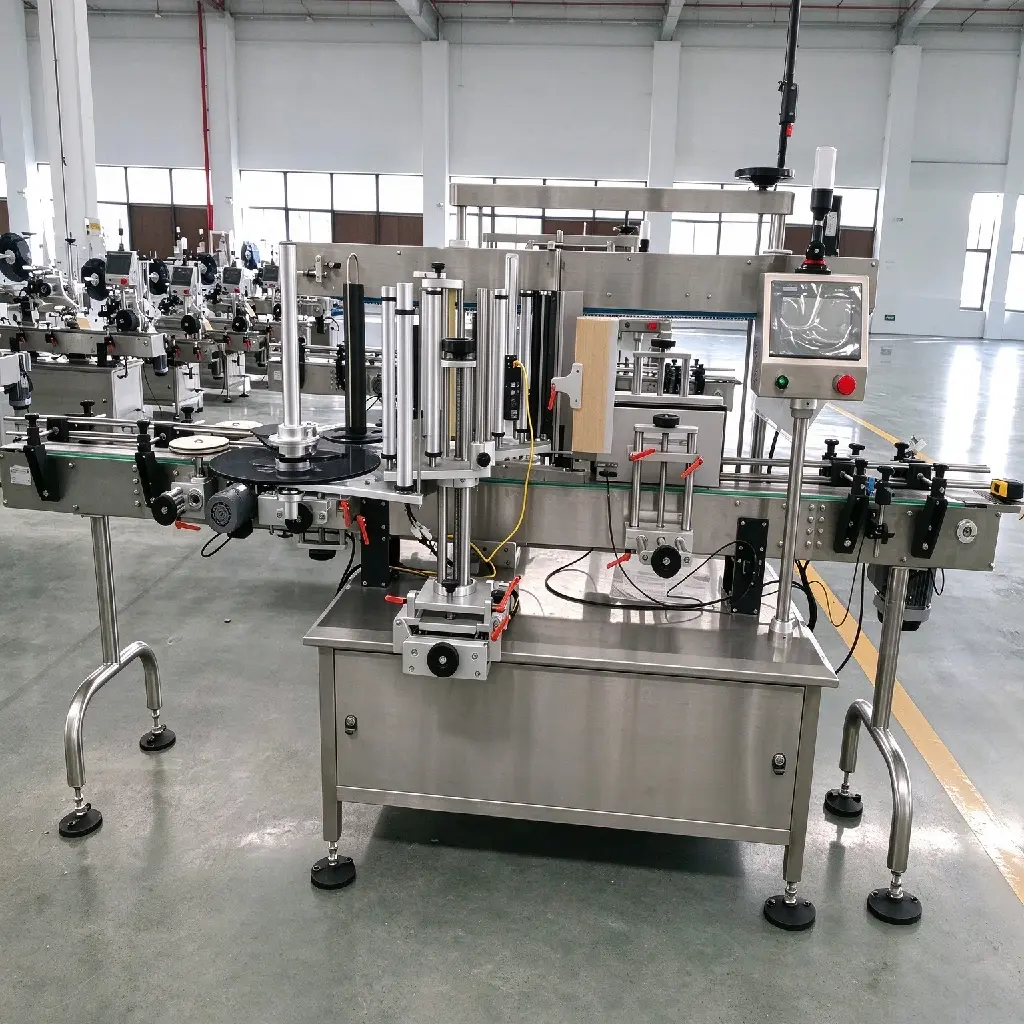
Self-adhesive labeling covers round bottles and double-sided flat bottles. Hot-melt OPP labeling includes a high-speed rotary OPP labeler for high-output lines. Shrink sleeve labeling needs a sleeving head plus a steam or electric shrink tunnel, which adds length, power and sometimes steam to the layout. All three sit under the labeling machine category, but they make very different demands on the conveyor.
Round bottles can be rolled past a label head. Flat, square and shaped bottles need positive orientation, and that usually means a longer guided section. If a date code, a vision check or a tamper-evident label is required, the space for it has to be reserved now rather than added after installation. The bottle labeling machine buying guide covers formats and pre-order checks, while the shrink sleeve labeling machine guide explains how the tunnel choice changes the line.
Bottle stability at the label point is worth testing with the real container. A bottle that is stable enough for filling can still rotate or lift slightly at a wrap-around station, and the resulting skew is often blamed on the labeler when the cause is the transfer into it.
6. A specification checklist to send with your RFQ
- Net output required per shift, the shift length, and the allowance expected for cleaning, changeover and minor stops.
- Container range for every SKU: material, diameter or width, height, neck finish, and whether the bottle is stable on a moving conveyor.
- Product data at filling temperature: viscosity, specific gravity, foaming behaviour, particulates, and whether the product is filled hot.
- Fill volume range, the accuracy requirement, and whether the container is sold by volume or by weight.
- Closure drawings for every cap, the cap feed method, and the torque or application specification.
- Label format and material, label dimensions, the face to be labeled (front, back, wrap or sleeve), and any coding or inspection requirement.
- Number of SKUs and expected changeover frequency, with change parts listed for each format.
- Utilities available on site: power, compressed air, water or steam for a shrink tunnel, and drainage.
- Floor plan, ceiling height, and access for operators and maintenance on both sides of the line.
- Acceptance tests: which SKUs run at FAT, run duration, reject criteria, and the spare parts and tooling delivered with the line.
That list is longer than most RFQs, but every item on it maps to a decision that would otherwise be made later, on site, at greater cost. The capping line layout article gives a concrete example of how much space infeed and outfeed actually need.
7. Where the specification gets tested: FAT, changeover and spares
The factory acceptance test is where the RFQ becomes measurable. Agree before the order which SKUs run at FAT, at what speed, for how long, and what counts as a reject. Include a real format changeover in the test rather than treating it as a training exercise, because changeover time is one of the numbers most likely to be optimistic in a quotation.
Ask for the recommended spare parts and change parts list with the quotation, not after installation. Wear parts on capping heads and filling valves, and the tooling for each bottle and cap format, are what decide how long a format change actually takes. Runtech's spare parts and tooling support page describes what is supplied and how it is ordered.
Documentation is part of the specification too. The turnkey project process sets out the stages from layout to commissioning, and the quality control and CE certificates page lists the checks and documentation available for an order. Confirm in writing which of these apply to your project, and keep the agreed list attached to the acceptance criteria.
8. Line configurations by production context
Configuration follows the product and the number of SKUs. The table below shows how the same four blocks are combined in four production contexts, and which parameter gets underestimated in each.
| Production context | Typical configuration | What to watch |
|---|---|---|
| Small cosmetic bottles, many SKUs | Linear filler with quick-change parts, or a compact monoblock; self-adhesive labeling for round or flat bottles | Changeover time, change-parts storage, label orientation on small diameters |
| Daily chemical and detergent bottles | Linear or rotary filler, trigger or pump cap applicator, self-adhesive or OPP labeling | Foaming, chemical compatibility of seals and hoses, dip-tube handling |
| Viscous sauces, pastes, edible oil | Servo piston or gear pump filler, product temperature stated, self-adhesive or sleeve labels | Heating or agitation, cleaning between batches, volume versus weight |
| High-output, single-format line | Rotary filler and multi-head rotary capper, high-speed OPP or shrink sleeve labeling, buffer conveying | Bottleneck balance, accumulation length, utilities for the shrink tunnel |
The product-specific pages are useful when the material drives the decision: viscous sauce and paste filling is the clearest example of a product that changes the filler, the cleaning method and the label choice at the same time. For a line with many SKUs, the number of formats matters more than the peak speed of any one station.
Frequently asked questions
What is included in a complete bottle filling line?
Four working blocks plus conveying: bottle unscrambling and infeed, filling, capping, labeling, and the conveyor and inspection equipment between them. The conveyor block is where accumulation, reject handling and sensors live, and it is the part most often left out of a first quotation.
How do I size the stations so the line is not bottlenecked?
Start from the required net output per shift, add an allowance for cleaning, changeover and minor stops, then size every station to clear that gross rate. State which bottle, product and closure the quoted rate applies to. Buffer conveyor absorbs short stops; it does not fix a station that is permanently slower.
Should I choose a monoblock or separate filler and capper?
A monoblock reduces transfers and floor space, which helps on small bottles and tight layouts. Separate machines give more flexibility when formats change often or when the two stations need different rates. The monoblock versus separate filler and capper comparison covers the trade-off in detail.
Which filling machine type is right for viscous products?
It depends on the product, not just the viscosity number. Servo piston fillers are the usual choice for creams, sauces and pastes; gear pump and flow meter approaches suit oils and thinner liquids; servo weighing suits large containers or product sold by weight. See how to choose a liquid filling machine for viscous products for the product-to-meter match.
What should a factory acceptance test cover before shipment?
The SKUs to be run, the speed and duration of each run, the reject criteria, and at least one full format changeover. Agree the spare parts and change parts list at the same time, since those items determine how the line behaves after installation.
How many SKUs can one line handle?
It depends on the change parts, the time each changeover takes, and whether bottle geometry stays stable enough at the labeler. List every SKU in the RFQ and ask for a changeover time per format rather than a single average.
Request a line proposal with your bottle, cap and label specs