
A wrap-around labeling machine enquiry usually arrives with three numbers: bottle diameter, target speed and label artwork dimensions. Those are enough to shortlist a machine and not enough to run one. The problems that appear in production come from things the enquiry rarely mentions: condensation on a cold-filled PET bottle, a film gauge that lifts at the overlap, a glue pot held ten degrees below its working window, or a half-degree taper that turns a clean wrap into a wrinkled seam.
This guide is about hot-melt OPP labeling, the roll-fed method used on high-volume water, beverage and daily chemical lines. It is the third of the three labeling technologies Runtech builds, alongside self-adhesive label applicators and shrink sleeve systems. The general bottle labeling machine buying guide covers all three. Here the focus is narrower: what to specify when a film label is cut from a reel and glued to the bottle with hot melt, and where that method stops being the right answer.
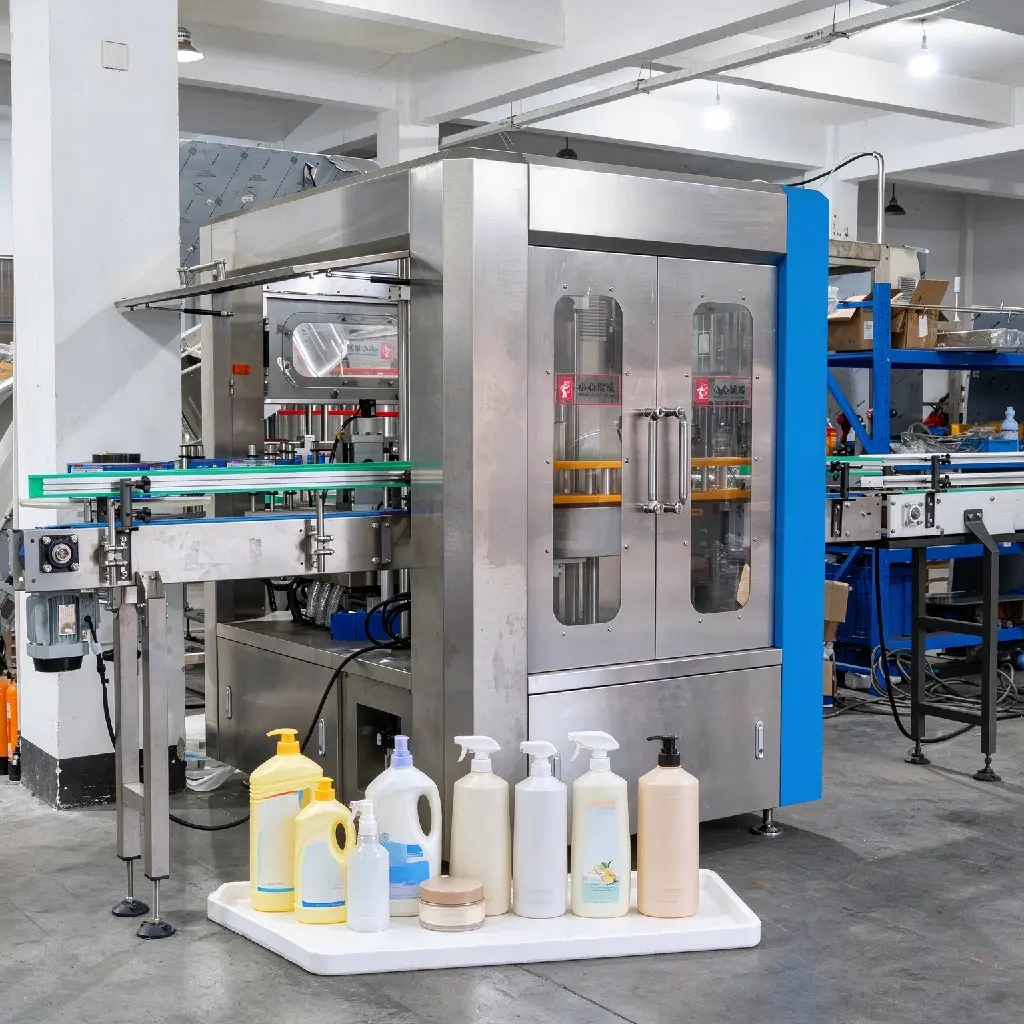
How roll-fed hot-melt labeling works
A roll-fed labeler does not handle individual labels. It feeds a continuous web of printed OPP or BOPP film from a reel, tensions it, cuts it to a fixed length, applies glue to the cut piece and transfers it to a bottle that is rotating on a pad or held between a star wheel and a belt. The bottle turns, the film wraps around it, and the two ends meet at the overlap. The BOPP hot-melt roll-fed labeling machine is a straightforward example of this layout.
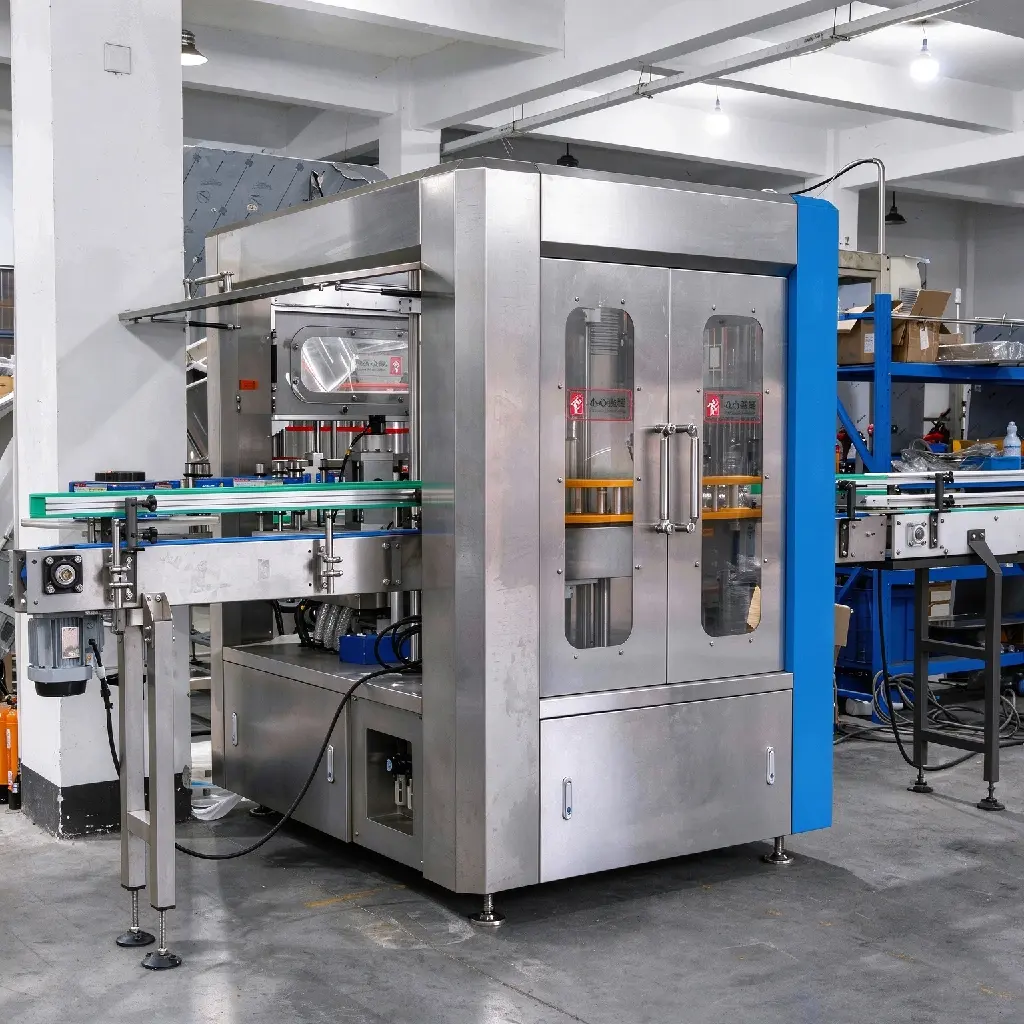
The sequence has four stations that have to stay in time with each other. The unwind and tension control present a flat web to the cutter. A rotary knife cuts each label to the set length. A glue wheel or glue drum picks up molten adhesive from a heated pot and puts it on the label. A vacuum drum or transfer belt carries the cut label to the bottle and starts the wrap. On a rotary machine, several bottle pads run at once around a carousel, so the rated output is a function of head count and rotation speed rather than a single linear cycle.
Because the label is cut to length in the machine, cut length is a recipe parameter, not a label order. That is the main economic difference from pressure-sensitive labeling, where the converter die-cuts each label and ships it on a liner. It is also the main source of setup error: cut length has to equal the bottle circumference plus the intended overlap, and both numbers change when the bottle changes.
Runtech offers this method in two mechanical forms. A high-speed OPP hot-melt labeling machine suits a single dominant bottle format at sustained volume. A rotary hot-melt wrap-around labeler handles PET daily chemical bottles at higher throughput with more heads. Both sit under the hot-melt OPP labeling machine category, with a high-speed rotary OPP labeler configuration at the top of the range.
The two-strip glue pattern and why it matters
The glue is not spread over the whole label. A wrap-around labeler applies two narrow strips, one at the leading end and one at the trailing end, so the middle of the film sits against the bottle without adhesive. This is deliberate. PET bottles change dimension slightly after filling, especially with warm product or during ambient temperature swings. A fully glued label resists that movement and blisters. A two-strip label can move with the bottle while the overlap stays bonded.
Two consequences follow, and both belong in the specification. First, glue consumption is low, but the glue has to be right. Most lines use an EVA-based hot melt with a working temperature set by the adhesive supplier, commonly in the 150 to 180 °C range at the pot. Temperature is not a free variable. Too cool and the adhesive sets before the overlap closes; too hot and it stays open, strings at the glue wheel and builds carbon in the pot. Ask the supplier to state the working window for the exact adhesive grade and to show where the machine measures it.
Second, the bottle surface has to be dry and reasonably warm. Cold-filled bottles leaving a chiller carry condensation, and hot melt will not wet a wet surface. Plants running chilled product usually add an air knife, a warming section or simply enough conveyor dwell before the labeler. If your line fills cold, say so in the enquiry; it changes the layout upstream of the machine, not the labeler itself.
The overlap is the weak point of the whole method. It is a visible seam, it is the only place the label is held at both ends, and it is where a wrinkled or skewed label starts. Glue wheel width, glue film thickness and the pressure of the wrap-down belt all affect it. When samples come back from a factory acceptance test, look at the overlap first, under raking light, on bottles from the middle of the run rather than the first ten.
Container geometry: where wrap-around fits and where it fails
Roll-fed wrap-around labeling is a cylindrical-bottle method. The label is cut to a fixed length and pulled around a constant radius, so the container needs a straight, circular cross-section over the full label height. PET water bottles, HDPE detergent bottles and round shampoo bottles are the natural fits. These are the formats running on detergent and dishwashing bottling lines and shampoo and conditioner lines.
Taper is the first limit. A bottle that narrows toward the shoulder can still be labeled, but only below the point where the taper begins, and the label has to be cut for the diameter at that height. A taper across the label band produces slack at one edge and a wrinkle at the other. If the artwork needs to run high on the shoulder, wrap-around is the wrong method.
Square, oval, flat-sided and handled containers are out of range for a standard roll-fed head. The film cannot follow a changing radius, and the overlap will not sit flat on a corner or a panel break. Those formats go to a self-adhesive label applicator, which can place separate front and back labels on flat panels, or to a shrink sleeve labeling machine, which conforms to the container in a heat tunnel. The labeling machine category groups all three so the format decision comes before the machine decision.
There is one more geometric check that buyers skip. Bottles from two suppliers can share a nominal diameter and differ by a millimeter in the finished part, because of mold wear or blow-molding conditions. That millimeter changes the circumference by about three, which changes the required cut length. If you dual-source bottles, label samples from both suppliers during the trial, rather than only the one that arrived first.
Film stock: OPP, BOPP and gauge selection
OPP is oriented polypropylene; BOPP is the biaxially oriented version, stretched in both directions during manufacture. Both are used for roll-fed labels, and both are supplied as printed reel stock rather than die-cut labels. BOPP has better dimensional stability and a flatter web, which helps registration on high-speed lines. OPP is common where cost per label dominates. Your converter will choose between them, but the choice belongs in the machine specification because gauge, stiffness and surface treatment affect how the web feeds and cuts.
Gauge is the first number to settle. Thin film, in the range of roughly 30 to 50 micrometres for many label applications, feeds easily and costs less, but it is limp: it can flutter at the transfer drum, stretch under tension and show every imperfection in the bottle surface underneath. Heavier film holds its shape and gives a stiffer, more rigid wrap, at higher cost and with more pronounced memory at the overlap. Ask for samples in two gauges and run both. The right gauge is the thinnest one that survives your line speed without fluttering or curling, not the thinnest one the converter can supply.
Surface treatment matters more than most buyers expect. The face on which the hot melt lands has to accept the adhesive, and corona treatment level, lacquer, varnish and any overprint all change that. A label that prints beautifully can still fail at the overlap because the glue is bonding to a varnish rather than to the film. Specify which side receives the glue stripes and have the converter confirm the treatment on that side. Where the line runs in a cold or dry environment, static on the film web is worth checking too; an ionising bar or humidity control is a small addition at specification time and a nuisance to retrofit.
Print registration is the other film-side issue. Roll-fed labels are cut to a fixed length with a printed eye mark guiding the cutter, so the converter has to hold repeat length within a tolerance the machine can track. Confirm the eye-mark specification, the print repeat tolerance and the sensor type before the reel is ordered. A label with good artwork and a drifting repeat will produce skewed overlaps all shift long, and no amount of glue adjustment will fix it.
Cut length, registration and line speed
Cut length is bottle circumference plus overlap. On a 60 mm diameter bottle the circumference is about 188 mm; with a 10 mm overlap the cut lands near 198 mm. That arithmetic is simple, and it is worth doing explicitly for every SKU, because the machine stores it as a recipe and a wrong value shows up as a gap or a double-thick seam rather than an obvious fault.
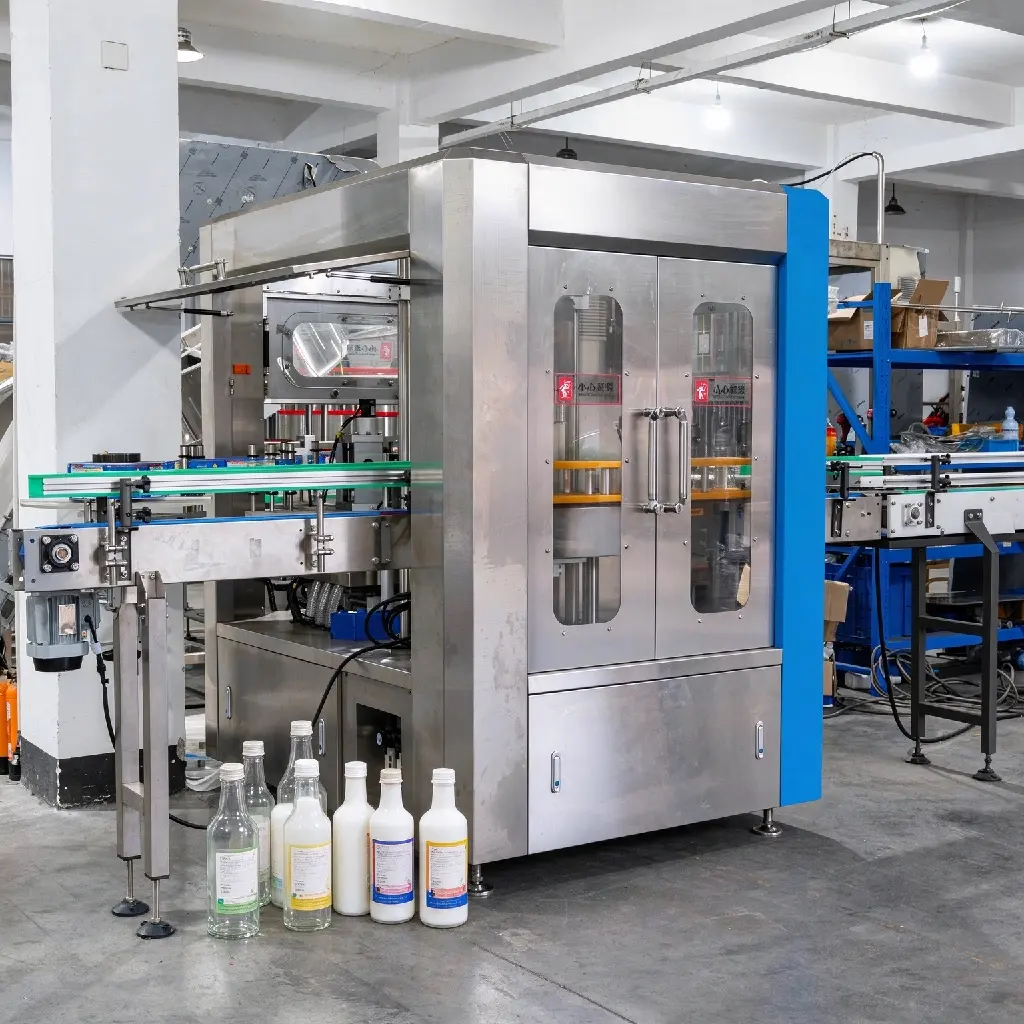
Registration is what keeps the cut in the right place relative to the print. The eye-mark sensor reads each repeat and trims the knife phase, so the artwork sits where the artwork should sit. Two things degrade it: variation in the printed repeat and slip in the web tension. Both are usually converter problems that present as machine problems. When a line will not hold registration, measure the reel before adjusting the labeler.
Speed changes the failure modes. At low output the operator can see a bad overlap and pull the bottle. At several hundred bottles per minute, which is the range rotary wrap-around machines are built for on beverage and high-volume daily chemical lines, a two-strip glue joint has a fraction of a second to close and set. That is why high-speed OPP hot-melt equipment is specified with tighter glue temperature control, more consistent bottle handling and a longer, more controlled wrap-down section than a slow machine needs.
Treat the rated speed as a number tied to a stated bottle and label, not a property of the machine. Ask what diameter, what gauge and what label length the figure was measured with, then derate for your hardest SKU. A line built around one 500 ml bottle and one film stock will hold a higher sustained rate than the same machine running five formats with reel changes between them. If you need that flexibility, the complete line specification guide sets out how to balance stations around the slowest one.
Changeover: what a bottle diameter change involves
A self-adhesive labeler changes format by loading a different label reel and adjusting a few guides. A roll-fed wrap-around labeler changes more parts, which is the trade for cheaper labels. Expect to touch the cut length in the recipe, the bottle handling parts that locate the container (star wheel, guides, pads or belts), the glue wheel height, and the timing between the transfer drum and the bottle rotation. On a rotary machine the number of heads stays fixed; what changes is how each head presents the bottle to the film.
That is why this method favours long runs. A water plant running one format for three shifts gets the lowest label cost in the plant. A daily chemical contractor running eight SKUs in short batches spends the saving on changeover labor and on film left on partly used reels. If your mix looks like the second case, cost the changeover time honestly before comparing it with a self-adhesive applicator, which will have a higher label cost and a shorter change.
The practical way to specify this is a format matrix, the same discipline used when specifying a filling and capping machine for multiple bottle sizes. One row per SKU: diameter at the label band, label height, cut length, film gauge, glue grade and expected run length. Ask the supplier to state which parts change for each row and to quote a changeover time measured on your two most different formats. A single "ten minutes" figure measured between two near-identical bottles is not useful.
Cleaning belongs in the changeover conversation too. The glue pot, glue wheel and doctor blade collect carbon and stray adhesive, and they need a scheduled clean rather than an occasional one. Hot melt does not wash out with water. Ask what the cleaning routine is, how long it takes, and which parts are consumable. This is also where the labeling problems guide becomes relevant: wrinkles, skewed labels and bubbles have different causes on a glued film label than on a self-adhesive one, and the diagnosis starts with the glue and the web, not the bottle.
Cost per label: film, glue and liner waste
The reason to choose this method is the label. A pressure-sensitive label carries a silicone-coated liner that you pay for, ship, wind up after dispensing and then dispose of. A roll-fed OPP label is just film, cut to length in the machine. On long runs the difference per thousand bottles is material, and it grows with label area because the liner scales with the label too.
Set against that are costs the quote does not always itemise. Hot melt adhesive is a consumable. The glue pot draws power during a warm-up period before the line can start, and again after an interruption. Film reels carry a minimum order quantity, and short runs leave part-used reels in stores. Changeover takes longer. Cleaning takes labor and parts. None of these erase the film saving at high volume; all of them matter at low volume, which is why the break-even point sits at a different run length for every plant.
The honest comparison is cost per thousand good bottles, not cost per thousand labels. A label that fails at the overlap is a rejected bottle or a rework step, and a line stopped for a glue pot clean is lost output. When you build the business case, put the film saving on one line and put glue, warm-up energy, changeover labor, cleaning and an allowance for start-up waste on the other. For high-volume body lotion and cream packaging or detergent formats the first line usually wins clearly. For a short-run, multi-SKU cosmetics schedule, run the numbers before committing.
Decision table: wrap-around vs self-adhesive vs shrink sleeve
| Criterion | Hot-melt OPP wrap-around | Self-adhesive (pressure-sensitive) | Shrink sleeve |
|---|---|---|---|
| Label supply | Printed film reel, cut in machine | Die-cut labels on a liner | Printed sleeve on a reel |
| Container shape | Straight round, constant diameter | Round, flat, oval, tapered, most shapes | Almost any shape, including contoured |
| Graphics coverage | Full wrap with a glued overlap | Front, back or wrap, panel by panel | Full 360° with tamper band option |
| Label cost at volume | Lowest, no liner | Highest, liner included | Highest, plus tunnel energy |
| Line speed ceiling | High, rotary machines built for volume | Medium to high | Medium, tunnel sets the pace |
| Changeover | More parts: cut length, handling, glue | Fastest, reel and guides | Sleeve reel, tunnel settings |
| Extra equipment | Glue pot, temperature control | None | Steam or electric shrink tunnel |
| Best fit | One or few round formats, long runs | Many SKUs, shaped bottles, short runs | Full-body graphics, shaped bottles |
Use the table as a filter, not a ranking. If the bottle is square, the first column is gone. If the artwork must cover the shoulder, the first column is gone again. If the schedule is eight SKUs a day, the changeover row decides. The general labeling buying guide covers the same three technologies from the buying-guide side; this table is the narrower engineering view.
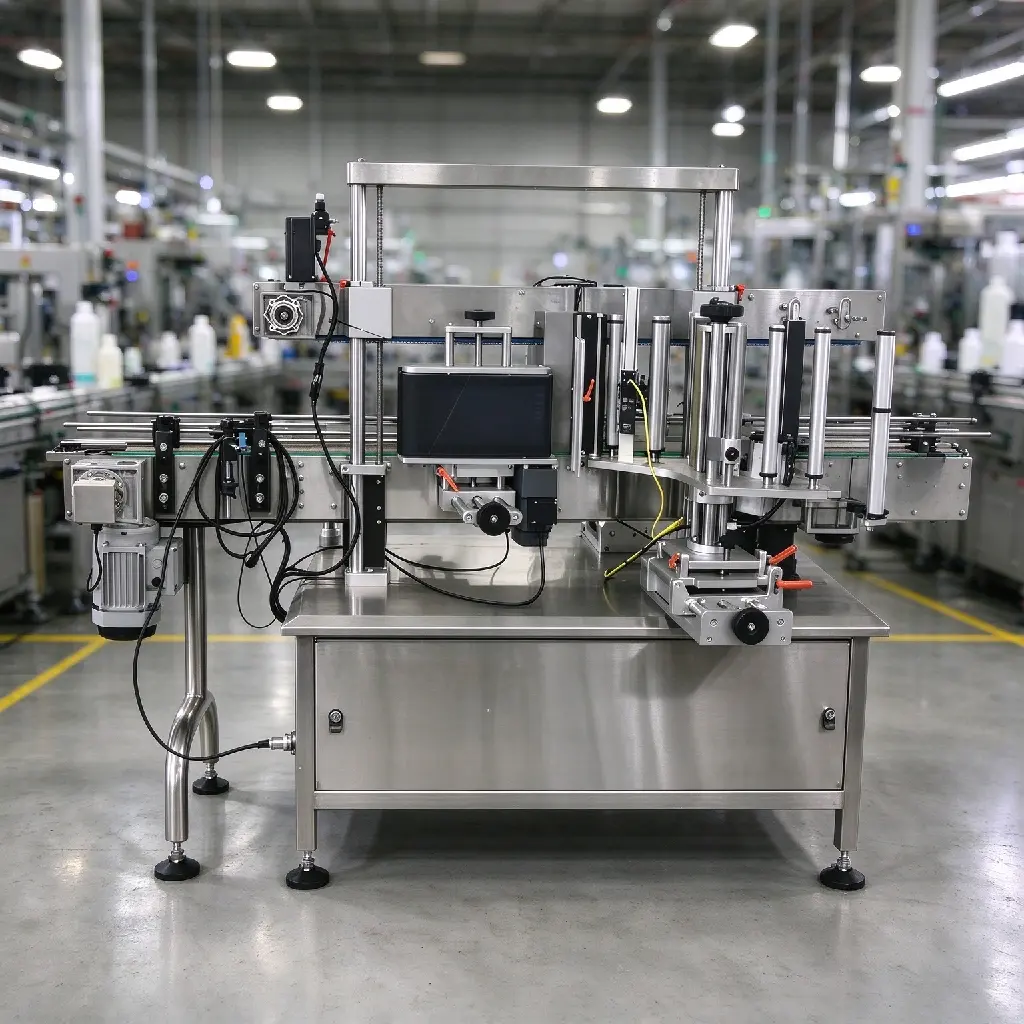
Pre-order checklist and acceptance test
Specification is where most of the risk sits, so write it down before asking for a quote. Cover the bottle at the label band (diameter and tolerance, taper, material, surface condition and temperature at the labeler), the label (film type, gauge, print repeat tolerance, eye mark, which face gets glue), the adhesive (grade, working temperature, supplier), and the run profile (SKUs, run lengths, changeover frequency, sustained speed versus peak). Add the upstream conditions: cold fill, condensation, dust, and how much straight conveyor exists before the labeler.
Then put the same items into the acceptance test. Run your hardest SKU, with your film, your bottles from both suppliers if you dual-source, at sustained speed for a full shift rather than a ten-minute demonstration. Check the overlap under raking light, check registration at the start and end of the reel, check glue behavior after a simulated stop and restart, and measure the changeover between your two most different formats. Record the reject count and its causes.
Three details are worth writing into the contract. Ask for the glue temperature control and measurement points to be listed. Ask for the spare and wear parts list with prices, including the glue wheel, knife and vacuum drum components. Ask for the electrical and mechanical drawings to match the delivered machine, so a replacement part can be ordered against a serial number eighteen months later. These are the same checks a buyer applies when evaluating a filling machine manufacturer; they cost nothing at order stage and a great deal to add afterwards.
Finally, send samples. A specification sheet cannot describe how a particular film behaves on a particular bottle at a particular glue temperature. Send a sleeve of bottles and a printed reel from the converter you intend to use, and ask for labeled samples back before you sign off. The machine that handles those samples is the one you are buying.
FAQ
Can a wrap-around labeling machine label square or oval bottles?
Not with a standard roll-fed head. The film is cut to a fixed length and wrapped around a constant radius, so a changing radius produces slack, wrinkles or a failed overlap. Square, oval, flat-sided and handled containers go to a self-adhesive applicator for separate front and back labels, or to a shrink sleeve system with a heat tunnel.
Is OPP film cheaper than self-adhesive labels?
At volume, yes. A pressure-sensitive label includes a silicone liner that is paid for, shipped and discarded. A roll-fed OPP label is film cut to length in the machine. The comparison has to include glue, glue-pot warm-up energy, longer changeover and cleaning, so the advantage narrows as run length falls and SKU count rises.
Why is glue applied only at the two ends of the label?
The middle of the film is left free so the label can move with the bottle. PET bottles change dimension slightly after filling and with ambient temperature. A fully glued label resists that movement and blisters, while a two-strip bond holds the overlap and lets the panel sit flat.
What causes a wrinkled or skewed overlap?
Usually one of four things: a cut length that does not match the bottle circumference plus overlap, a bottle taper across the label band, glue outside its working temperature window, or a printed repeat that drifts so the eye-mark sensor loses registration. Check the reel and the bottle diameter before adjusting the glue settings.
Does a cold-filled line need anything extra before the labeler?
Yes. Condensation on the bottle prevents hot melt from wetting the surface. Chilled lines typically add an air knife, a warming section or enough conveyor dwell for the bottle to reach ambient temperature. This belongs in the layout upstream of the labeler, so state the fill temperature in the enquiry.
How many formats should one roll-fed machine handle?
That depends on run length more than on count. One or two round formats in long runs suit the method well. Many short-run SKUs spend the label saving on changeover labor, part-used reels and cleaning. Build a format matrix with cut length, handling parts and changeover time for each SKU before deciding.
Every number in this guide is a starting point for a trial, not a substitute for one. Send your bottles and a printed reel, and specify against the samples that come back.