
A wrinkled label is rarely a label problem. On a bottling line, a defect that shows up at the label head often starts one station earlier, at the bottle infeed, the film reel or the shrink tunnel. Slowing the machine down usually hides the cause for one shift and brings it back on the next. The faster route is to work backwards through four stations: feed, orient, apply and finish. Each station has a small set of variables, and most label defects map to one of them.
This guide covers the three label technologies used on Runtech lines: self-adhesive, hot melt OPP/BOPP film, and shrink sleeve. It is written for operators and maintenance engineers who already have equipment running. If you are still choosing a machine, start with the bottle labeling machine buying guide, and use this guide once the line is running.
Start with the station, not the symptom
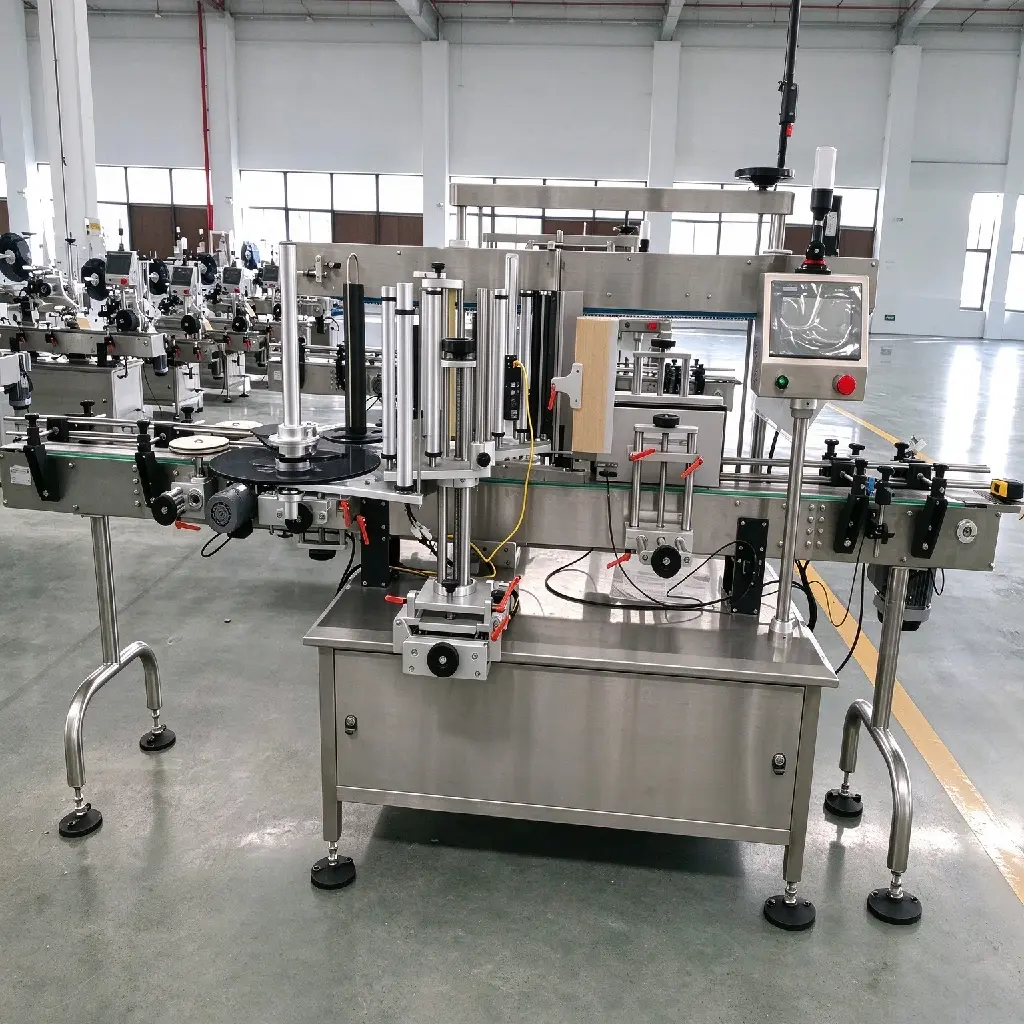
Every labeling machine repeats the same sequence. A label is separated from a roll or cut from film, the bottle is positioned, the label is applied, and the bond is finished by pressure, cooling or heat. A defect at the last station can be caused by a setting at the first. Skewed cuts on a sleeve, for instance, become visible only after the tunnel shrinks the film, but the cause sits at the cutter.
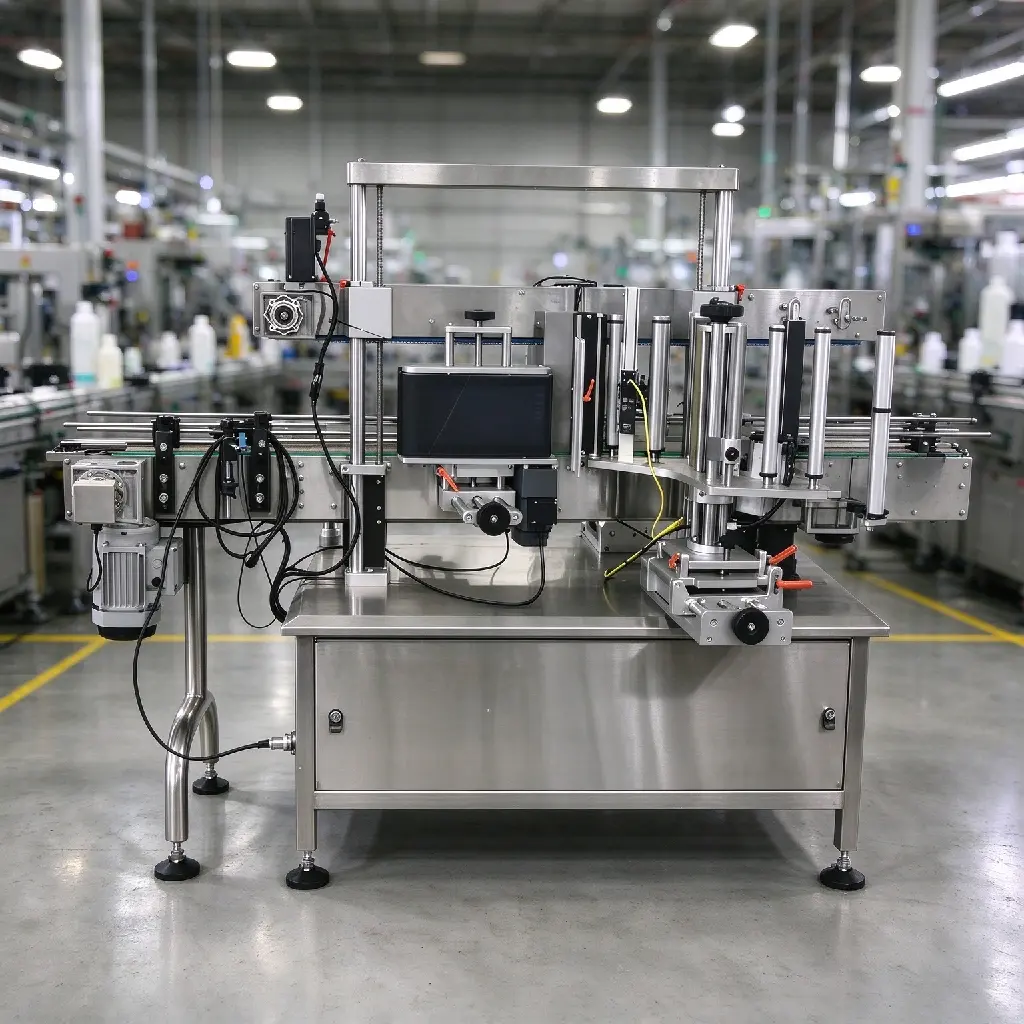
Write down the station before touching a setting. Two questions narrow most cases quickly. Did the defect appear after a changeover, a new label lot, or a maintenance action? Is it present on every bottle or only at one position in the cycle? A defect on every container points to a setup value. A defect every eighth bottle on a rotary machine points to a single head, a worn gripper or a dirty sensor.
The filling machine and capping machine upstream matter here too. A bottle that arrives wet, ovalised by a side belt, or with a cap torque that tilts the neck will not hold a label squarely no matter how well the labeler is set. Our guide to nozzle dripping on liquid and paste lines covers the wet-bottle case; the same logic applies to condensation on chilled PET.
Three label technologies fail in different ways
The failure modes are not interchangeable. A remedy that works on a self-adhesive label, such as more wipe-down pressure, will do nothing on a shrink sleeve and can tear an ultra-thin OPP film.
| Technology | Typical defects | Main variables | First thing to check |
|---|---|---|---|
| Self-adhesive (pressure sensitive labeling machines) | Bubbles, wrinkles, skewed placement, double feeds, missed labels | Dispense-to-bottle speed sync, wipe pressure, sensor type, label liner, static | Bottle rotation speed vs label feed speed |
| Hot melt OPP/BOPP (wrap around labeling machine) | Dog-ears, edge lift, film stretch, static misfeed, glue strings | Glue temperature, film tension, cutter condition, static elimination, vacuum drum | Glue temperature control and ioniser output |
| Shrink sleeve (shrink sleeve labeling machine) | Shoulder wrinkles, dog-ears, floating sleeves, scorched edges, distorted graphics | Cut squareness, sleeve height, tunnel heat distribution, film shrink ratio | Cut edge and sleeve vertical position before the tunnel |
The table is a starting point, not a diagnosis. A wrinkle on a round cosmetic bottle and a wrinkle on a PET water bottle can look identical and have opposite causes. The sections below separate them.
Wrinkles and bubbles on self-adhesive round bottles
On a round bottle labeling machine, the label is dispensed while the bottle rotates. If the bottle surface speed and the label feed speed do not match, the film is either stretched or compressed at the moment of contact. Stretching shows up as a fine diagonal wrinkle near the trailing edge. Compression shows up as a bubble or a ridge.
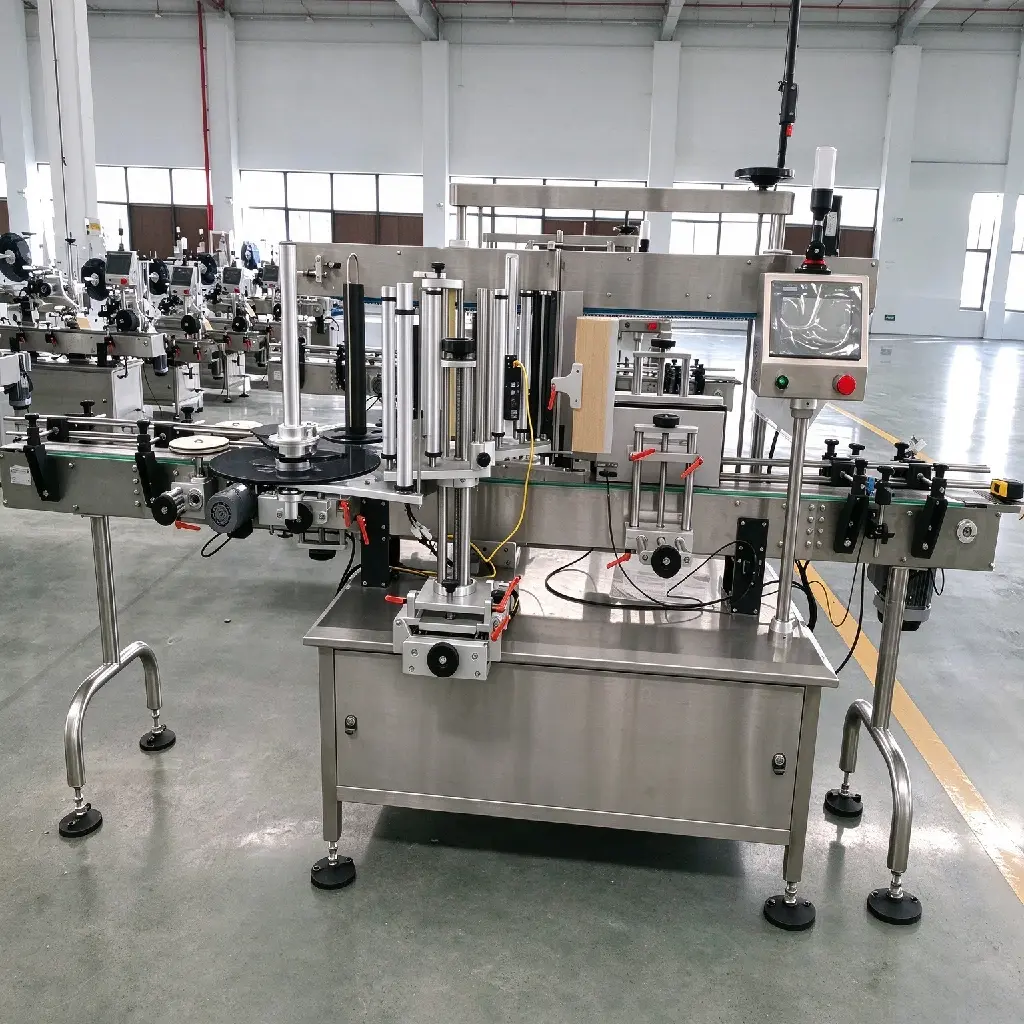
The High Speed Automatic Labeling Machine for Round Plastic Bottles uses a servo-driven rotating mechanism that synchronises bottle spinning speed with label dispensing speed. That is the check to make first: confirm the recipe still matches the bottle diameter after a changeover. A diameter entered incorrectly by a few millimetres changes surface speed enough to leave a visible crease at 100 bottles per minute.
Bubbles are a separate mechanism. Air trapped between the label and a curved, high-gloss surface needs to be pushed out from the centre towards both edges. The Automatic Round Bottle Sticker Labeling Machine uses a flexible silicone pressing belt that rolls from the centre outwards. If bubbles cluster at one edge, inspect the belt for wear or contamination before adjusting dispense speed. A hardened or nicked belt presses unevenly and leaves a repeatable pattern in the same place on every bottle.
Keep the published envelope for these two machines next to the line sheet: 20-130 bottles per minute adjustable, +/-1 mm labeling accuracy, bottle diameter 20-120 mm, bottle height 50-350 mm, label width 15-180 mm, PLC plus servo motor plus photoelectric detection, 220 V 50 Hz single phase, 2.0 kW, 450 kg, and 2200 x 1050 x 1680 mm overall. A label wider than 180 mm or a bottle outside 20-120 mm is outside that envelope, and no amount of pressure adjustment will make it conform.
Face stock matters as much as the machine. The same equipment accepts paper, PVC, PET and synthetic paper self-adhesive stickers. On cream jars, the jar labeler runs PP and BOPP face stocks on glass and acrylic, and PE on squeezable containers. Adhesive has to match the surface energy of the container. A construction that performs on glass can lift on low-energy PP, which looks like a machine fault and is actually a material mismatch.
Skewed labels, double feeds and missed labels
Placement faults usually come from detection or handling, not from the label head. Three symptoms are worth separating.
A label that sits consistently high or low across a whole batch is a recipe offset. Recall the stored recipe rather than nudging the head. On the model 54 machine, changeover from a 500 ml to a 5 L detergent bottle takes about 10 to 15 minutes and involves swapping star wheels and guide blocks, then recalling the preset recipe on the touchscreen. On the model 28 machine the same job takes 15 to 20 minutes using hand-wheel adjustments. If placement drifts after a format change, the mechanical change parts were probably not seated or the wrong recipe was recalled.
Double feeds and missed labels point to the sensor. Transparent labels on transparent bottles are the hard case: a standard photoelectric sensor reads the liner gap poorly. Model 54 is fitted with high-sensitivity fibre optic sensors optimised for transparent and translucent labels, and for transparent bottles. If a line starts double-dispensing after a label lot change, clean the sensor and re-teach the gap before changing any speed setting. Dust on the lens and a new liner with a different gap pitch produce the same symptom.
A missing bottle or an exhausted label roll should stop the machine, not produce an unlabeled bottle downstream. Optical sensors on these machines detect both conditions and halt the applicator. If unlabeled bottles are reaching the case packer, test the sensor with a deliberately missing bottle at low speed. The rotary capping machine downtime handbook describes the same stop-and-verify routine for cap jams, and it applies equally to label infeed.
For flat, square and two-sided work, the double-sided and flat bottle labeling category uses a different handling principle. Bottle orientation is fixed, so an un-oriented bottle cannot be labeled consistently. If front and back labels are offset in opposite directions, check the orientation station before the label heads.
Static, glue temperature and dog-ears on OPP lines
Hot melt OPP and BOPP film is thin, transparent and prone to static. On a high-speed rotary OPP labeler, static on a lightweight PET bottle pulls the film off registration before the glue sets. The Automatic BOPP Hot-Melt Roll-Fed Labeling Machine and the High Speed OPP Hot Melt Labeling Machine both integrate an ionised air blower that neutralises static on the bottle surface and the film. When labels land a few millimetres off at high speed but are correct at low speed, test the ioniser before touching registration.
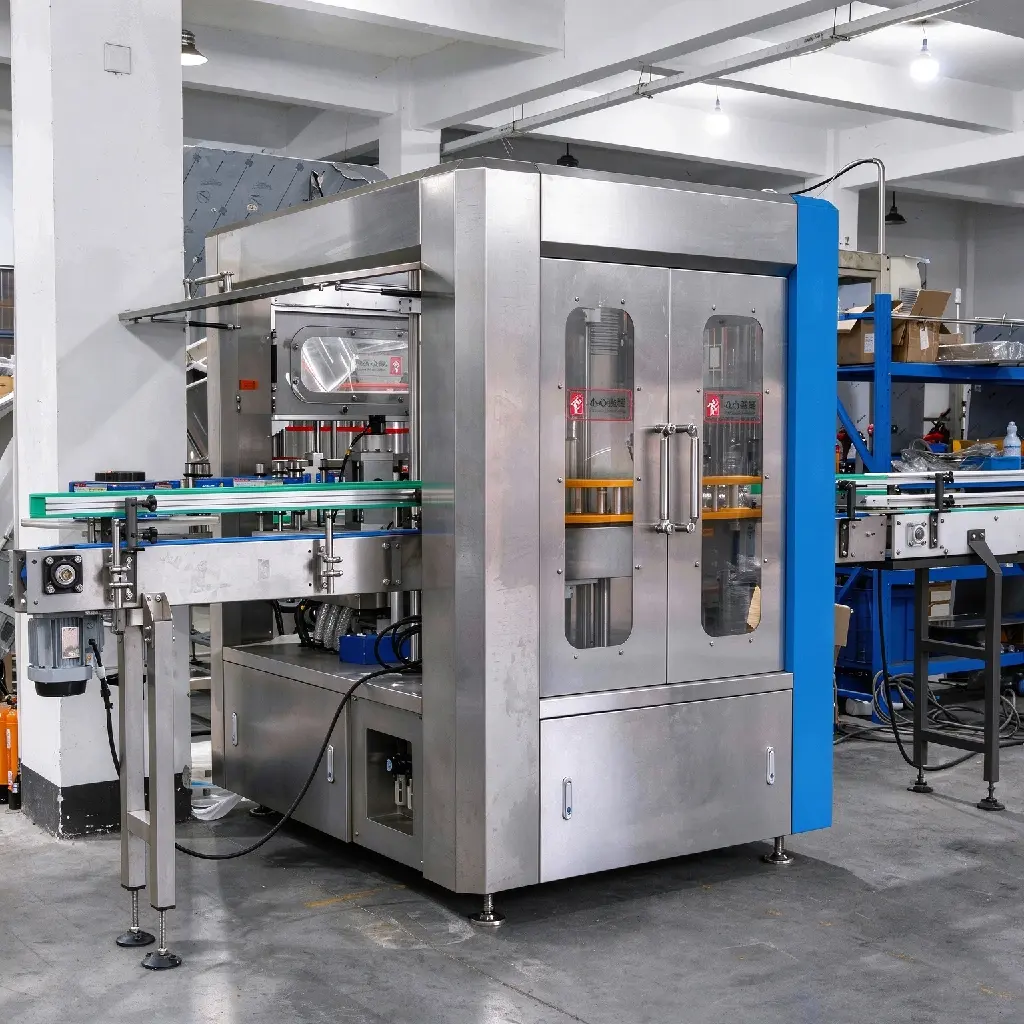
Glue temperature is the other OPP variable. The rotary hot melt glue labeler controls adhesive temperature and pressure to place glue only where needed, which prevents the dog-ears and wrinkles associated with cold glue on PET. The BOPP machine uses automatic constant temperature control: if temperature becomes abnormal, it stops and alarms, because the two failure modes are poor adhesion on the cool side and scorched film on the hot side. If edge lift appears gradually over a shift, look for a heater or thermostat fault, not a tension setting.
A flexible brush after application presses the thin film down and removes trapped air. A servo-driven cutter and a high-vacuum labeling drum keep the cut edge clean and the film under control. Blunt cutter edges show up as ragged label ends or film strings. On the rotary model, servo control of both label feed and bottle rotation holds +/-0.5 mm accuracy, and optical sensors detect missing bottles or labels and stop the applicator. A registration sensor flags out-of-tolerance labels, and some models can be fitted with a reject system.
The published OPP range runs from the RT-1H-STD at 800-1000 bottles per hour, 6 kW, 1000 kg and 1650 x 1500 x 1800 mm, through to the RT-24H-PRO at 24,000 bottles per hour, 10 kW, 3000 kg and 2193 x 1970 x 2053 mm, on 380 V 50/60 Hz. Applicable containers are 2 L-5 L large bottles or 200 ml-2 L round bottles depending on the model. A defect that appears only above a certain speed is usually a tension or vacuum limit, not a glue problem. The capping torque troubleshooting guide applies the same rule: measure the variable at the speed where the fault appears.
Sleeve wrinkles and scorch marks in the shrink tunnel
Sleeve defects split cleanly between the sleeving station and the steam and electric shrink tunnels. A sleeve that is cut at an angle will show dog-ears after shrinking. A sleeve dropped too high or too low will not follow the shoulder. Both are mechanical and can be checked on bottles pulled before the tunnel. If the pre-tunnel bottles look right and the finished bottles do not, the tunnel is the cause.
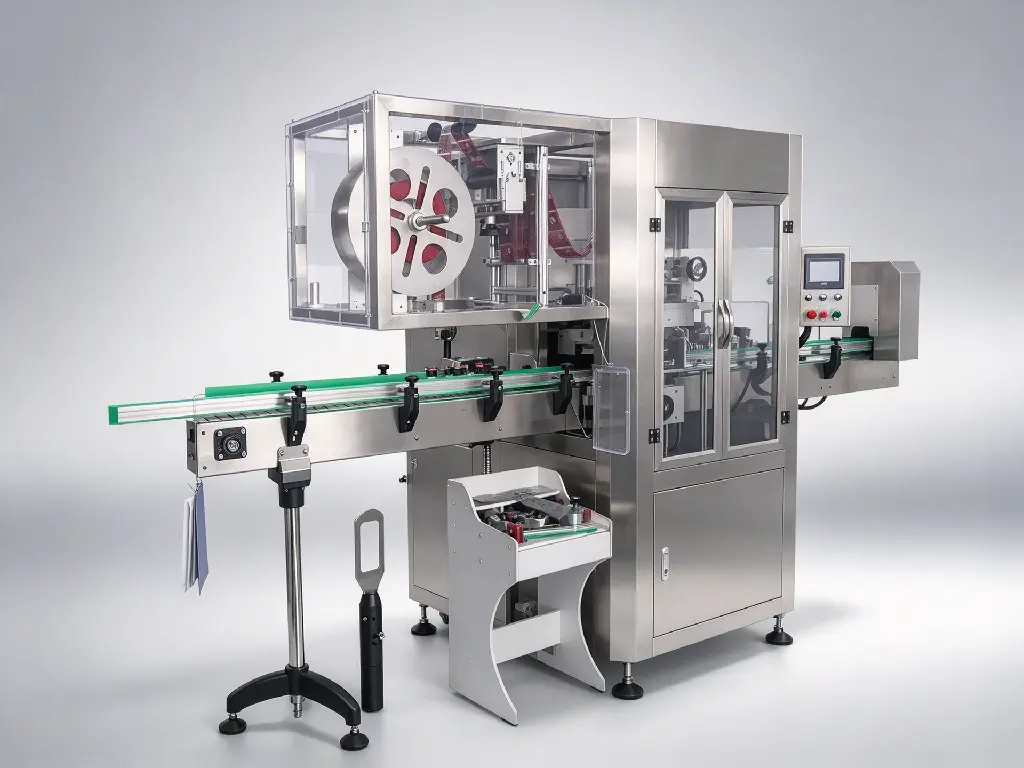
Wrinkles on the shoulder, floating sleeves and scorched edges are thermal. Film, container and tunnel have to match. PVC has the lowest shrink temperature and a high shrink ratio, PET-G needs a higher shrink temperature with more controlled shrinkage, and OPS sits between them. The shrink sleeve labeling machine guide covers film selection in detail. Uneven heat produces a sleeve that is tight on the body and loose at the shoulder, or a graphic that distorts where the film shrank more than the artwork allowed.
The published sleeve and tunnel range covers RT-4040MM at 6000-15,000 BPH, RT-4075MH at 15,000-24,000 BPH, RT-7510HH at 30,000 BPH and RT-1015HH at 36,000 BPH. All four are 3000 x 1050 x 2000 mm, 800-900 kg, 3 to 5 kW on 220/380 V 50/60 Hz, with declared accuracy of at least 99.9 percent on the two smaller models and at least 99 percent on the larger two. Film thickness is 0.03-0.13 mm, sleeve length 30-250 mm, flat width up to 200 mm, label outer diameter 500 mm, bottle height up to 320 mm and bottle diameter 30-124 mm or 30-100 mm depending on model. Materials are PVC, PET and OPS. A sleeve outside the 30-250 mm length range or a bottle taller than 320 mm falls outside the machine's specification; no temperature change will fix it.
The industrial shrink sleeve labeling machine, the PVC PET OPS sleeving machine and the steam shrink tunnel are the usual pairing on daily chemical lines; the electric shrink tunnel is the alternative where steam is not available. Steam and electric heat do not distribute identically, so a recipe transferred between the two without a trial run is a common source of shoulder wrinkles.
A symptom-to-cause table
Use this as a first-pass filter. It assumes the correct label, bottle and recipe were in use before the fault appeared.
| Symptom | Most likely cause | Check first | Where to look |
|---|---|---|---|
| Fine diagonal wrinkle near label trailing edge | Bottle surface speed and dispense speed out of sync | Bottle diameter in the recipe after changeover | Self-adhesive round bottle section |
| Bubbles clustered at one label edge | Worn or contaminated pressing belt, or poor wipe-down | Silicone belt condition and pressure | Self-adhesive round bottle section |
| Label consistently high or low on every bottle | Recipe offset or wrong change parts | Stored recipe and star wheel / guide block seating | Skewed labels section |
| Double feed or missed label after a label lot change | Sensor gap detection, dirty lens, new liner pitch | Fibre optic sensor and gap re-teach | Skewed labels section |
| Edge lift growing over a shift | Glue temperature drift or heater fault | Constant temperature control and alarm log | OPP section |
| Label a few mm off at high speed only | Static on bottle or film | Ionised air blower output | OPP section |
| Dog-ears after shrinking | Angled cut or sleeve too high / low | Pre-tunnel bottle samples | Sleeve section |
| Tight body, loose shoulder, distorted graphics | Uneven tunnel heat or wrong film shrink ratio | Tunnel zone temperatures and film type | Sleeve section |
If two symptoms appear together, fix the upstream one first. A static misfeed that also looks like a placement offset will not be cured by changing registration.
Changeover and preventive checks that stop repeat defects
Most repeat defects trace back to a changeover that was never fully verified. The filling and capping machine guide to multiple bottle sizes makes the same point about specifying a format envelope. On a running line, verify it after every change.
- Recall the recipe for the exact bottle and label combination, then run ten bottles at low speed and inspect them before ramping up.
- Confirm bottle diameter, height and label width against the machine envelope, not against the previous SKU.
- Check that star wheels, guide blocks and holding fixtures are seated and matched to the new format.
- Clean photoelectric and fibre optic sensors, then re-teach the label gap for the new liner.
- Inspect the silicone pressing belt, brush and wipe rollers for nicks, hardening or adhesive build-up.
- For hot melt lines, verify glue temperature is stable and the alarm log is clear before production speed.
- For sleeve lines, pull bottles before the tunnel and after it, and compare sleeve height and cut squareness.
- Check upstream equipment: wet or ovalised bottles, tilted caps and inconsistent infeed spacing all create label faults downstream.
The capping machine care guide and the rotary capping machine maintenance checklist show how to turn this into a shift sheet. Wear parts on a labeler are fewer, but belts, sensors, cutters and glue heaters fail on the same slow-drift pattern as capping chucks.
Where each defect shows up on a real line
High-gloss cosmetic round bottles show bubbles first, because the surface leaves nowhere for air to escape. Large 2 L-5 L detergent bottles show placement drift, because heavy containers slip on the conveyor and the side belt has to hold them through the wrap. PET beverage bottles show static and condensation problems, which is why hot melt with an ioniser is the usual choice there. Full-body sleeves on shaped household chemical bottles show shoulder wrinkles, because the film has to follow a profile that changes sharply above the body.
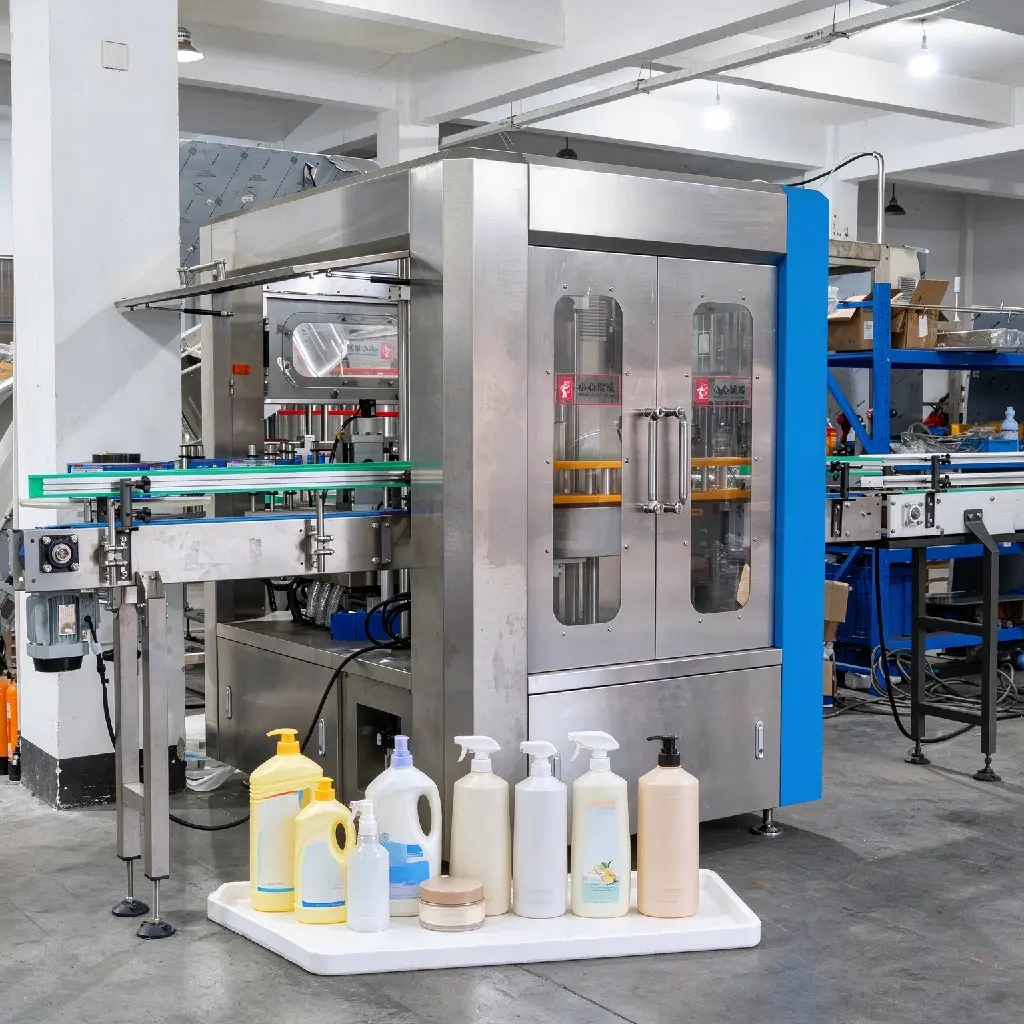
Line layout matters as much as the labeler. A labeler placed too close to the capper inherits bottle vibration; one placed too far downstream inherits dried product residue. The capping line layout guide gives the infeed and outfeed reasoning, and the monoblock versus separate filler and capper comparison explains how one shared bottle transport changes what the labeler sees. The liquid filling machine buying guide and the capping machine buying guide are the other two pieces of that layout picture.
Frequently asked questions
Why do labels wrinkle only on round bottles and not on flat ones?
A round bottle rotates while the label is dispensed, so surface speed has to match feed speed at every point of contact. A flat bottle is held in a fixed orientation and does not add that variable. Wrinkles unique to round containers usually mean the bottle diameter in the recipe is wrong or the servo rotation is no longer synchronised.
Can one labeling machine handle both round and square jars?
Yes, within a defined size envelope. On jar equipment, changeover means swapping handling fixtures and recalling the stored recipe, a 15 to 30 minute job for a trained operator. Very wide, very flat or unusually shaped jars may need dedicated tooling, which is confirmed against samples before a configuration is quoted.
What causes bubbles under transparent labels on glass or PET?
Trapped air that was not rolled out from the centre of the label to both edges. A flexible silicone pressing belt does this job. If bubbles repeat in the same position on every bottle, inspect the belt for wear or contamination before changing dispense speed.
How do I stop a hot melt OPP label from lifting at the edges?
Check glue temperature stability first. Automatic constant temperature control should hold the setpoint and stop with an alarm when it drifts, because both a cool and an overheated glue system cause bond failures. Then check the ioniser, the cutter edge and the vacuum drum.
Why does a shrink sleeve wrinkle at the shoulder but not on the body?
The shoulder changes diameter quickly and needs a different heat profile from the body. Uneven tunnel heat, a sleeve dropped at the wrong height, or a film with the wrong shrink ratio for that profile will leave the body tight and the shoulder loose. Compare bottles pulled before and after the tunnel to separate a cut problem from a thermal one.
How often should labeling machine sensors and belts be checked?
At every format change for sensors, since a new label liner can have a different gap pitch. Belts, brushes and wipe rollers belong on a weekly preventive check, and cutter edges on a hot melt line should be inspected whenever label ends become ragged. The capping machine care guide describes the same wear-part logic for a neighbouring station.
Review labeling equipment and line configurations with Runtech