
Full-body shrink sleeves decorate the entire container, front, back, top and shoulder, in a single label. That is why you see them on shampoo, shower gel, beverage and household chemical bottles. A sleeve labeling machine is only half the system, though. The shrink tunnel is the other half, and it is where most lines run into trouble: wrinkles on the shoulder, scorched edges, sleeves that float or tear. The pages below cover how a shrink sleeve labeling machine actually works, how PVC, PET and OPS film behave, and which tunnel and line specs keep the bottle clean at speed.

How a shrink sleeve labeling machine works
Every shrink sleeve line does four things in sequence:
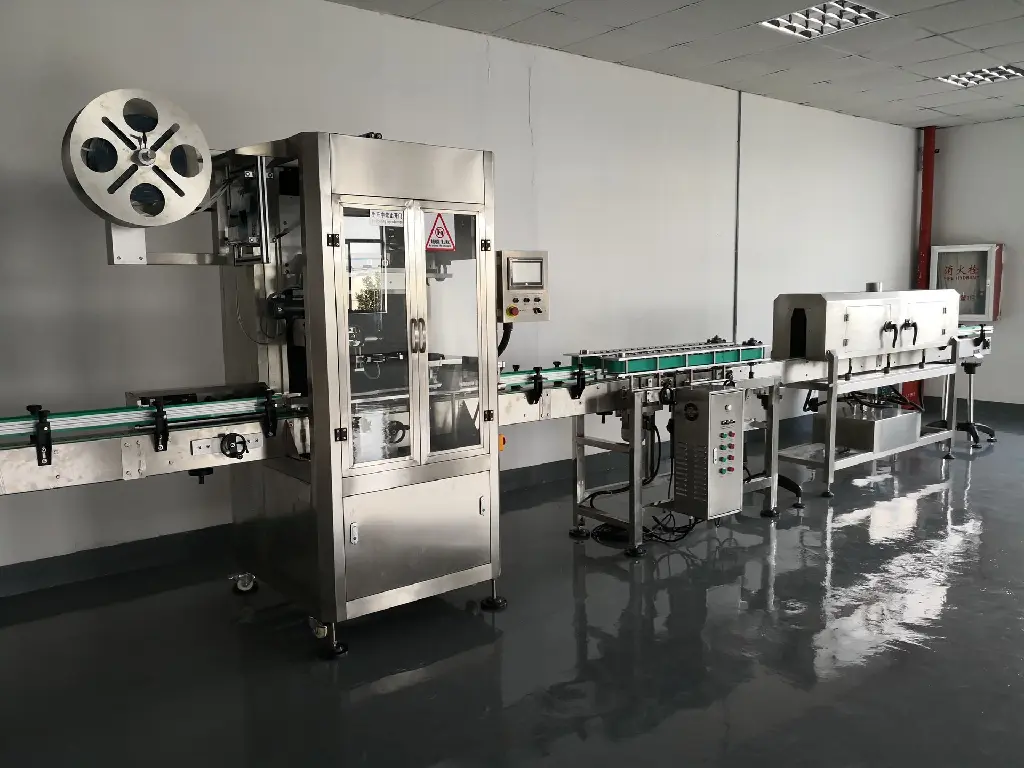
1. Unwind and register the printed film. A roll of printed sleeve film feeds into the machine with a registration sensor keeping each printed label aligned to the cut point.
2. Cut the sleeve. A rotary or blade cutter slices the film into individual sleeves of controlled height. A centering fold keeps the cut square. Skewed cuts turn into visible dog-ears after shrinking.
3. Feed the sleeve onto the bottle. A mandrel or gripper opens the sleeve and drops it over each container as it indexes through, with the sleeve's vertical position set by the container height.
4. Shrink the sleeve in the tunnel. Heat tightens the sleeve onto the container profile, from body through shoulder and neck.
The first three stations are mechanical. The fourth is a thermal process, and film, container and tunnel all have to match there. A line that feeds and cuts perfectly can still ship wrinkled bottles if the tunnel is wrong for the film.
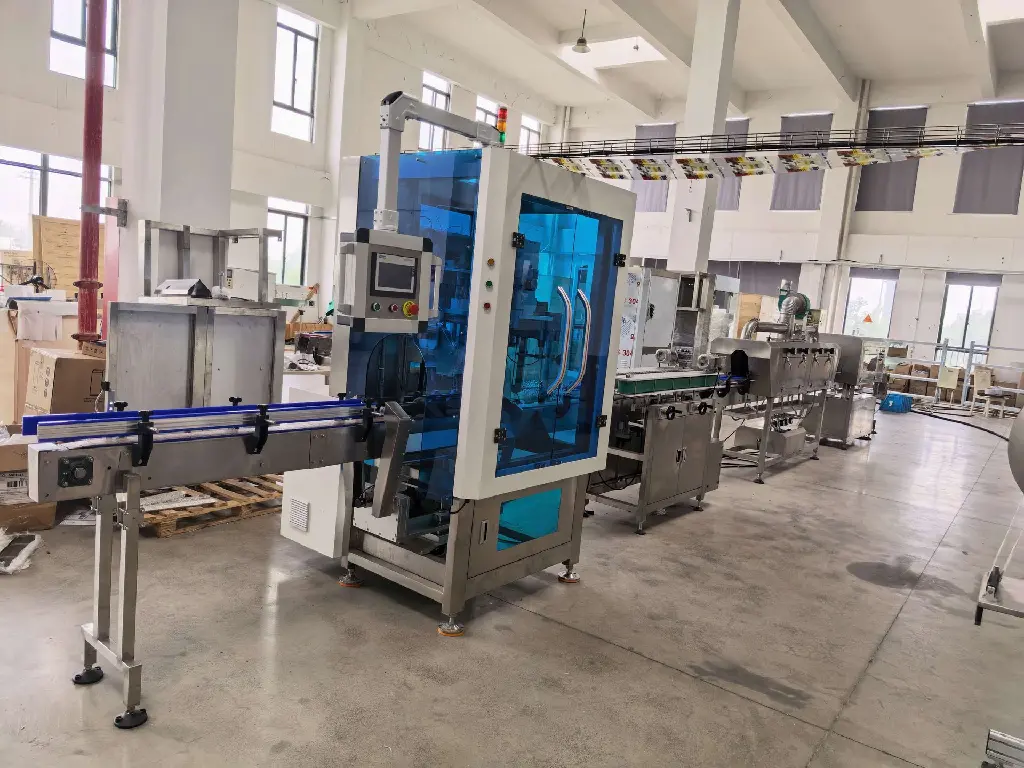
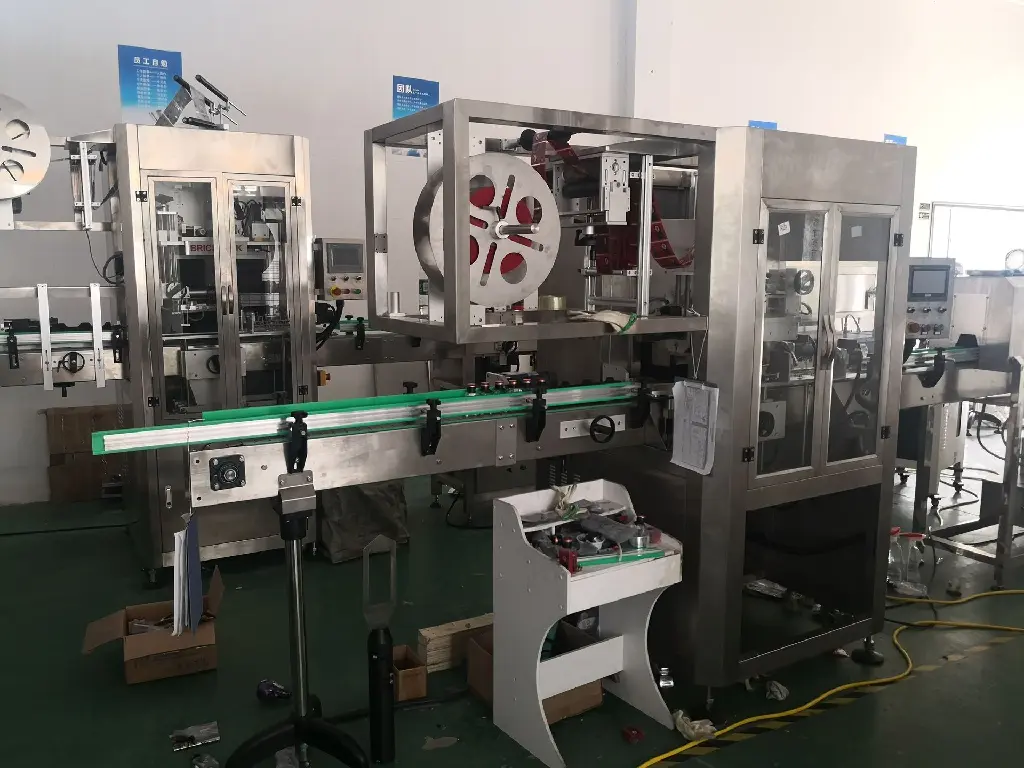
The sleeving station itself is a compact machine: film reel, cutter, mandrel and bottle indexing conveyor in one frame, sized to the container diameter range. On daily chemical lines it usually sits downstream of the filler and capper, applying sleeves to finished pump and trigger bottles before palletizing.
Sleeve film: PVC vs PET vs OPS
The film decides the tunnel. The three materials used on daily chemical and beverage sleeve lines differ in shrink temperature, shrink ratio and finish:
| Film | Shrink behavior | Finish | Typical use |
|---|---|---|---|
| PVC | Lowest shrink temperature, high shrink ratio | Good clarity, lowest cost | Daily chemical and household bottles |
| PET (PET-G) | Higher shrink temperature, controlled shrink | Highest clarity and gloss | Premium cosmetics, beverage full-body sleeves |
| OPS | Moderate temperature, low shrink ratio | Matte, economical | High-speed lines needing predictable shrink |
What that means on a line:
- PVC is the workhorse for shampoo and household chemical bottles. It costs less, shrinks easily and tolerates electric tunnels.
- PET gives the best shelf appearance for premium cosmetic containers but needs a well-controlled steam tunnel to shrink evenly without clouding.
- OPS shrinks predictably on high-speed lines where a stable, repeatable sleeve height matters more than gloss.
Runtech's sleeving systems are built to run all three films: the Automatic PVC PET OPS Sleeving Machine feeds printed film sleeves over each bottle, then a steam or electric tunnel shrinks the label tightly around the body for a full wrap look, with bottle diameter and height change parts customizable.
Steam tunnel or electric tunnel: the real decision
The tunnel is where most buyers under-specify. The two technologies deliver heat differently, and they suit different containers and speeds.

Steam shrink tunnels inject controlled steam into a multi-zone chamber. Steam carries heat evenly around the bottle, which matters on full-body sleeves that have to shrink through a shoulder curve without wrinkling. They suit round containers at high line speeds, but you need steam handling and water treatment on site. Runtech's Automatic Steam Shrink Tunnel for PET, PVC & OPS sleeve labels covers beverage and daily chemical lines at 15,000–24,000 BPH.
Electric (infrared) shrink tunnels heat with elements in controlled zones. They suit odd-shaped containers, short runs and plants without a steam supply, including pharma-clean environments. Uneven heating on complex shapes is the trade-off, so each container needs its zones tuned. Runtech's Stainless Steel Electric Shrink Tunnel is specified for shaped daily chemical bottles with PVC, PET and OPS film at up to 30,000 BPH.
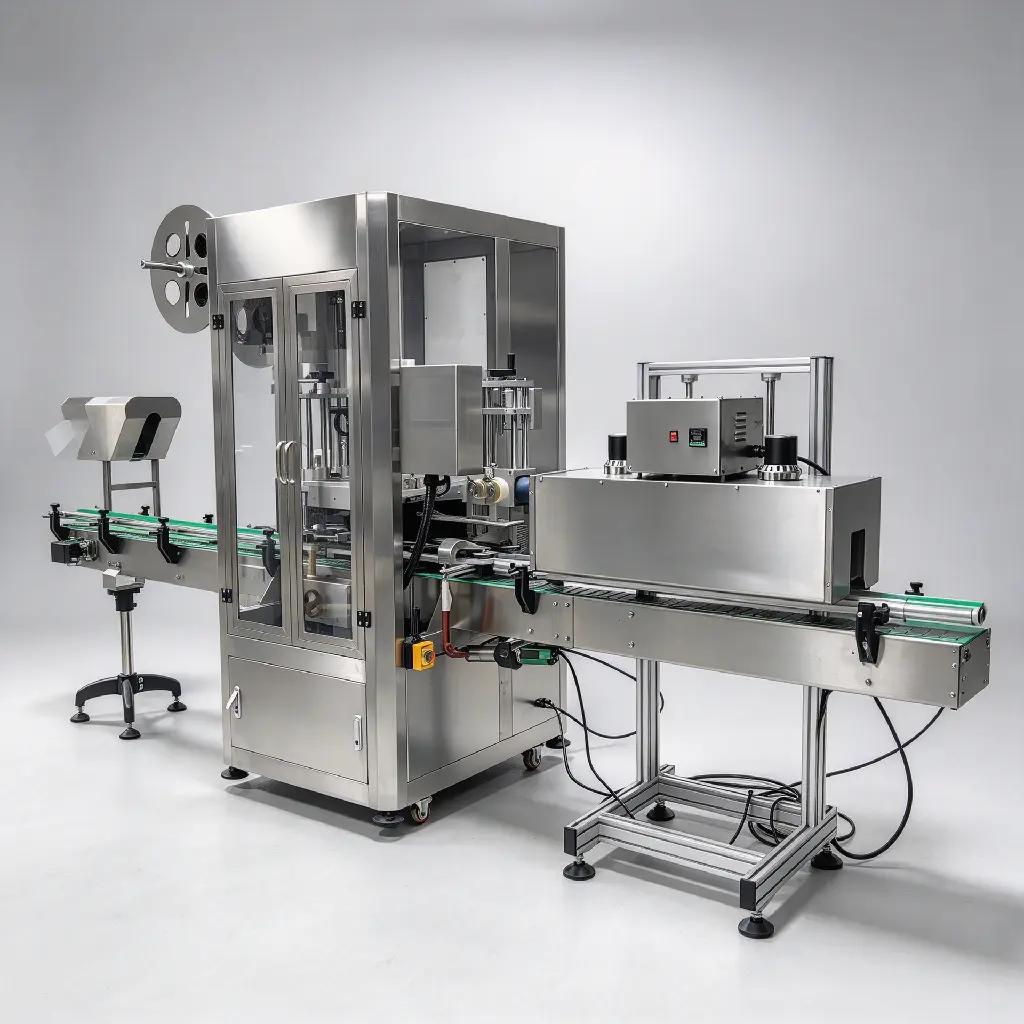
A simple rule: round container, full-body, high speed → steam. Shaped container, moderate speed, no steam utility → electric. Many lines ship as one integrated system. The Intelligent Sleeve Labeling Machine with Steam Shrink Tunnel pairs the sleeving head and steam tunnel in a single machine, so there is no alignment or gap to sort out between separately bought stations.
Full-body, partial and neck-band sleeves
The same machine platform covers three decoration formats:
- Full-body sleeves wrap from base to shoulder (or over the cap) and give 360° graphics plus tamper evidence if the sleeve runs over the closure.
- Partial sleeves cover a defined height band. Trigger sprayer bottles often use them so the pump head stays uncovered.
- Neck bands are narrow tamper-evident seals for the cap and neck. They run on the same cutter with a short cut height.
Format choice affects machine configuration, not machine type: cut height range, mandrel tooling and container handling are specified per format, and change parts cover the range between them.
Sizing the machine to your line
A sleeve system is specified around the container, not the catalog. Five numbers decide the configuration:
| Spec | What it determines | What to check before ordering |
|---|---|---|
| Bottle diameter range | Mandrel and guide tooling | Minimum and maximum diameter across all SKUs |
| Bottle height | Sleeve cut height and drop stroke | Tallest container with cap or pump fitted |
| Line speed (BPH) | Tunnel length and zone count | Matched to filler and capper, not to an isolated peak |
| Film material | Tunnel type and temperature profile | PVC, PET, OPS (list every film the line will run) |
| Sleeve format | Cut range and container handling | Full-body, partial, neck band |
Two sizing mistakes come up again and again. First, specifying the sleeve machine for the line's headline speed while the filler averages far less; you pay for tunnel capacity you never use. Second, forgetting the next SKU. A machine tooled to one bottle diameter with no change parts turns every product launch into a re-engineering project. Runtech builds sleeving machines for medium to high speed lines across daily chemical, personal care, cosmetics, fine chemicals and food & beverage. The Industrial Automatic Shrink Sleeve Labeling Machine and the High Speed Full-Body Shrink Sleeve Machine cover that range as standard.
Common sleeve defects and how to fix them
Most shrink sleeve quality problems trace back to one of six causes:
- Wrinkles on the shoulder: shrink energy too low or uneven zone temperature. Retune the zone profile; on steam tunnels, check nozzle cleanliness.
- Dog-ears (folded sleeve edges): skewed cut or an off-center sleeve drop. Fix the registration sensor or gripper centering, not the tunnel.
- Burned or cloudy film: temperature too high for the film, most often PET in an over-hot electric tunnel. Reduce zone temperature and slow the conveyor.
- Floating sleeve (loose fit): film shrink ratio too low for the container taper, or container diameter out of spec. Change the film or check bottle tolerance.
- Sleeve tears at the perforation: worn cut blade or misaligned perforation tooling. That is a maintenance item, not a process setting.
- Sleeve height varies bottle to bottle: inconsistent indexing or a drifting drop stroke. Check the bottle sensor and stroke stop.
Fix these at the machine, not in the artwork or film spec. Once the tunnel and cutting settings are right, the same printed sleeve runs consistently.
Where sleeve lines run
Sleeve labeling concentrates where 360° decoration sells the product: shampoo, shower gel and pump bottles in personal care; household cleaners and dishwashing liquid in daily chemicals; sauces and beverages in food and drink. The same tunnel technology also serves fine chemicals and pesticides, where a full-wrap label carries mandatory regulatory text on every panel. For a broader comparison of sleeve labeling against self-adhesive and hot-melt OPP systems, see the Bottle Labeling Machine Buying Guide.
FAQ
What is the difference between a sleeve labeling machine and a shrink sleeve labeling machine?
There is no functional difference. Both names refer to the machine that cuts printed film sleeves and feeds them onto containers. "Shrink sleeve labeling machine" or "sleeving machine" usually implies the shrink tunnel is part of the supplied system, which is the configuration most lines need.
Can one machine handle different bottle sizes?
Yes. Bottle diameter and height are covered by change parts (mandrel tooling, guides and drop stroke settings). Runtech's sleeving machines ship with customizable change parts matched to the container range you specify at order time.
Steam or electric tunnel: which should I choose?
Choose steam for round containers, full-body sleeves and speeds from roughly 15,000 BPH, where even heat around the bottle gives a wrinkle-free shoulder. Choose electric for shaped containers, moderate speeds, or plants without steam utilities. Both are offered integrated with the sleeving machine.
How fast do shrink sleeve lines run?
Sleeving machines for medium to high speed lines run with tunnels matched to the application: Runtech's steam shrink tunnels cover 15,000–24,000 BPH, and the electric tunnel specification reaches 30,000 BPH for shaped daily chemical bottles.
Does the container material matter?
Yes. The container must tolerate tunnel heat. PET and PVC bottles run well in steam tunnels because steam's heat transfer is fast and even; thin-wall containers in electric tunnels need zone tuning to avoid distortion. Glass and metal containers have no heat limit but change the shrink dynamics.
What film should I choose for a premium look?
PET (PET-G) film gives the highest clarity and gloss after shrinking, which is why premium cosmetic and beverage brands use it. PVC remains the economical standard for daily chemical bottles, and OPS suits high-speed lines needing predictable shrink.