
Most enquiries for a filling and capping machine begin with two numbers, a target output and a bottle size. The third number, how the bottle gets from the filling nozzle to the capping head, is the one that decides whether you buy one machine or two. Both configurations exist in Runtech's catalog, and the choice is rarely about which one is better. It is about how often you change formats, how much floor you have, and whether the capper can keep up with the filler.
Runtech builds filling machines and integrated filling-capping monoblocks for daily chemical, personal care, cosmetics, chemical and food plants. The sections below work through the decision with published machine data, so the specification you send a supplier reflects the line you will actually run.
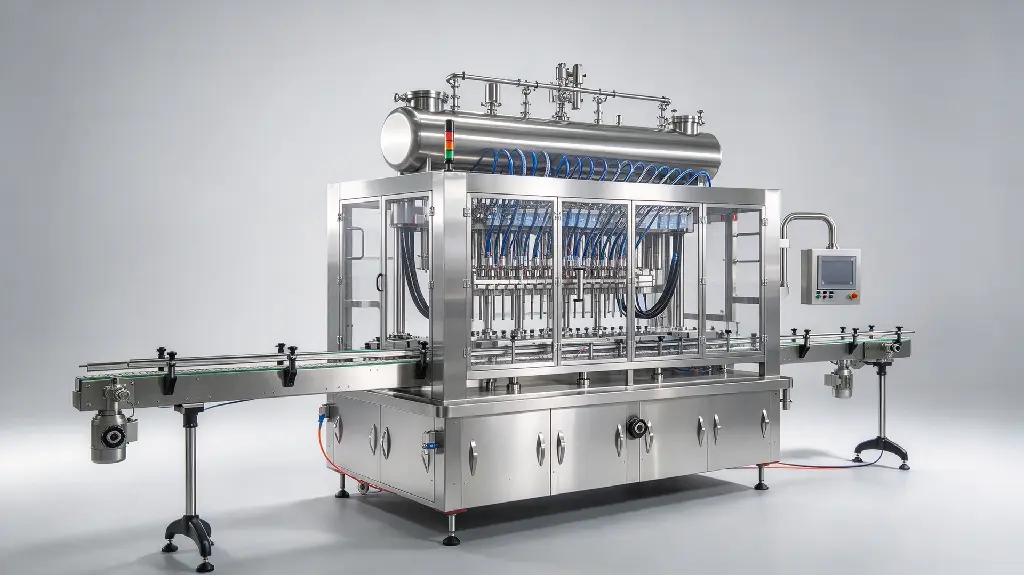
What a filling and capping monoblock integrates
A monoblock puts filling and capping on one base with one bottle transport system. The bottle is indexed or carried through both stations without leaving the machine, so there is no separate conveyor handoff, no second bottle alignment and no intermediate buffer to tune. That is the whole mechanical argument for it.
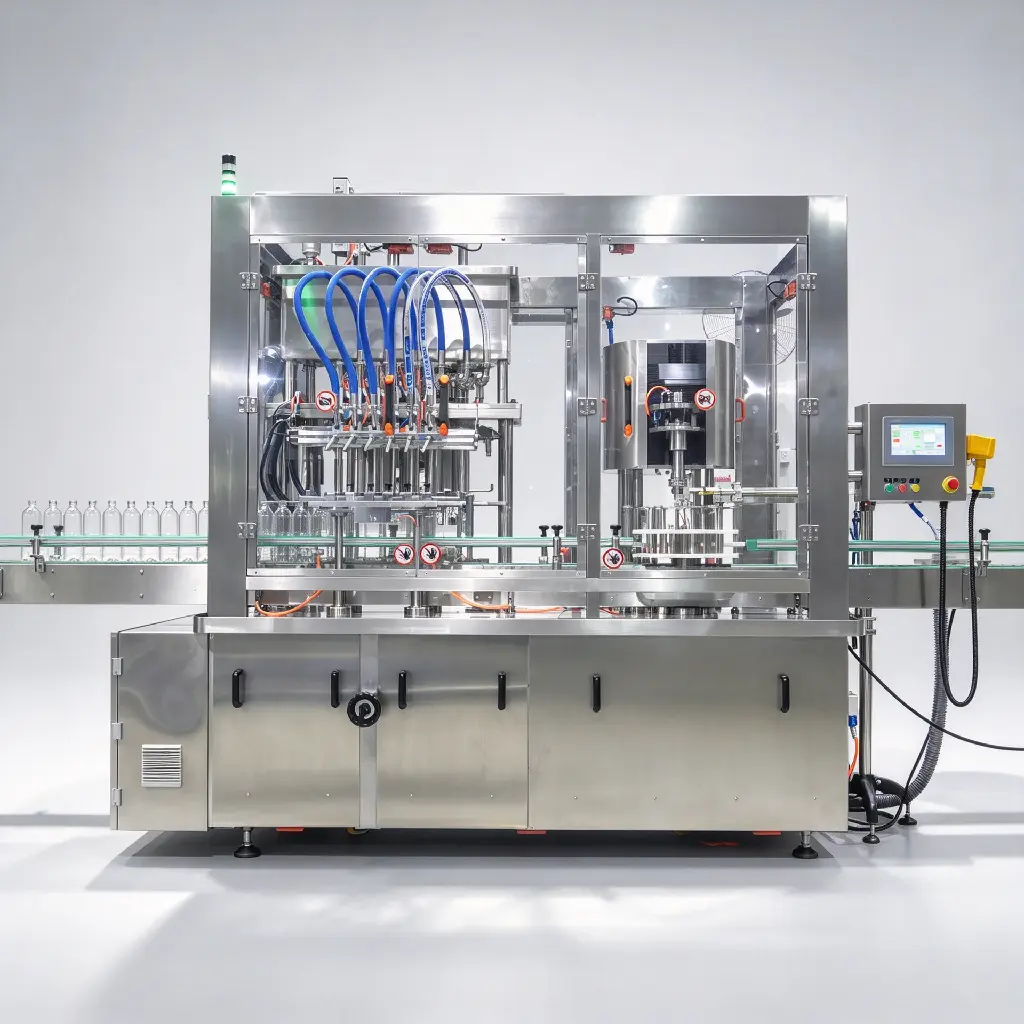
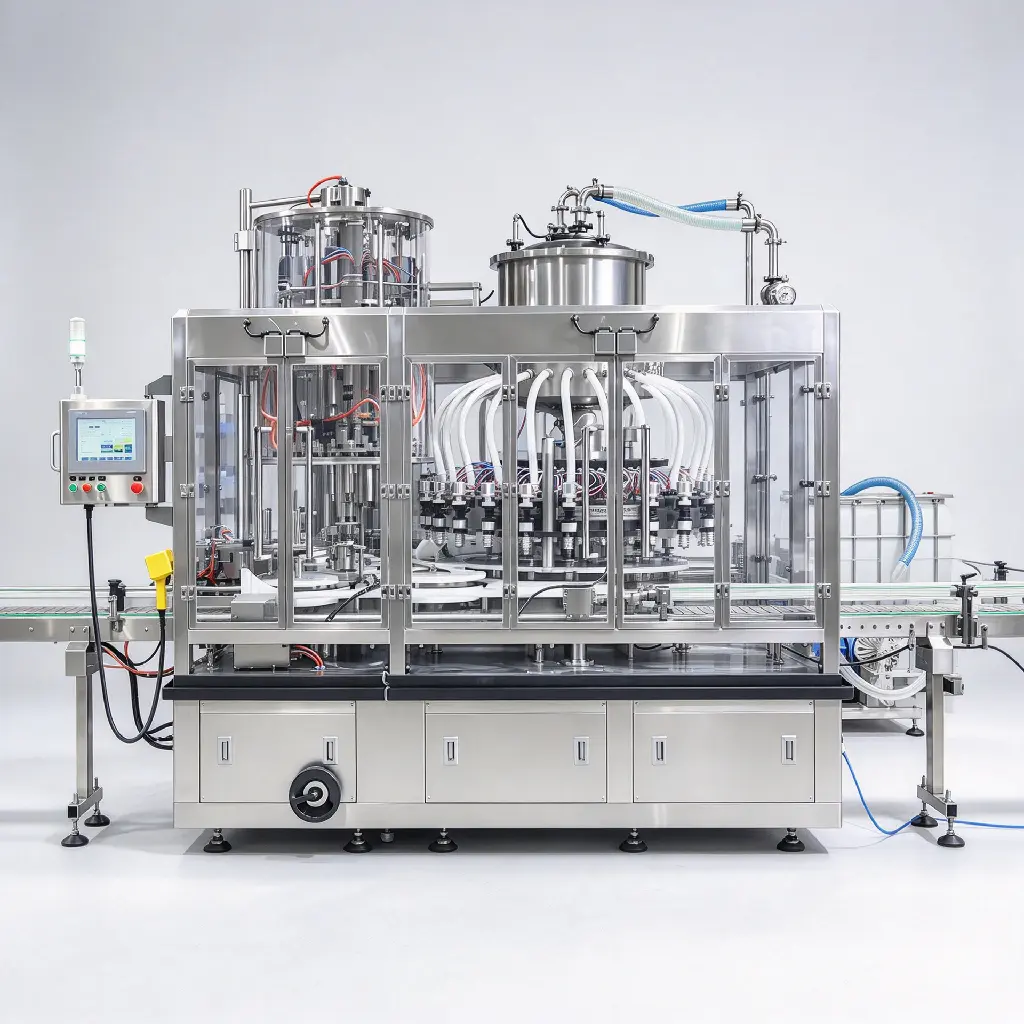
The servo-controlled monoblock filler and capper is the daily chemical version. Its published specification covers 300-1500 ml of water-like and viscous non-corrosive liquids, bottles of 60-150 mm diameter and 250-350 mm height, with special bottles customizable. Filling accuracy is stated as -3 to +4 g below 1 kg and -4 to +6 g between 1 and 3 kg, under stated conditions of uniform specific gravity, product standing for more than four hours and no bubbles. The servo capping station carries adjustable torque, which matters when one line runs several closures.
The rotary filling and capping monoblock for juice and still drinks takes the same idea into glass bottles, with food grade stainless steel construction and sanitary filling. Runtech groups both under the integrated filling-capping monoblock category; the linear and rotary ranges sit beside it as filler-only machines.
If the fill and the cap have to stay registered on a small or unstable bottle, and floor space is tight, one base is the simpler machine. If the line has to grow, or the capper and filler run at different speeds, two machines give you more room to change each one.
Monoblock or separate machines: the decision table
Neither configuration wins on every axis. The table below uses the two real configurations in Runtech's catalog: the 56 monoblock, and a separate automatic bottle filler feeding a pump, trigger and dispenser capper.
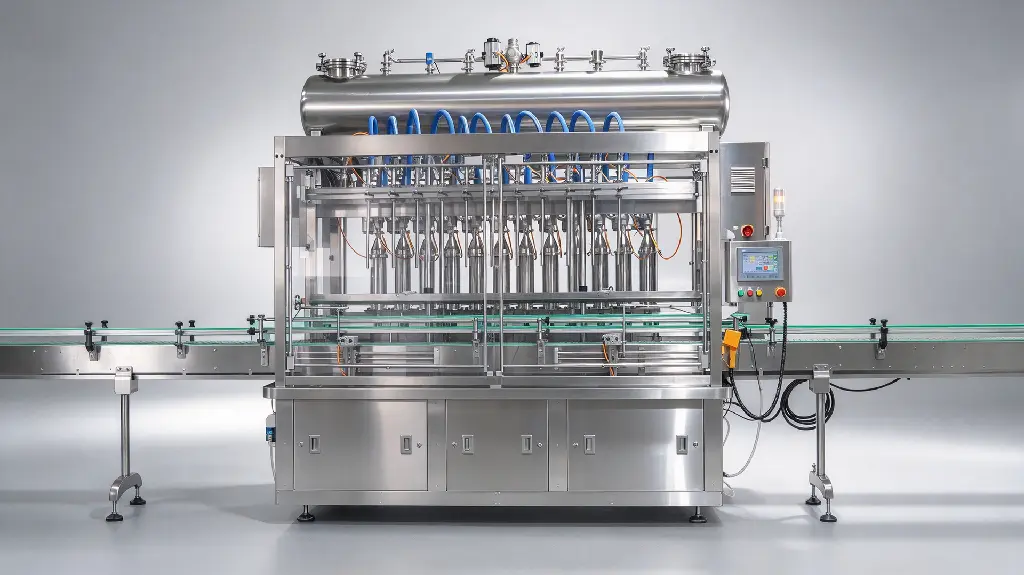
| Criteria | Monoblock (product 56) | Separate filler + capper (products 10 + 45) |
|---|---|---|
| Bottle handoff | One transport system, no transfer | Conveyor, guides and buffer between machines |
| Published footprint | 2,030 x 1,453 x 3,000 mm | 1,930 x 1,453 x 3,000 mm plus 2,100 x 1,900 x 2,950 mm |
| Installed weight | About 2,020 kg | About 1,920 kg plus 4,200 kg |
| Power | 2.2 kW, 3-phase 380 VAC 50 Hz | 3 kW plus 5 kW, two supplies |
| Capping torque | Servo, adjustable per recipe | Permanent-magnet clutch, set mechanically |
| Format changeover | One recipe, one set of change parts | Two setups, two sets of parts, one conveyor |
| Adding a third station | Requires a new machine or downstream line | Add a labeler or checkweigher on the conveyor |
| Best fit | Small bottles, tight floor, one product family | High output, mixed closures, future expansion |
Floor space and the handoff between two machines
Note the footprint column. The two separate machine bodies already total about 4,030 mm in length before the conveyor between them, the infeed straight and the outfeed accumulation area. A monoblock needs one working envelope, not two. The capping line layout guide sets out how much that handoff space really takes.
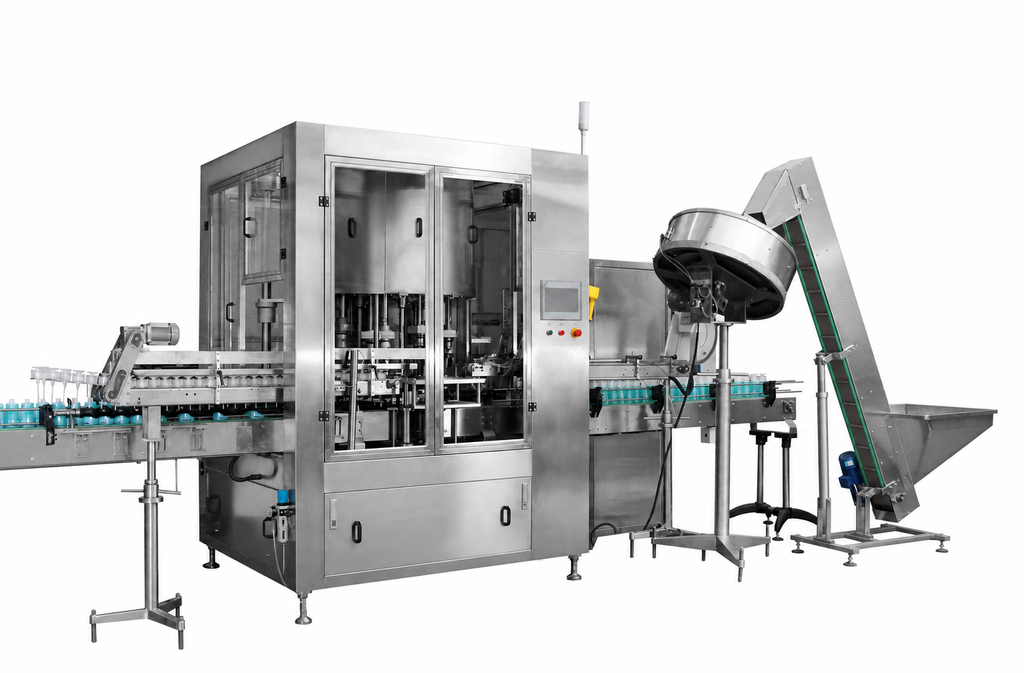
The power and air figures are per machine. Two machines mean two electrical drops, two air connections and two sets of guarding to commission. That is not a reason to avoid them, but it belongs in the installation budget.
Speed matching: the number that decides the line
Runtech quotes around 6,000 bottles per hour at 330 ml on glass cleaner for the industrial automatic bottle filling machine and for the servo monoblock. That is 100 bottles per minute.
Now read the separate cappers. The 10-head pump, trigger and dispenser capper is published at 70-80 bottles per minute, or roughly 4,200-4,800 bottles per hour. The 6-head rotary pump capper is published at 55-60 bottles per minute, or roughly 3,300-3,600 bottles per hour. Both use permanent-magnet clutch torque control.
Those figures sit well below the filler's rated output. A line built from a 6,000 BPH filler and a 6-head capper will not run at 6,000 BPH, whatever the brochure says. Either you specify more capping heads, or you accept the lower rate and plan around it. The industry application guide uses an 80 percent OEE planning figure for the same reason: theoretical head counts do not survive a full shift with changeovers and planned stops.
A monoblock avoids this particular mismatch, because one drive and one pitch govern both stations. It does not remove the need to check the rest of the line. The 30-nozzle servo rotary filler and the liquid filling machine buying guide both make the point that a fast filler only builds a queue when bottle supply, capping and downstream conveying are sized to match. On a monoblock, the capper is inside the machine; on a split line, the capper is the constraint you have to buy your way out of.
Torque control and closure handling
Closures decide more than the capping station. A lotion pump, a trigger sprayer and a dispenser pump need different grip, different alignment and different torque. The pump cap vs trigger cap guide covers the mechanical differences in detail.
The contrast in torque control is worth stating plainly. Runtech's servo monoblock carries an adjustable torque setting on the capping station, so each recipe can hold its own value. The separate 10-head capper and 6-head rotary capper use a permanent-magnet clutch, which is set mechanically and holds one setting across the run. Both work. The difference shows up when a line changes closures several times a week, or when a single SKU has a narrow torque window.
Check the failure modes before you sign off. Loose caps, stripped threads and torque drift are the three that repeat on rotary machines, and the capping torque troubleshooting guide walks through each one. The capping machine buying guide puts the torque window early in the specification for the same reason: define it before the quote, not during commissioning.
On a monoblock, changing capping torque is a recipe change. On a split line, it is an adjustment at the capper plus a check on the bottle handoff upstream. Neither is hard, but they cost different amounts of operator time across a year of changeovers.
Changeover, formats and cleaning
Format flexibility usually decides the purchase after the speed question is settled. A monoblock has one set of bottle guides and one recipe to change. A split line has guides at the filler, guides at the capper and a conveyor in between, all of which have to agree on bottle pitch and height. The multi-size buying guide sets out the size matrix worth sending with an enquiry, including which adjustments are operator settings and which need dedicated parts.
Cleaning pulls in the wetted materials. Both the monoblock and the standalone automatic bottle filler are published with SUS304 main construction and SUS316L product-contact parts, RS-485, Ethernet and USB interfaces, noise below 78 dB, and a clean stable air supply of at least 0.5 MPa at no more than 0.3 m3/min. Corrosive products change the question again: the tracking chemical bottle filler uses an anti-corrosion structure and dynamic tracking nozzles for that class of liquid, and is specified for 10-500 ml.
Ask for a changeover timed with the real parts and the real recipe. Then repeat the accuracy check after cleaning. A clean single fill proves the machine can be set up; two hours at production speed proves it can hold the setting.
The spec sheet and acceptance test
A useful enquiry reads like a test plan. Vague ranges such as "100 ml to 1 L bottles" leave the supplier to guess at geometry, which is where most later disputes start.
| Spec | What to state | Why it matters |
|---|---|---|
| Bottle range | Diameter, height and centre of gravity for every SKU, including extremes | Guides, pitch and tooling on both stations |
| Fill volumes | Minimum, maximum and target per SKU | Cylinder or meter sizing |
| Product behaviour | Viscosity at production temperature, foam tendency, corrosiveness | Metering principle and wetted materials |
| Closure list | Every cap type, neck finish and torque window | Servo recipe or clutch setting, grip and alignment |
| Target output | Sustained bottles per hour, plus shift length | Whether capping head count can match the filler |
| Accuracy | Acceptable deviation and the conditions it must hold under | Which metering principle is viable |
| Changeover | SKUs per week and allowed switch time | Recipe memory and quick-change parts |
| Utilities | Power, compressed air, water or CIP supply | Installation and running cost |
| Compliance | Net content rules, cleaning and batch records | Weighing feedback and documentation |
Agree the acceptance test before the machine is built and run it on the hardest SKU, not the easiest one. Include the smallest dose, the least stable bottle, the most viscous or foaming formula and the boundary of the diameter range. Record net content deviation across a continuous run, fill level consistency from bottle to bottle, drips on the neck and thread, foam at the surface and capping torque on each closure. Then time a changeover with the actual parts and repeat the accuracy check after cleaning. On a split line, add one more measurement: the bottle queue at the handoff conveyor during a sustained run. If it grows, the capper is the limit.
Where each configuration runs
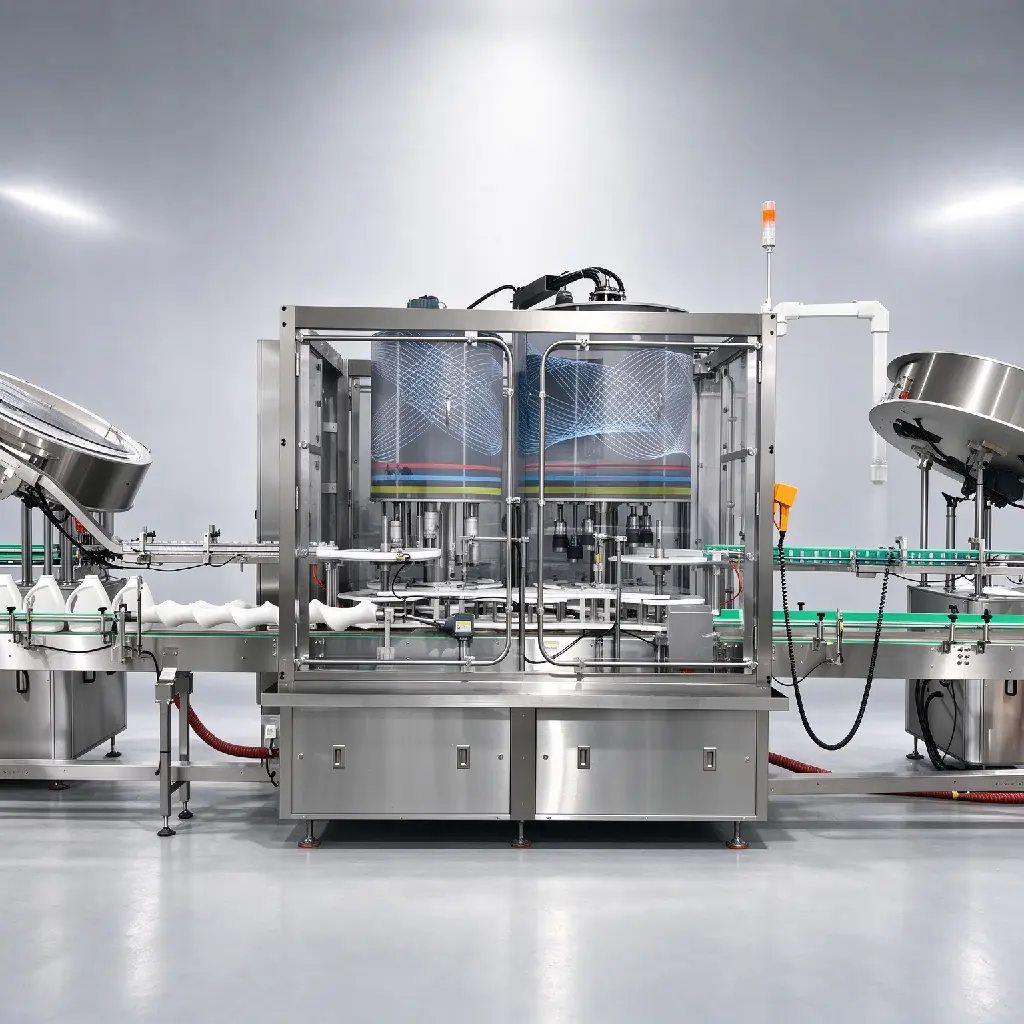
Daily chemical and home care lines fill laundry detergent, dish soap, surface cleaners and disinfectants into HDPE bottles. They run long campaigns with few closures, so a monoblock's compact footprint and single recipe suit them well. The servo monoblock is specified for that work.
Cosmetics and personal care run smaller packs and more SKUs, often with pump or dispenser closures that show every drip. Monoblocks and small-bottle fillers dominate here too, but a split line earns its place when the same plant runs pumps, triggers and screw caps in one week. Food and beverage glass bottles bring a different set of constraints; the juice monoblock keeps the glass under control through both stations with food grade stainless steel.
Chemical and agrochemical lines add corrosion resistance and heavier containers, where the tracking chemical filler is the more appropriate starting point than a general-purpose monoblock. Once the filler and capper are settled, the labeler follows. The round bottle sticker labeling machine and the bottle labeling machine buying guide cover the downstream choice in the same terms as this one.
FAQ
What is a filling and capping machine?
It is a packaging line that doses product into a bottle and closes it. The term covers two builds: a monoblock that does both on one base, and a separate filling machine linked by conveyor to a capping machine. Runtech lists both, so ask the supplier which one the quote describes.
When is a monoblock the better choice?
When bottles are small or unstable, floor space is tight, and the line runs one product family with few changeovers. One transport system removes the bottle handoff entirely, and one drive keeps filling and capping at the same pitch. The published 2,030 x 1,453 x 3,000 mm envelope is also easier to place than two machines plus a conveyor.
Can a separate capper keep up with a 6,000 BPH filler?
Not at the published head counts. Runtech's 10-head capper is rated 70-80 bottles per minute (about 4,200-4,800 bottles per hour) and its 6-head rotary capper 55-60 bottles per minute (about 3,300-3,600 bottles per hour), against roughly 6,000 bottles per hour at 330 ml for the filler. Specify more capping heads or plan the line around the lower rate.
How do I set capping torque on a monoblock?
On Runtech's servo monoblock, torque is adjustable at the capping station and can be held per recipe. Separate cappers such as the 10-head and 6-head models use a permanent-magnet clutch set mechanically. Define the torque window for every closure before the quote, then verify each one during the acceptance test.
How much floor space do separate machines need?
The two machine bodies alone measure about 1,930 x 1,453 x 3,000 mm and 2,100 x 1,900 x 2,950 mm. Add the conveyor between them, the infeed straight, the outfeed accumulation area and clearance for door swing and operator access. The capping line layout guide gives a site measurement checklist for exactly this.
What should an acceptance test include?
The hardest SKU, a continuous run at production speed, net content deviation, fill level consistency, neck drips, foam, capping torque on each closure, a timed changeover and a repeat accuracy check after cleaning. On a split line, watch the bottle queue at the handoff conveyor during the sustained run.