
A personal care brand owner sent two bottles in a courier bag. One was her best-selling body lotion, filled on a line she had bought two years earlier. The other was a sample from a retailer complaint: the same lotion, but the cap ring was cracked and a thin track of product had dried down the side. Her note had one question: "The filler says it is putting in the right amount. Why do customers get leaking bottles?"
The machine was not broken. It was an overflow filler, specified when the range was mostly thin shower gel. Since then the brand had added a thick body lotion and a shampoo with a different foam profile. The same machine that was perfect for the first product was quietly overfilling the second and leaving wet necks that the capper could not seal.
This personal care filling line case study is a composite drawn from the enquiries we see most often. It follows that project from diagnosis through selection, installation and results, then closes with the five lessons the team said they would do differently.
Key Takeaways
- Personal care is not one viscosity. A line bought for thin shower gel can overfill thick lotion and leave wet necks that fail the capper.
- Match the filling method to the product: overflow for thin, level-critical liquids; servo piston for creams, lotions and shampoo from roughly 3,000 cP upward.
- Servo piston dosing on a multi-SKU personal care line holds around ±0.5% to ±1%, versus operator-dependent ±3 to ±5 g on the old gravity/overflow setup.
- Torque-monitored capping stops the two personal-care failure modes at once: cracked tamper rings from over-torque and leaking caps from under-torque.
- Recipe recall and quick-release parts cut changeover from about 45 minutes to under 20, which is where most of the payback came from.
1. Background: Who Was Running This Line, and What Did They Make?
This cosmetics filling machine case study starts with a mid-size personal care brand and private-label contract manufacturer in Southeast Asia. They ran a personal care co-packer filling line with about 40 SKUs across skin care and hair care. Products went to retail shelves and export partners, so a leaking bottle became a complaint in another market within weeks. Three shifts kept the line close to continuous production. Grand View Research puts the personal care filling machine segment at USD 480 million in 2021 and USD 663.3 million by 2030, roughly 3.8% CAGR. Asia-Pacific is the largest market. Treat that as published industry data, not a forecast for this project.
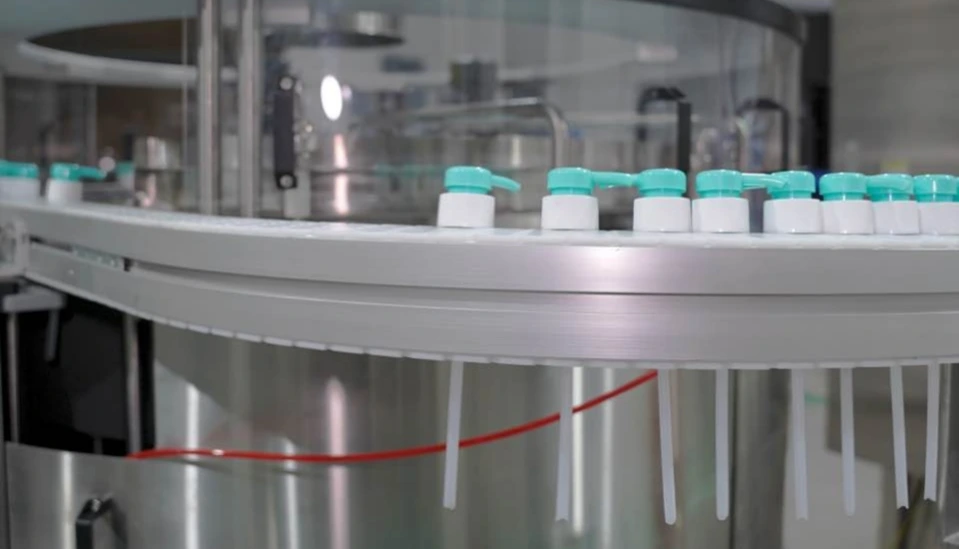
The range spanned four very different products. Thin shower gel sat near 50 to 500 cP. Shampoo ran at 3,000 to 8,000 cP and foamed readily. Body lotion sat around 4,000 to 6,000 cP, and a heavier hand cream reached roughly 12,000 to 15,000 cP. Packaging added a second axis: 250 ml, 500 ml and 1 L PET bottles in round and oval shapes, a few glass jars, and flip-top, disc-top and pump closures with tamper rings. Two cap formats needed orientation rails. One conveyor carries all four, as Figure 1 shows.
The equipment told the real story: a legacy overflow filler bought when the range was shower gel only, plus one manual capping station. Three gravity fillers had been merged into that setup. An overflow head suits a thin, free-flowing, level-critical liquid. On a 6,000 cP lotion it becomes the wrong machine, because it controls visible level rather than delivered mass. The machine was not the problem. The specification was written for a product mix that no longer existed.
Every number from here on belongs to a composite built from aggregated published personal-care filling projects, with company details and figures adjusted to protect confidentiality. The purpose is to show a realistic upgrade pattern and the reasoning behind each decision. Nothing here is a performance claim for a Runtech machine, and no result should be read as a guaranteed outcome for a different product or bottle.
2. What Exactly Was Going Wrong on the Line?
None of the four symptoms was a broken machine. All four came from one wrong specification. The team logged short and inconsistent fills on thick lotion, foam and false-full bottles on shampoo, stringing on the hand cream neck, and caps that either leaked in transit or arrived with a cracked tamper ring. Operators wiped necks by hand and re-torqued caps at the end of the line. Those manual workarounds quietly absorbed a whole shift.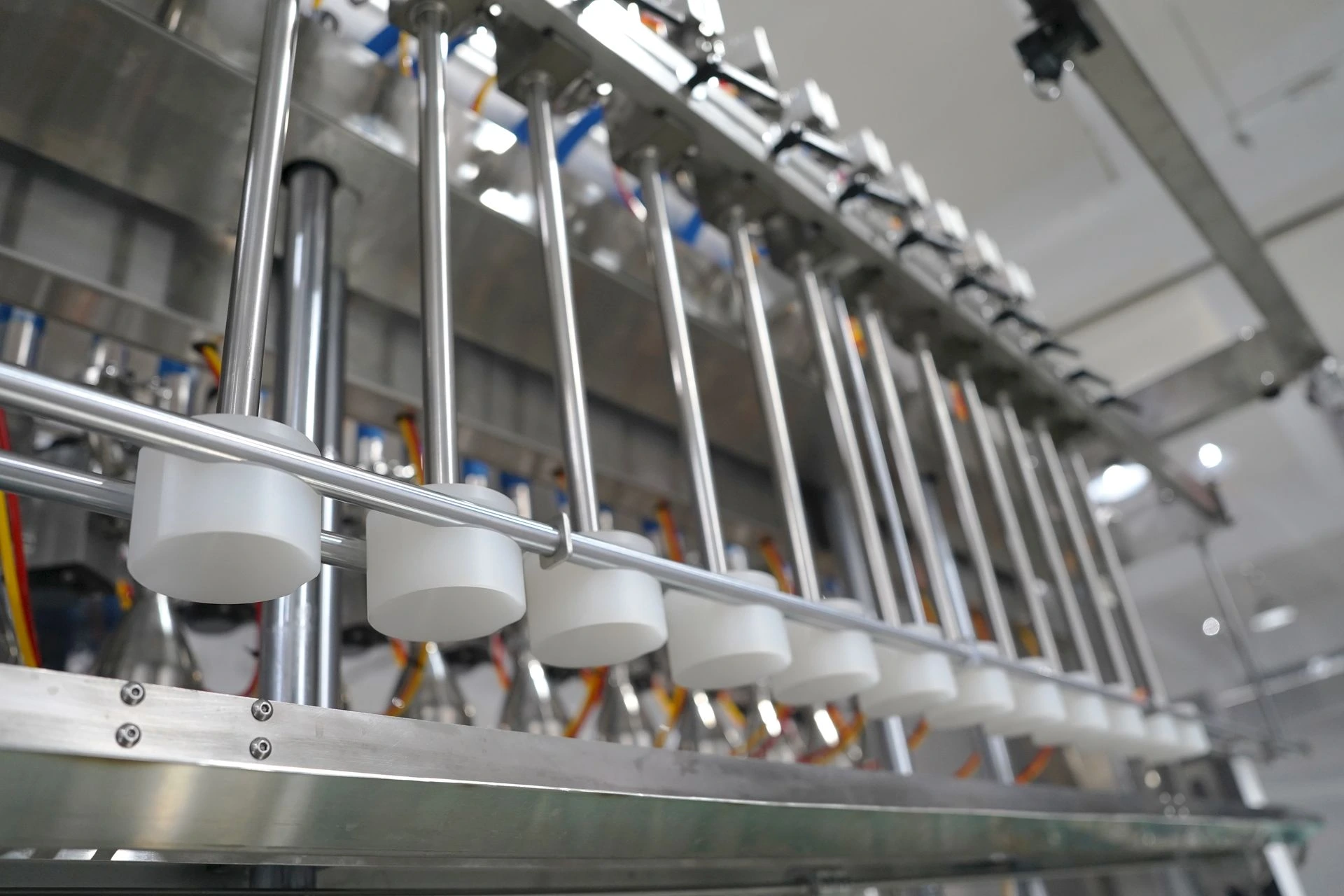
Overflow filling relies on a self-levelling liquid reaching a fixed neck level. Published supplier data puts shower gel and water-like products in the 1 to 50 cP band, while shampoo sits at 3,000 to 8,000 cP. At shampoo and lotion viscosity the product does not self-level fast enough, so the head keeps feeding, the bottle overfills and air gets trapped. A wet neck then reaches the capping station, where the cap slips or the ring takes more force than plastic can handle. So why does my shampoo filler overfill and foam? In most cases the method was chosen for a thinner formula.
The cost is easier to see in arithmetic than in a complaint log. Roughly 5 ml of extra product on every 500 ml bottle, at 20,000 bottles a month, is about 100 litres of giveaway before counting rejects. A published Sunter Machinery example describes the same 5 ml pattern across 20,000 bottles a month, around USD 800 a month, cut to under USD 100. That is an external illustration, not this client's audited accounts. Add the wiped necks, rework and retailer credits, and the loss stops looking like a small setting problem. That same residue explains how to stop product stringing on a body lotion bottle neck. The fix is simple: cut the product cleanly before the nozzle lifts.
A shampoo filling solution has to control air before it controls speed. The team did not stop to re-derive the foam physics. For air entrapment, drop height and overflow behaviour, see how an overflow filler fixes foam problems. Their question was narrower: which filling method could hold all four products on one line.
The four line symptoms mapped to product behaviour, old-line response and consequence.
Symptom on the line | Product behaviour behind it | What the old line did | Consequence |
Lotion looks full but fails checkweigher | Thick formula traps air, does not level | Overflow topped to neck, not weight | Short net content, retailer complaint |
Shampoo foams and settles | Surfactant plus drop height entrains air | Free-fall fill into open bottle | False-full bottle, wet neck |
Hand cream strings on the neck | High viscosity resists a clean cut-off | Nozzle lifted before product cleared | Residue on thread, capper slip |
Caps leak or rings crack | Wet neck and uneven closure force | Manual capping station, no torque log | Transit leaks, tamper ring damage |
3. Why a Servo Piston Filler Won This Lotion Filling Line Upgrade
The decision came down to viscosity and recipe count. Speed was never the argument. Gravity and overflow suit thin, free-flowing liquids that settle quickly to a level. A servo piston filler for cosmetics is a positive-displacement device: it meters a fixed volume per stroke, so thickness changes the pressure required but not the dose delivered. That single property decided the comparison. Buyers who compare a servo piston vs overflow filler for shampoo are really asking one thing: will the liquid behave the same on Monday and on Friday? On this range, it would not.
Four features made the servo piston filler for cosmetics fit this lotion filling line upgrade. A slow-fast-slow profile starts gently, fills quickly and slows at the top, limiting aeration on shampoo. Bottom-up anti-drip nozzles descend to the bottle base and rise with the level. That removes the drop height that creates foam and the stringing that leaves residue on a cream neck. A recipe per SKU removed the mechanical re-setting that had made changeover a craft skill. Suck-back gave a clean cut-off before the nozzle lifted. Published supplier data from a UAE personal-care co-packer links bottom-up nozzles and ball-valve cut-off with fewer wet-cap rejects after FAT. The example came from a different project, but it points the same way.
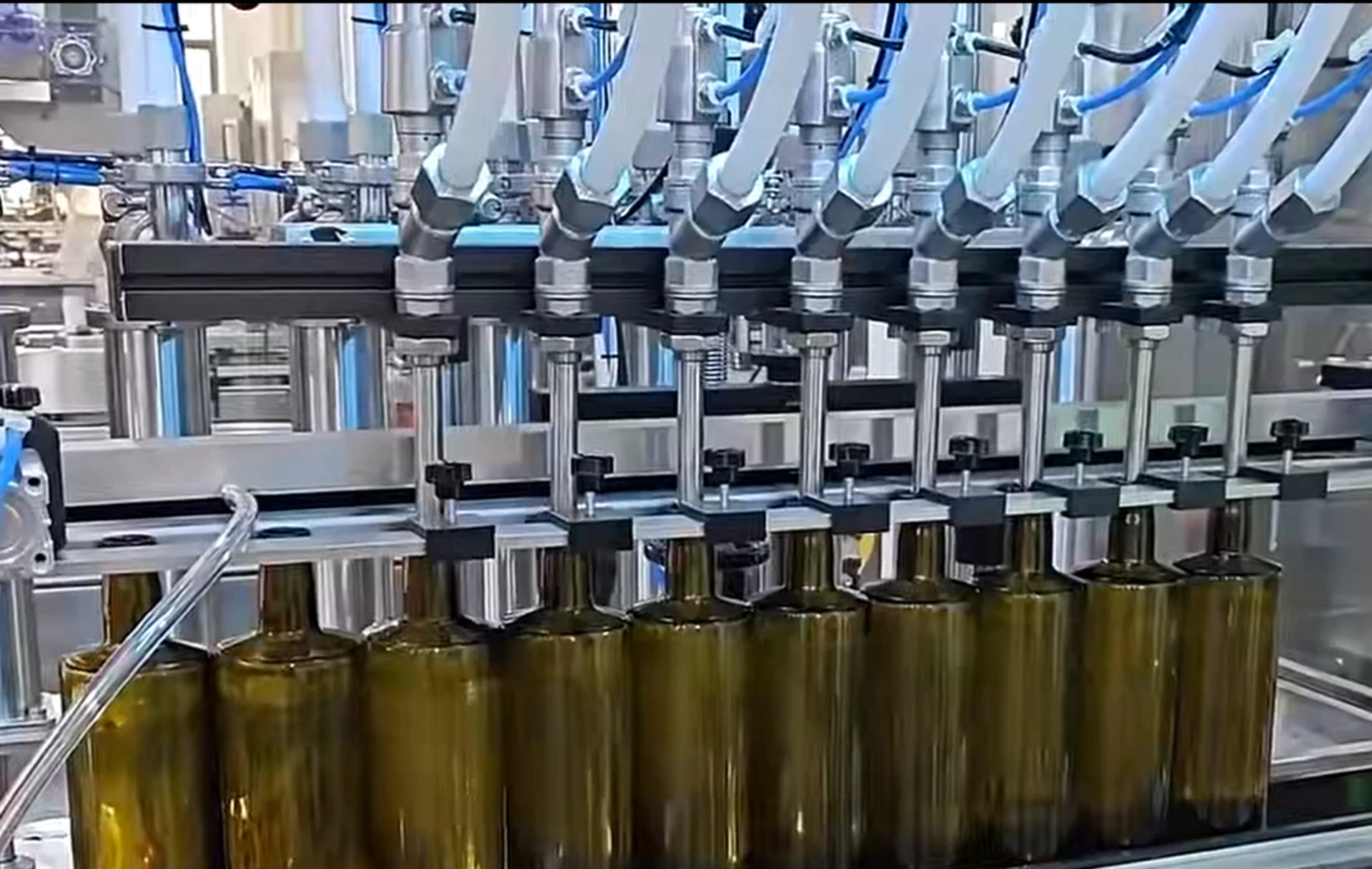
Accuracy claims need the same care. Suppliers in this category typically quote ±0.5% to ±1% on servo piston dosing and roughly ±3 to ±5 g with operator-dependent gravity or overflow. Those are brochure ranges, not acceptance criteria. The acceptance figure has to be validated on the real lotion, at filling temperature, in the production bottle, during the factory acceptance test (FAT). A supplier who will not run your product before shipment is offering a specification, not proof.
An honest limit is worth more in a spec review than an all-purpose claim. For thin alcohol toners or water-like products, servo piston and bottom-up filling are unnecessary cost; overflow remains the better, cheaper fit and gives a visible level in a clear bottle. A line sustaining more than roughly 80 BPM would step up to a rotary platform. This project sat below the rotary threshold and above the thin-liquid one, in the middle band where selection logic matters most.
Filling methods compared on viscosity range, SKU changeover and fit for this project.
Method | Best viscosity | Multi-SKU changeover | Fit for this project |
Gravity and overflow | 1 to 50 cP | Manual reset, slow | Failed on lotion above 3,000 cP |
Flowmeter | Thin to medium liquids | Recipe recall possible | Poor on aerated shampoo |
Peristaltic | Low to medium, sensitive fluids | Tube change between families | Wear, limited by dose size |
Servo piston, selected | 3,000 to 20,000 cP | Saved recipe per SKU | Best fit, chosen for this line |
Case Study: The Filling-Method Decision (Composite Example) Composite case study based on aggregated published personal-care projects. Details adjusted for confidentiality. Not a performance claim for any Runtech machine.
Background: A personal care co-packer filling line with about 40 SKUs, three shifts and one overflow filler bought for shower gel.
Challenge: Lotion above 3,000 cP overfilled, shampoo foamed, hand cream stringed, and wet necks defeated the manual capper.
Solution: A servo piston filler with a saved recipe per SKU, bottom-up anti-drip nozzles, suck-back cut-off and a slow-fast-slow profile.
Results: The line held the full viscosity range on one platform, with fill accuracy and changeover validated on real product at FAT.
4. Why Did the Capping Station Matter as Much as the Filler?
On personal care bottles, the cap is part of the filling problem. Torque capping for shampoo bottles fails at both extremes. Too much force cracks the tamper-evident ring or damages a pump mechanism, and too little force lets the cap leak during transit. Neither failure looks like a filling fault on the production report, but both start with what the filler left on the neck. An uneven fill height changes where the cap seats, so a torque value that worked on the previous SKU can be wrong on the next one.
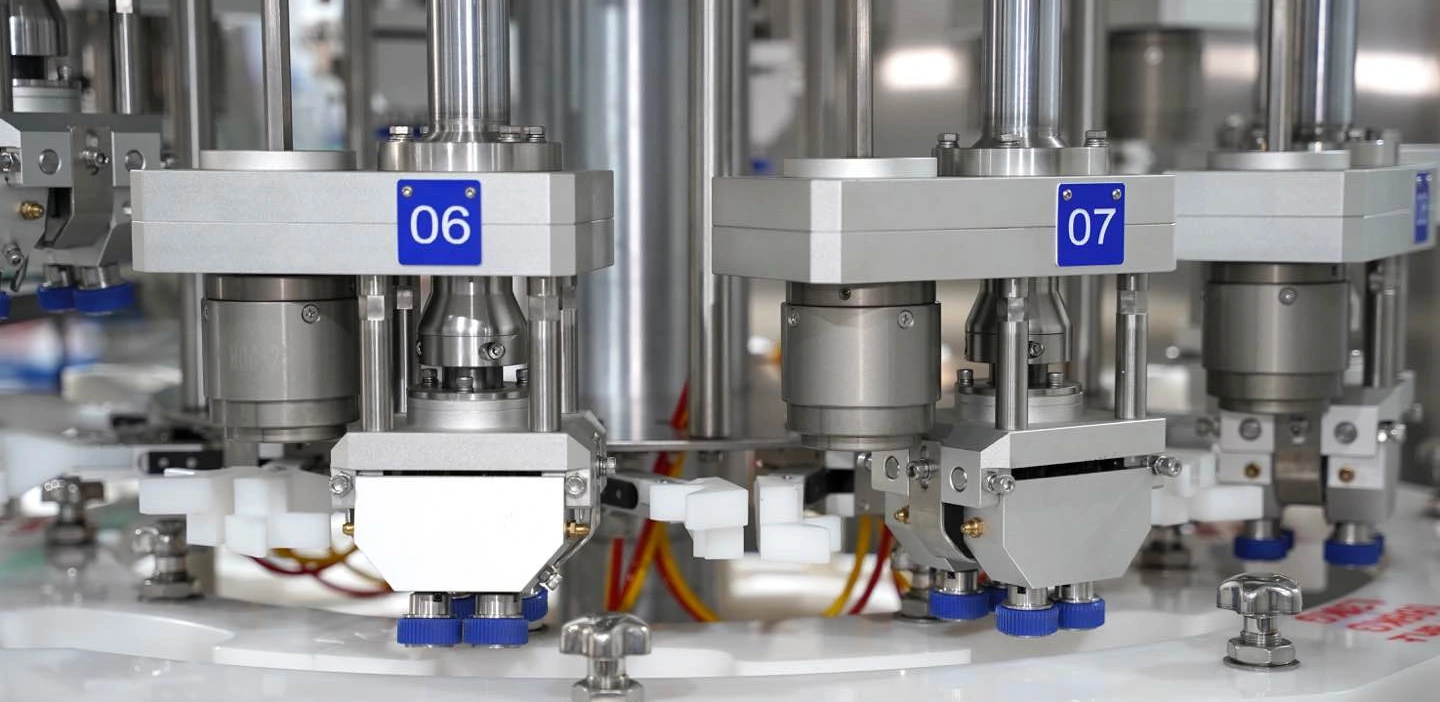
The fix was a servo torque capping head that runs each closure to a recipe value and logs torque bottle by bottle. A centrifugal sorting bowl with the right orientation rails handled flip-top and disc-top caps that jammed in the old bowl. The log mattered as much as the head: when a ring cracked, the team could read the torque trace instead of guessing. Figure 4 shows the head closing a flip-top bottle during the trial. That is torque capping for shampoo bottles in a multi-SKU plant: the closure set changes more often than the filler does.
Hygiene sat alongside torque in the same specification. Product-contact parts were specified in 316L stainless, quick-release for cleaning, with a documented flush or clean-in-place (CIP) sequence between fragrance families. Published supplier guidance from Sunter Machinery recommends 316L contact parts for shampoo and body wash and reports CIP cutting changeover from about four hours to 45 minutes in one example. Treat that as an external claim requiring confirmation on your own line. This project stays at case level. For head types and closure mechanics in depth, see capping machine applications and customer case studies.
Four handover conditions belong in the specification before a torque head is ordered: a clean neck, a repeatable fill height, a consistent bottle position and a correctly presented cap. If one drifts, a good capper produces a bad closure. Filler and closure decisions belong to one conversation, not two purchase orders.
Closure problems traced to root cause, the setting that fixed each and where it was verified.
Closure issue | Root cause | Setting that fixed it | Verified at |
Leaking caps | Under-torque on a wet neck | Torque recipe per cap type | FAT with production bottles |
Cracked tamper rings | Over-torque on plastic ring | Torque ceiling set in recipe | Torque log across full run |
Skewed caps | Bottle position not repeatable | Guide and star-wheel reset | Line trial at target speed |
Flip-top jams in bowl | Wrong orientation rails | Rails matched to real caps | Bowl test with 500 caps |
5. Body Lotion Filling Machine Results at FAT and in Production
Body lotion filling machine results are often quoted as one impressive number, hiding the product, bottle and test conditions behind it. These figures come from a composite based on aggregated personal-care projects, adjusted for confidentiality. They show the shape of a realistic upgrade, not a guaranteed outcome, and are not a performance claim for any Runtech machine. Take the arithmetic and the validation method, then repeat both with your own formula.
The FAT was run with the client's real body lotion, foaming shampoo, hand cream and production closures, not with water. Each SKU was checked for fill weight and cap torque across a full run, with the hardest product first. A water test would have passed on the old machine too, which is precisely why it proves nothing about a 15,000 cP cream. Wet-cap and foam rejects had sat around 8% on the composite baseline. Once the nozzle profile, cut-off and torque recipe were validated together, they came in under 1%.
The payback case was built from three operating gains, not a speed increase. Labour fell from roughly six operators to two across two shifts. Giveaway dropped about 60% once dose accuracy held. Changeover went from about 45 minutes to under 20 minutes, and at roughly 12 changes a week that recovered about five line-hours a week. Combined, the composite model landed in a 12 to 18 month payback range.
For comparison only, a published SunAura Latin America case reports ±1.5 g accuracy, about 40 BPM, six to two operators, giveaway down about 60% and a 14-month payback. HeavyTechLab reports an audited 2023 to 2024 comparison of 64% versus 89.3% overall equipment effectiveness (OEE) and ±1.8% versus ±0.35% accuracy. Both are external benchmarks, not Runtech results.
Sustained output settled at 42 to 50 accepted bottles per minute on 250 ml to 1 L formats, with the capping station deliberately set as the constraint. This is accepted output after rejects and changeovers, not a catalogue rating measured on water. How long does changeover take on a multi-SKU personal care line? As long as the slowest unscripted step, which is why the team wrote the routine down. For wider capacity modelling across very different lines, see liquid filling line capacity from 8 BPM to 55 BPM.
Before and after figures from the composite personal care project. Details adjusted for confidentiality; not a performance claim for any Runtech machine.
Metric | Before | After | Note |
Fill accuracy | About ±3 to ±5 g | Around ±0.5% to ±1% | Composite, validated at FAT |
Giveaway | About 5 ml per 500 ml | Down about 60% | Composite, illustrative arithmetic |
Foam and wet-cap rejects | Roughly 8% | Under 1% | Composite, real product at FAT |
Changeover time | About 45 minutes | Under 20 minutes | Composite, 12 changes a week |
Labour, two shifts | Six operators | Two operators | Composite, same output window |
Sustained output | Not sustained | 42 to 50 BPM | Composite, capping sets pace |
6. What Would They Do Differently? Five Lessons for Buyers
The biggest lesson was that changeover, not top speed, decided the business case. The team’s five points are worth forwarding before a specification is written:
- Test the hardest SKU, not the easiest. The thickest cream and the foamiest shampoo set the limits. A water trial on the best-selling gel proves very little.
- Specify the cap before the filler. Closure type and tamper-ring strength decide torque limits and neck condition, which then decide the filling method.
- Buy recipe memory and quick-release parts. Saved recipes and tool-free contact parts turned a craft skill into a repeatable routine.
- Verify torque and weight with real product at FAT. Demand the acceptance figure on your formula, at your filling temperature, in your bottle.
- Write the changeover routine before the line arrives. Sequence, part sets and first-good-fill checks should be documents, not shift folklore.
What should you send before requesting a cosmetic filling line quote? A short list any plant can assemble internally. It is not a formality. Each item removes a guess from the supplier's specification, and each missing item returns as a change order later.
The RFQ input checklist, with the reason each item changes the machine specification.
What to send | Why it matters |
Product list and SDS per family | Sets wetted parts and seal choice |
Viscosity at filling temperature | Decides pump and nozzle type |
Foam tendency | Sets fill profile and settling window |
Fill volumes and range | Sets stroke and cylinder size |
Bottle drawing with neck finish | Sets nozzle reach and guides |
Closure type and orientation | Sets bowl rails and torque recipe |
Target output per shift | Sets head count and line balance |
SKU count and changeovers | Sets recipe memory requirement |
Utilities and floor space | Sets layout and services |
Cleaning chemistry | Sets CIP sequence and part sets |
The pattern is repeatable. Specify for product behaviour, validate on real product, and treat capping as part of the fill. The next section points to the machine configuration that matches the line described here. Use it to compare the hardware against your own range.
Recommended Filling Machines by Industry
Personal care and cosmetics lines: the configuration in this case pairs servo piston dosing, bottom-up anti-drip nozzles and torque-monitored capping. See the automatic bottle filling and capping machine for cosmetic lotion and shampoo factories, which is the closest match to the line described here.
Multi-SKU body care lines: the method table in Section 3 and the closure map in Section 4 are the two checks to run before choosing a head count or a capping technology.
Thin, level-critical products: for water-like toners and clear shower gels, an overflow filler remains the correct, lower-cost choice. Do not over-specify a servo piston line for these SKUs.
Frequently Asked Questions
1.Can one filling machine handle thin shampoo and thick body cream?
Sometimes. A servo piston filler with a recipe per SKU and the right nozzle set covers both, but the thickest product and the narrowest neck set the limits. Sample both before ordering.
2.Why did our shampoo filler overfill and foam?
If it is an overflow or gravity filler, the product is not self-levelling fast enough at shampoo viscosity. A servo piston filler with a slow-fast-slow profile and bottom-up nozzle removes the drop height that creates foam.
3.What fill accuracy is realistic for a lotion filling machine?
Suppliers in this category typically quote ±0.5% to ±1% on servo piston and around ±3 to ±5 g with operator-dependent gravity or overflow. Demand the figure validated on your product at FAT.
4.Can the same line fill several bottle sizes and cap types?
Yes, within limits. Recipe recall plus quick-release change parts handle two to four formats. Flip-top and disc-top caps need the right sorting-bowl orientation rails, which must be confirmed with real caps.
5.What should I send before requesting a quote for a personal care filling line?
Send your product list and SDS, viscosity at filling temperature, foam tendency, fill volumes, bottle and cap photos or drawings, target output per shift and SKU count. Real samples give the most reliable recommendation.