
1. Comprehensive Preventive Maintenance Schedule
A well-structured maintenance plan prevents minor wear from escalating into major mechanical failures.
Many production teams only perform repairs after breakdowns, which shortens component lifespan and creates unpredictable production interruptions.
Below is a comprehensive maintenance matrix tailored for high-speed daily chemical and cosmetic packaging lines.
Preventive Maintenance Matrix
Frequency | Maintenance Tasks | Critical Notes |
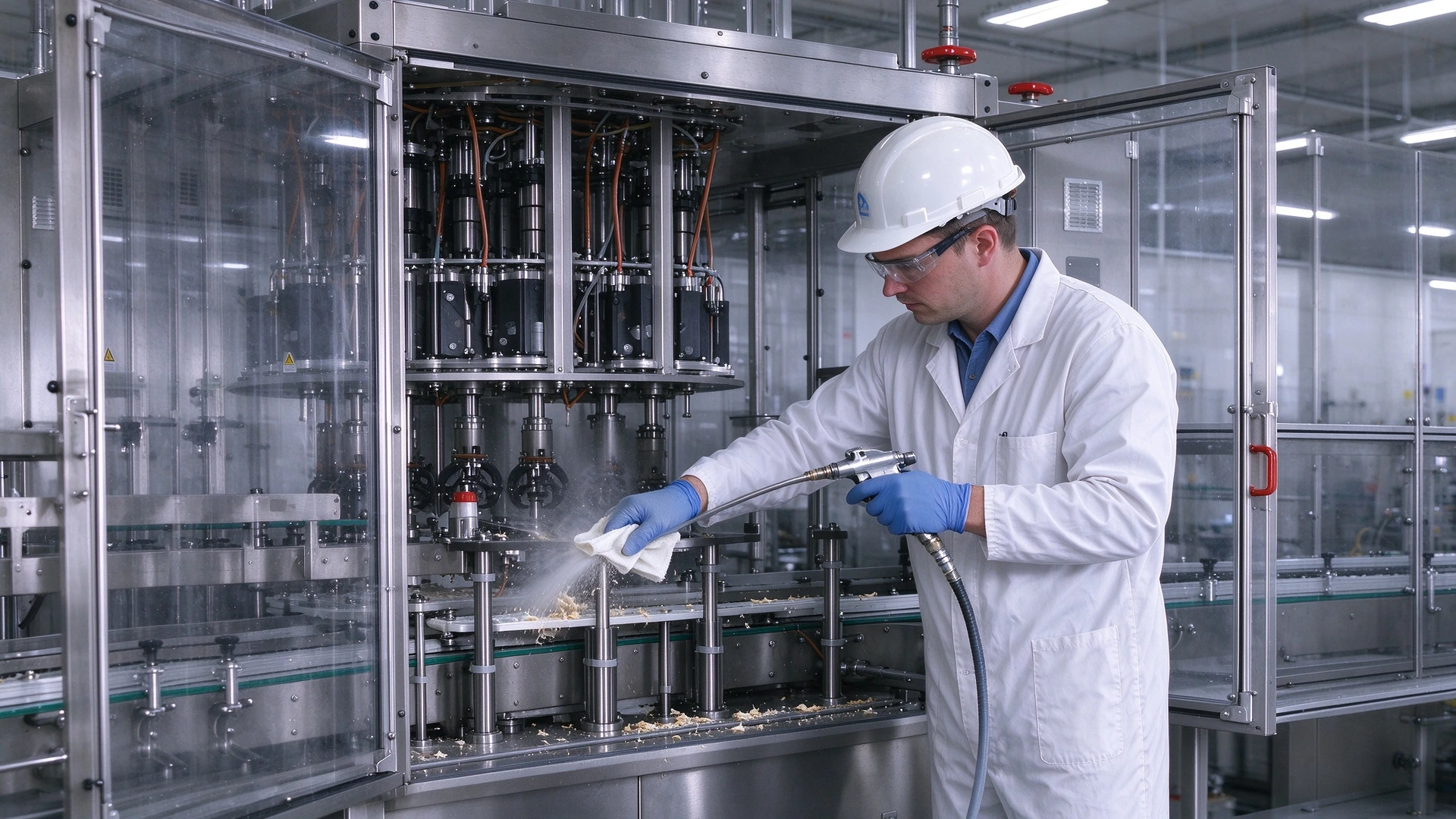
Daily | 1.Clean capping chuck / jaw, remove cap residue and liquid splashes; 2.Check air pressure and torque display; 3.Check loose screws on conveyor | Do not use high-pressure water to wash electrical components |
Weekly | 1.Lubricate rotary bearing and guide rail; 2.Calibrate capping torque; 3.Inspect sensor alignment and wiring | Use food-grade lubricant for daily chemical packaging machines |
Monthly | 1.Full disassembly inspection of spindle and clutch; 2.Replace worn rubber gripping pads; 3.Check PLC and HMI circuit connections; 4.Test emergency stop function | Stop production and lock out power source before overhaul |
Practical operational tip: Assign one operator per shift to finish daily cleaning and visual check. Record maintenance logs for traceability, which also supports GMP-related audit requirements for cosmetic & pharma factories.
2. Step-by-Step Troubleshooting Guide
When a fault occurs, avoid making random adjustments. Follow a logical sequence to identify the root cause.
Hasty modification of torque, height or conveyor speed often introduces new problems.
For highly specific closure issues, it is often helpful to consult a dedicated Trigger Capper Troubleshooting Guide or a Pump Capping Machine Maintenance Guide.
Before you start diagnosis: Confirm whether defects happen to all bottles or only random batches. Verify if bottle / cap batches have been changed recently — many “machine faults” actually come from dimensional tolerance deviation of supplied closures or bottle necks.
Below are the most common symptoms and actionable solutions.
Troubleshooting Matrix
Symptom | Possible Root Causes | Actionable Solutions |
Caps are loose after capping | 1. Worn chuck pads losing grip. 2. Torque setting too low. 3. Bottle slipping in the holding fixture. 4. Missing liner in the cap. | 1. Replace chuck inserts. 2. Adjust torque via HMI/clutch. 3. Adjust bottle guide rails or stabilizer belts. 4. Check cap supplier quality. |
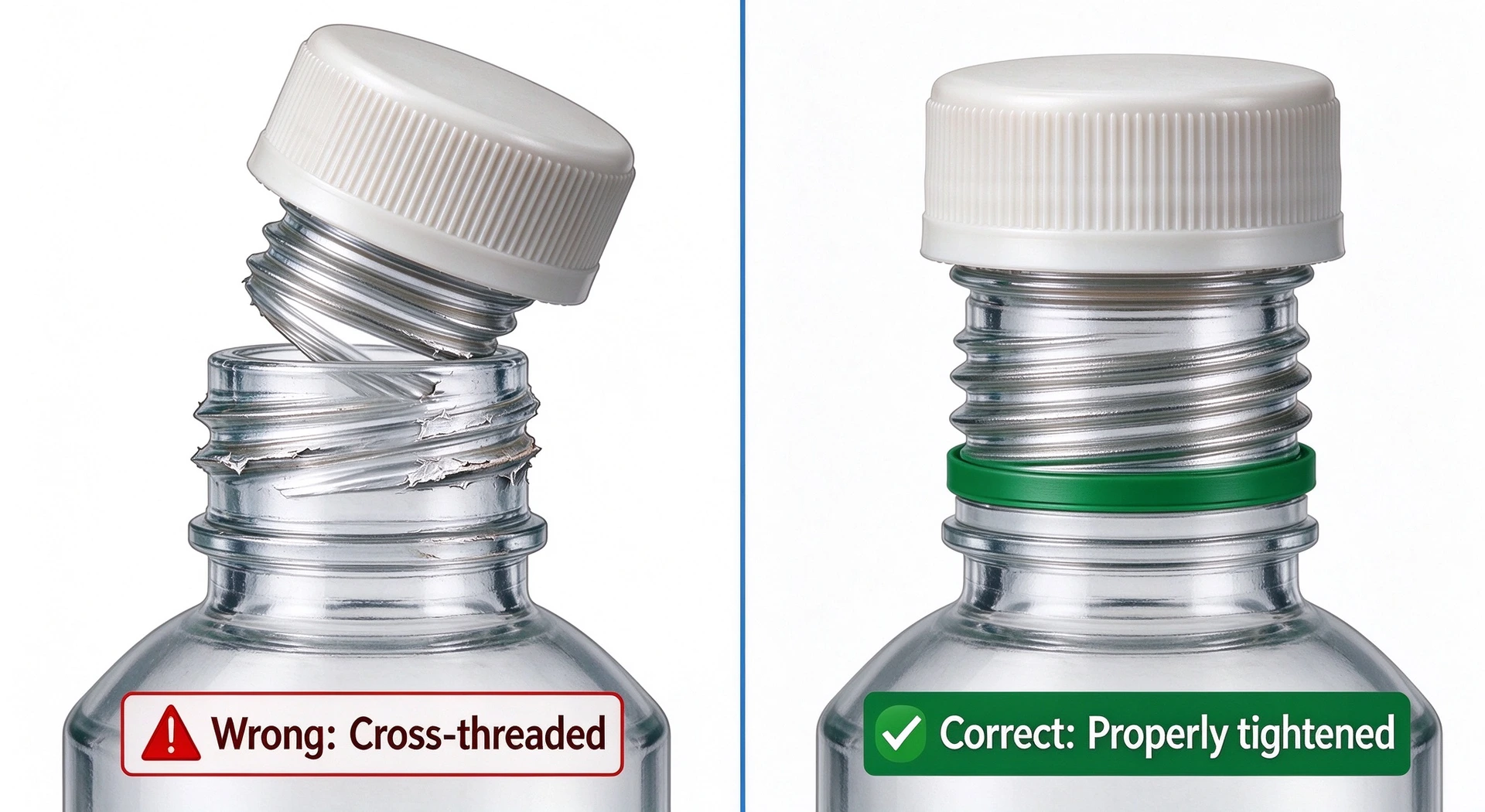
Cross-threading / Tilted caps | 1. Cap and bottle not centered. 2. "Soft start" mechanism failing. 3. Damaged bottle neck finish. 4. High-speed capping without proper alignment. | 1. Realign the capping head with the bottle neck. 2. Check servo profile or pneumatic cushioning. 3. Inspect bottle supplier. 4. Reduce capping speed temporarily. |
Leakage after transport | 1. Retained torque loss due to plastic creep. 2. Dip tube bent during insertion. 3. Internal pump spring crushed by over-tightening. | 1. Increase initial torque slightly & run a 24h audit. 2. Inspect dip tube straightener guides. 3. Decrease torque setting to prevent crushing. |
Cap feeder jams or misfeeds | 1. Track dirt or broken cap fragments. 2. Static electricity buildup. 3. Cap dimensions out of tolerance. 4. Bowl overfilled. | 1. Blow out tracks with compressed air. 2. Install ionizing air blowers to remove static. 3. Test a new batch of caps. 4. Maintain ideal bowl fill level. |
3. Pneumatic vs. Servo: Different Maintenance Focuses
The core driving system dictates the maintenance routine. Understanding the difference between a Pneumatic Capping Machine and a Servo-Driven Capping Machine is crucial for your maintenance team.
Pneumatic Capping Machines:
Your focus should be on the air supply. Water in the air lines will rust cylinders and destroy solenoid valves. Regularly drain the air compressor tank and replace the air filter element. Because they have fewer electrical components, they are highly reliable in humid environments, but they require constant monitoring of mechanical friction and pressure drops.
Servo-Driven Capping Machines:
Your focus should be on electrical calibration. Check the encoder connections and ensure the servo motor cooling fans are free of dust. Servo models offer closed-loop feedback, which means if the torque is wandering, it is usually a calibration issue rather than mechanical wear.
4. When to Call a Technician
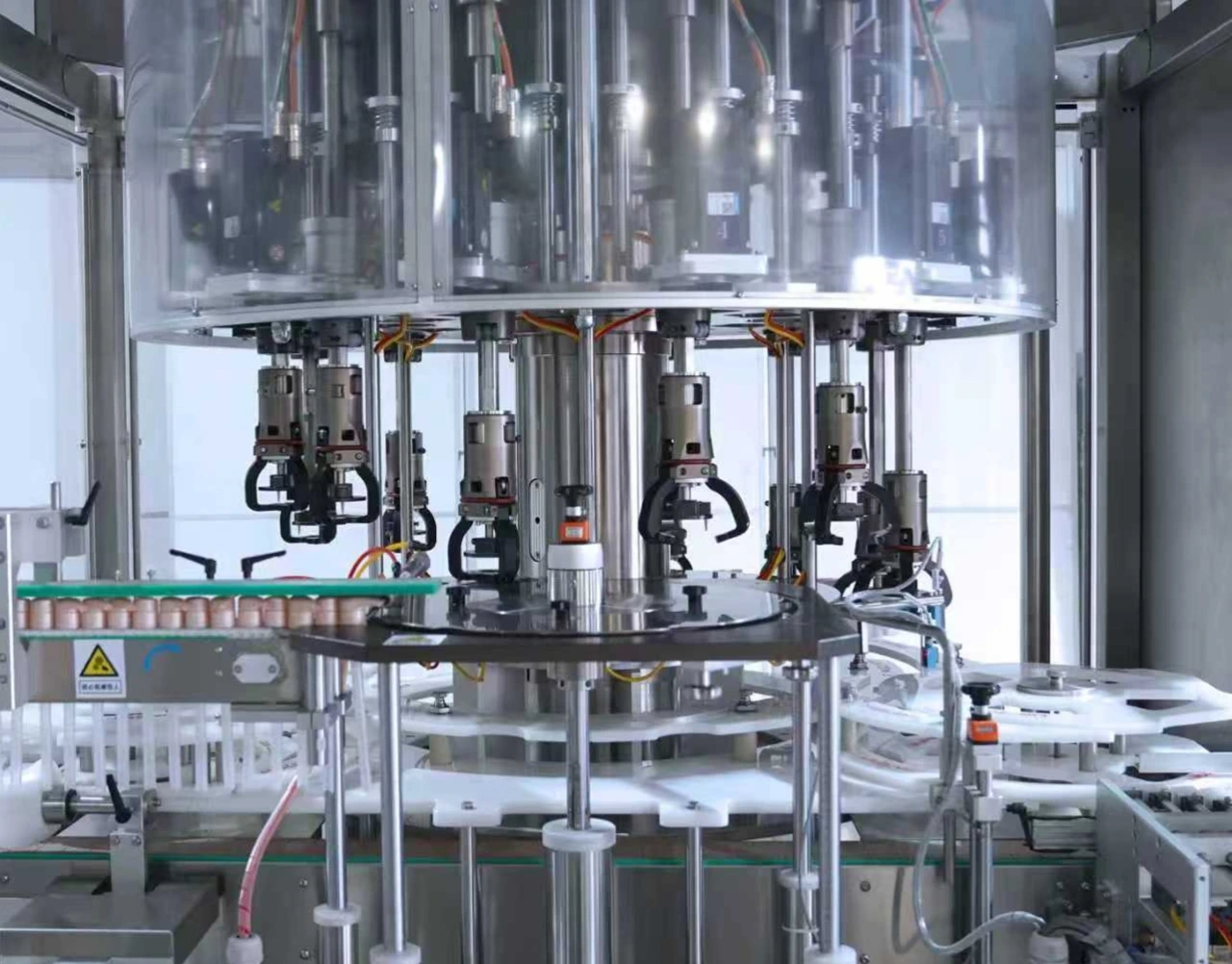
Although operators can handle daily cleaning and minor jam clearing, certain issues require expert intervention. Contact your equipment manufacturer if you experience:
- The PLC/HMI displays persistent error codes that cannot be cleared.
- The capping head assembly is physically damaged or making abnormal metallic grinding noises.
- Consistent torque deviation across all capping heads despite calibration attempts.
- You need to run a completely new bottle/cap shape that requires mechanical retrofitting.
5. Pre-Production Cap & Bottle Checks
Many packaging manufacturers overlook pre-verification of bottles and closures before mass production, which becomes a frequent source of capping defects even if your capping machine is in perfect condition. Every batch of pump caps, trigger spray caps or screw caps has slight dimensional variation from different suppliers.
We recommend you build a simple incoming inspection workflow matched to your automatic capping machine. Measure thread dimension, cap height, cap concentricity and liner flatness before loading new batches onto the line.
Run-Tech can provide a simple manual torque test jig for your QC team. It helps your quality staff test fit and breakout torque offline, before feeding bottles and caps into the capping station. This low-cost QC step effectively avoids cross-threading, cap tilting and torque fluctuation during formal production.
Even minor changes such as cap material switching from PP to HDPE will change friction characteristics, which means you need to recalibrate the capping torque on your servo capping machine accordingly.
6.Conclusion
Proper maintenance is the bridge between a high-performing capping machine and a long-term profitable production line. At Run-Tech, we engineer our capping equipment for maximum durability and ease of maintenance. By training your operators on daily checks, adhering to a strict lubrication schedule, and utilizing a systematic troubleshooting approach, you can ensure your packaging line operates at its maximum potential. If you ever need assistance, Run-Tech's global service team is always here to support your production.
Investing in routine preventive maintenance cuts unexpected repair costs and reduces product reject rates, bringing tangible ROI for your packaging plant.