
1. Quick Answer: What Is a Capping Machine Application?
A capping machine application is the specific bottle-and-cap combination a machine is configured to seal — trigger sprayers on HDPE bottles, lotion pumps on glass bottles, 38 mm screw caps on sauce jars, or aluminum-plastic caps on oral liquid bottles. In a bottling project, the capper sits between filling and labeling and has to match both. Most projects we deliver fall into five industry groups: daily chemical, cosmetics and personal care, food and sauce, pharmaceutical, and agrochemical. Each group brings its own cap types, torque windows, and compliance requirements — which is why "one machine fits every industry" is rarely true.
Key takeaway: Start your project definition from the cap, not the machine. The cap decides orientation, torque, speed, and change parts.
2. Bottling Projects by Industry at a Glance
The table below is the map for the rest of this article: what each industry typically bottles, which capping approach fits, and what the project must get right.
Table T1 — Industry overview
Industry | Typical Bottles & Caps | Common Capping Type | Project Focus | Typical Speed (est.) |
Daily chemical | HDPE/PET bottles, trigger sprayers, pump caps | Inline or rotary with cap orientation | Orientation at speed, foam and drip control | 60–250 BPM |
Cosmetics & personal care | Glass/acrylic bottles, small lotion pumps | Servo rotary, soft gripper pads | Surface finish, torque precision | 40–150 BPM |
Food & sauce | Glass jars and bottles, 38 mm screw caps | Inline or rotary, consistent torque band | Seal integrity, glass handling, washdown | 80–200 BPM |
Pharmaceutical | Oral liquid bottles, aluminum-plastic / CR caps | Rotary with torque logging + reject | Traceability, GMP documentation | 40–120 BPM |
Agrochemical | HDPE 1–4 L containers, large-diameter caps | Anti-corrosion rotary | Leak prevention, UN-certified packaging lines | 40–150 BPM |
Key takeaway: The machine type matters less than the match between cap behavior and line requirements. Browse the rotary capping machine range to see how configurations differ by head count and cap handling.
3. Daily Chemical Bottling Projects
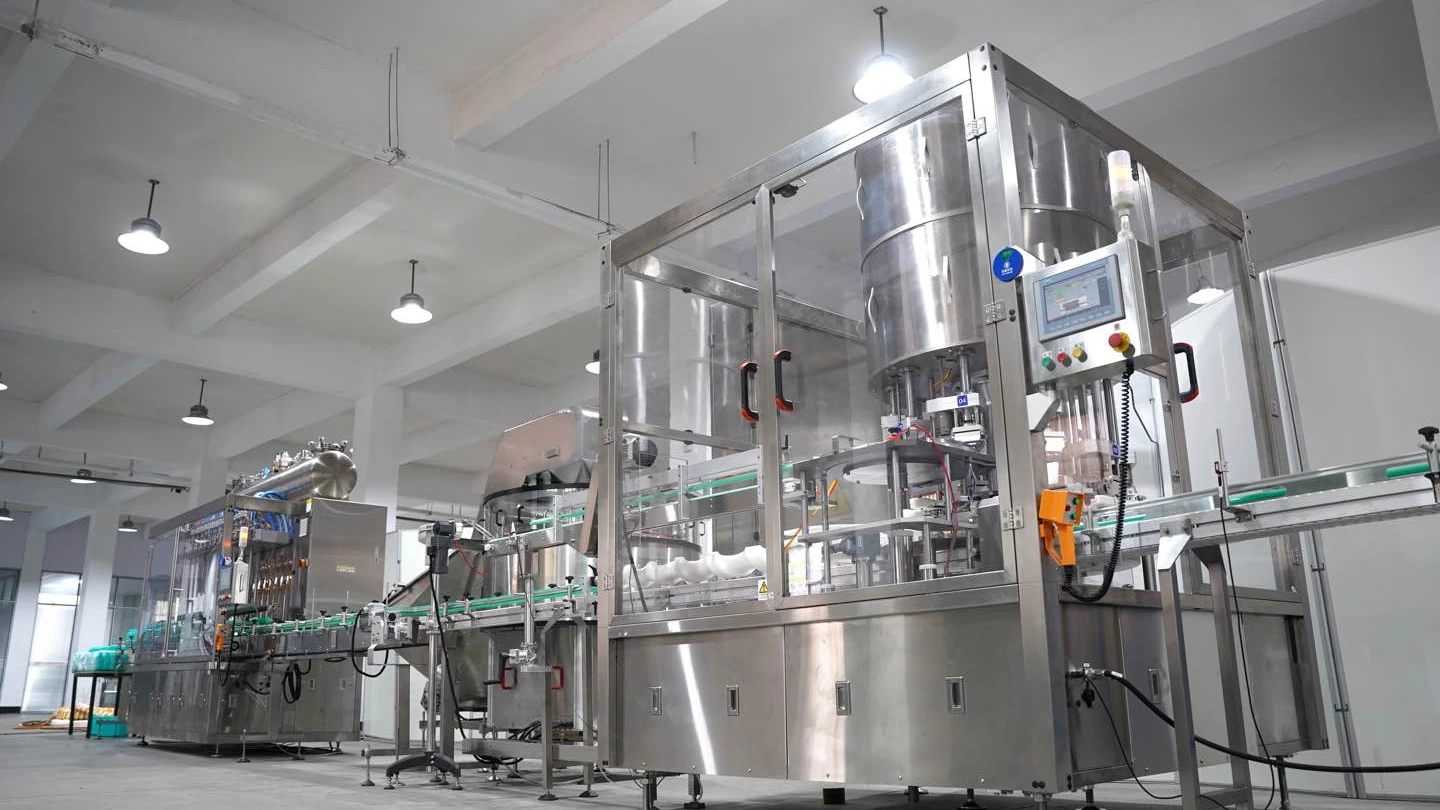
Daily chemical lines — dishwashing liquid, laundry care, household cleaners — live on trigger sprayers and pump caps. Both need to be oriented before capping: a trigger sprayer fed sideways stops the line, and a pump that enters the chuck at the wrong angle bends stems. The project scope usually runs unscrambler → filler → capper with a cap elevator and sorter → downstream labeling. Two details decide satisfaction: drip and foam management around the filling area (drips reach the capper and degrade chuck grip), and changeover between trigger and pump SKUs, which is why many daily chemical projects specify recipe-driven setups. For trigger formats specifically, see the rotary trigger spray capper for dishwashing liquid; for detergent bottles with pump caps, the servo pump capping machine for detergent bottles is a reference configuration.
4. Cosmetic and Personal Care Bottling Projects
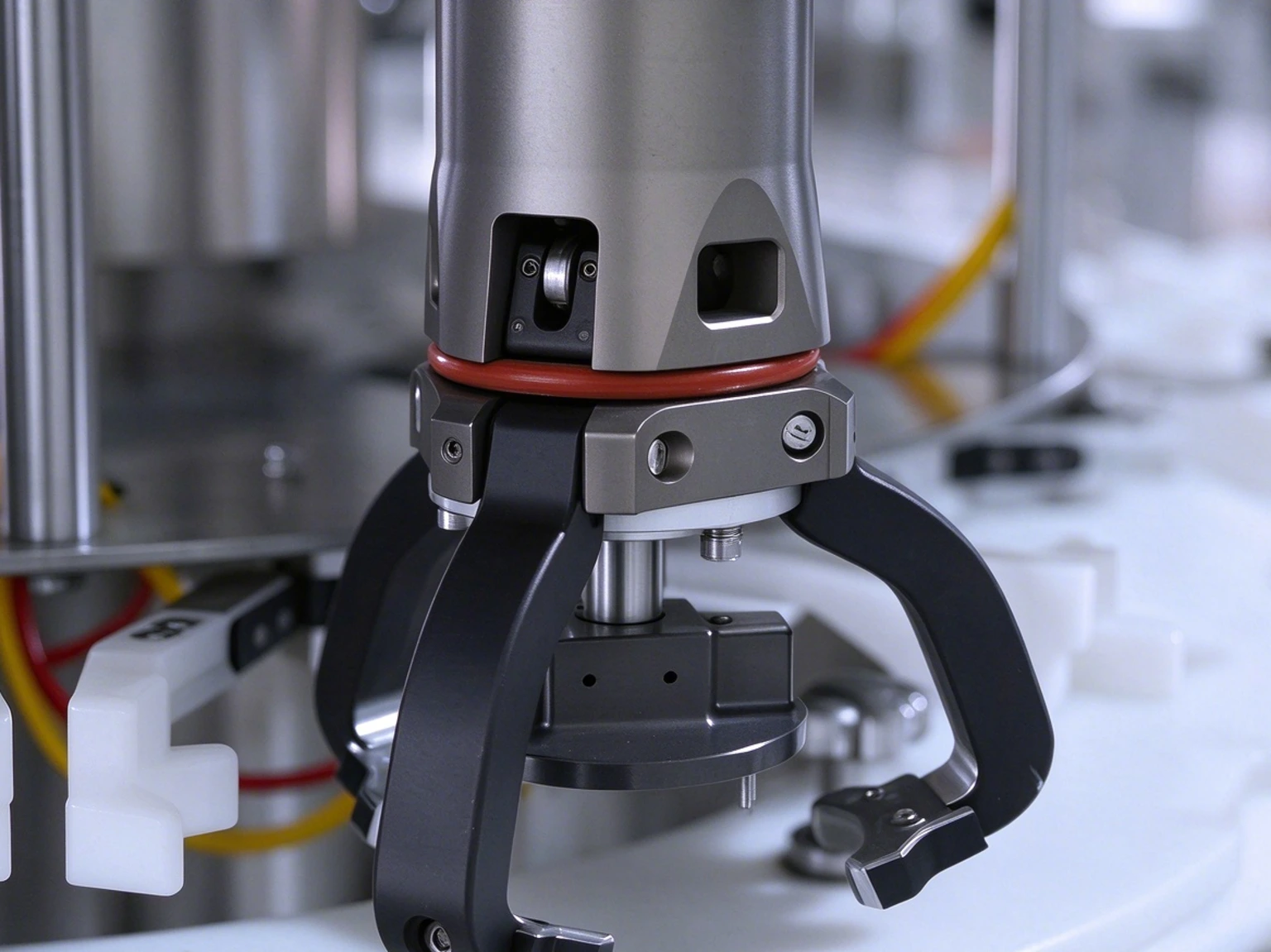
Cosmetic projects trade raw speed for appearance and precision. Bottles are glass or acrylic, caps are small-diameter lotion pumps, and a single chuck scratch turns a premium bottle into a customer return. Servo-driven heads with soft gripper pads hold low torque windows accurately; bottle transport is grip-based rather than clamp-based. Personal care lines — liquid soap, shampoo, body wash — run faster and care more about uptime: pumps must be picked and placed consistently across millions of cycles. References: the rotary pump capper for lotion bottles for cosmetic speeds, and the high-speed pump capping machine for personal care products for higher-throughput lines.
5. Food, Sauce and Condiment Bottling Projects
Food bottling projects bring glass, heat, and hygiene. Sauce jars and oil bottles use 38 mm screw caps or lug caps, and the torque band has to stay tight: over-torquing cracks glass, under-torquing leaks on hot-fill or retort products. Frames are built for washdown, and bottle plates are gentle but rigid. If your product is viscous, the filling side usually sets the pace — start with our guide to choosing a liquid filling machine for viscous products before sizing the capper.
6. Pharmaceutical and Agrochemical Bottling Projects
Pharma projects are defined by documentation. Oral liquid lines cap aluminum-plastic or child-resistant caps under GMP, with per-head torque records, data export, and automatic rejection of under-torqued bottles; the audit trail functions are designed to align with 21 CFR Part 11 electronic records requirements. Agrochemical projects flip the priority: 1–4 L HDPE containers with large-diameter caps and aggressive formulations demand anti-corrosion frames, higher-torque heads, and downstream leak detection, and packaging for dangerous goods falls under UN packaging requirements. In both industries the capper is a compliance component, not just a speed component.
7. How the Capper Fits into the Whole Bottling Line
A bottling project is a chain of matched rates: unscrambler → filler → capper → labeler → coder → packing. The line runs at its slowest matched station, so the capper is sized against the filler's sustained output — not its peak — with buffer conveyors absorbing the difference. Layout and buffer planning are worth doing early; our capping line layout guide covers the floor-space questions. For the full-line view, see our liquid filling machines and labeling machines ranges.
Table T2 — Line stations and what they exchange
Station | Role in the Project | Typical Speed Range (est.) | Interface Notes |
Unscrambler | Feeds bottles single-file | Match line rate | Bottle-shape dependent tooling |
Filler | Doses product, sets the pace | 60–250 BPM | Drip/foam control protects the capper |
Capper | Seals caps at the correct torque | 40–250 BPM | Needs oriented caps + stable bottle feeding |
Labeler | Applies body/top labels | 40–200 BPM | Jar geometry shared with capper tooling |
Coder / checkweigher | Batch data, final QC | Match line rate | Reject criteria agreed in writing |
Key takeaway: Size the capper to the filler's sustained rate plus growth headroom — never to either machine's nameplate peak.
8. Matching the Capping Machine Type to Your Project
Two formats cover most bottling projects. Inline spindle cappers suit lines below roughly 50 BPM, mixed SKUs with short batches, and budgets that favor low changeover effort. Rotary carousel cappers suit stable, high-volume production of oriented caps (trigger, pump) or torque-critical caps (pharma, cosmetics). The deeper comparison of spindle, servo, rotary, and pneumatic architectures lives in capping machine industry applications and customer case studies; the format-level choice between pump and trigger handling is covered in pump cap vs trigger cap machine differences.
Table T3 — Project signals and suggested setups
Project Signal | Suggested Setup | Why |
<50 BPM, many SKUs, short batches | Inline spindle capper | Handwheel changeover in minutes, low cost |
Trigger or pump caps, >100 BPM | Rotary with cap orientation | Orientation + parallel heads at speed |
Torque traceability required | Rotary with per-head logging | GMP and audit documentation |
Multiple bottle sizes, long batches | Recipe-driven rotary | Stored settings cut changeover hours |
Rule of thumb: Decide by batch length and cap behavior first; decide by speed second. If your SKUs run more than roughly 4 hours each, a recipe-driven HMI rotary capper absorbs multi-size changeovers far better than a faster machine absorbs poor planning.